

A Complete Guide to Managing Lieu Days Off in the UK
Posted by Robin on 07 Feb, 2026 in
At its core, Time Off In Lieu (TOIL)—often called lieu days off—is a pretty straightforward alternative to paying overtime. When someone on your team works extra hours beyond their contract, instead of getting paid more for that time, they bank it as paid time off to use later. Simple.
This system is all about flexibility, benefiting both the company and the employee.
What Exactly Are Lieu Days Off?

Think of TOIL as a company "time bank." An employee puts in a few extra hours to hit a tough deadline or manage a sudden rush of work—that’s a "deposit." Later on, instead of getting cash (overtime pay), they can "withdraw" those hours as paid leave.
It’s a simple shift that turns extra work from a purely financial transaction into a tangible benefit. For businesses, it's a great way to handle busy periods without bloating the immediate payroll. For employees, it gives them back something arguably more valuable than money: their time. They can use it for a long weekend, a family event, or just to recharge their batteries.
Time Off in Lieu at a Glance
To quickly see how TOIL stacks up against traditional paid overtime, here's a simple comparison. It helps to clarify where each approach shines.
| Aspect | Lieu Days Off (TOIL) | Paid Overtime |
|---|---|---|
| Compensation | Employee receives equivalent paid time off. | Employee receives extra pay, usually at a higher rate. |
| Cost to Business | Defers cost; payroll isn't immediately impacted. | Increases immediate payroll costs. |
| Employee Benefit | Promotes work-life balance and flexibility. | Provides immediate financial reward. |
| Administration | Requires a robust system for tracking accrued time. | Requires accurate timesheet and payroll processing. |
| Best For | Salaried roles where workloads fluctuate. | Hourly roles with clear, defined work hours. |
As you can see, the choice isn't just about money; it's about what fits your company culture and the needs of your team.
Why You Need a Formal TOIL System
Putting a proper, well-defined TOIL policy in place is more than just box-ticking. It’s a smart move for managing your workforce effectively. Get it right, and the benefits go far beyond just saving on overtime pay.
A formal system for managing lieu days off helps organisations:
- Boost Employee Morale: Giving back time is a powerful way to acknowledge extra effort. Many employees value an extra day off more than the cash equivalent, which builds loyalty and job satisfaction.
- Increase Operational Agility: TOIL gives you a flexible way to manage those inevitable peaks and troughs in workload without the headache of hiring temps or the fixed cost of constant overtime.
- Attract and Retain Talent: In today’s job market, a fair and flexible TOIL policy is a huge selling point. It shows you respect work-life balance, which is a major draw for top candidates.
On the flip side, a lack of a formal policy is asking for trouble. Those informal, "we'll sort it out later" agreements are a minefield of misunderstandings, disputes, and inconsistencies. What starts as a friendly perk can quickly become a source of resentment.
A formal TOIL policy isn't just about compliance; it's about fairness and transparency. It sets clear expectations for everyone, ensuring that extra work is acknowledged and rewarded consistently, preventing potential burnout and legal challenges down the line.
The first step is always to get it in writing. A clear, accessible policy ensures that everyone—from managers to new starters—understands exactly how lieu days off are earned and used. This creates a system that’s fair, sustainable, and works for the whole organisation.
Navigating the Legal Rules for TOIL in the UK
While Time Off In Lieu (TOIL) often feels like a simple, handshake agreement between a manager and their team member, it actually sits within a specific legal framework here in the UK. Getting these rules right is crucial for building a policy that’s not just fair, but fully compliant. It protects your business and, just as importantly, gives everyone clarity.
The big one you need to know about is the Working Time Regulations 1998. This legislation lays down the fundamental rules for working hours and the rest periods every employee is entitled to. If you mismanage lieu days off, you could easily—and accidentally—fall foul of these regulations.
At its heart, TOIL is almost always a contractual arrangement, not a statutory right. This means there's no automatic legal requirement for an employer to offer lieu days for extra hours worked. Whether it exists and how it operates comes down entirely to what’s written in the employment contract or your official company policy.
The key thing to remember is that TOIL is a system built on mutual agreement. Without a clear, written policy, you're leaving the door open for assumptions and disputes. A formal policy removes all that ambiguity and makes sure everyone knows the score.
This contractual setup gives you control over how your TOIL system works, but it absolutely must respect those core legal protections for employees.
The 48-Hour Week and Rest Periods
The Working Time Regulations state that you can’t require an employee to work more than an average of 48 hours per week. This is typically measured over a 17-week reference period. While employees can voluntarily sign an "opt-out" agreement to work more, this has to be a formal, written choice they make.
So, how does TOIL fit in with this?
- Accrual is Key: The hours an employee works to earn lieu days still count towards their 48-hour average in the week they were actually worked.
- Preventing Burnout: A poorly managed TOIL system can easily push employees over this limit week after week, leading to burnout and potential legal trouble if there’s no opt-out in place.
- Mandatory Rest: Employees are also legally entitled to daily and weekly rest periods, like having 11 consecutive hours of rest in any 24-hour period. Offering TOIL doesn’t cancel out this fundamental need for proper breaks.
Essentially, you can’t use TOIL as a workaround for safe working hours. It’s a way to compensate for extra effort, not a loophole to ignore employee welfare.
Keeping TOIL Separate from Statutory Holiday
Another critical point of compliance is making a clear distinction between TOIL and statutory annual leave. They are two different beasts and must be managed and recorded separately to avoid a legal headache. They serve different purposes and are governed by different rules.
In the UK, the statutory minimum paid annual leave is 5.6 weeks for a full-time employee, a legal right that includes the usual bank holidays. You can find more data on annual leave trends in the UK. Some employers allow staff to take bank holidays as lieu days off if they have to work them.
Keeping them separate is vital for a few reasons.
- Payment in Lieu: When an employee leaves, you have to pay them for any statutory holiday they've accrued but not taken. The rules for paying out any leftover TOIL, on the other hand, are dictated entirely by your company policy.
- No "Buying Out" Statutory Leave: You can’t pay an employee instead of them taking their minimum 5.6 weeks of holiday (except when they're leaving). TOIL, however, doesn’t have this restriction.
- Clear Records: Your absence management system must show two distinct balances: one for statutory holiday and one for accrued TOIL. Mashing them together is a compliance nightmare and can lead to major mistakes in holiday pay calculations.
By treating them as completely separate pots of leave, you ensure every employee gets their legal holiday entitlement while also benefiting from a fair and transparent system for any extra hours they put in.
How to Build a Fair and Effective TOIL Policy
Relying on a vague, informal approach to Time Off In Lieu (TOIL) is a recipe for disaster. It doesn't take long for confusion, disputes, and feelings of unfairness to creep in. A well-thought-out, written policy, on the other hand, acts as a clear blueprint for everyone. It builds trust, ensures everyone plays by the same rules, and turns an informal perk into a structured, reliable benefit that works for your team and the business.
Crafting this policy isn't just a box-ticking exercise. It's about clearly defining the give-and-take of workplace flexibility. You're setting the foundation for how extra effort is recognised and rewarded, which is absolutely vital for keeping morale high and nurturing a positive company culture.
Laying the Groundwork: Your Core Policy Elements
A solid TOIL policy is built on a few non-negotiable pillars. Each one needs to be defined with crystal clarity to stamp out any chance of ambiguity. Think of it as creating a user manual for your company's approach to extra work.
Here are the essential bits every TOIL policy must have:
- Eligibility Criteria: Spell out exactly who can earn lieu days off. Is it open to all employees, or is it limited to certain roles, departments, or salary bands? For instance, you might decide that senior managers on higher salaries are expected to work additional hours as part of their role, making them ineligible for TOIL.
- Authorisation Process: This is a critical control measure. Define how overtime must be approved by a manager before the hours are worked. This stops employees from racking up huge amounts of time without any oversight. Make it clear that any unapproved extra hours won't qualify for TOIL.
- Accrual Rate: The simplest and fairest approach is a straight one-to-one swap: one hour of overtime earns one hour of TOIL. If you plan to offer something more generous for unsociable hours, like time-and-a-half for a weekend shift, you need to detail that explicitly in the policy.
This infographic shows how UK TOIL policies fit within the broader legal and contractual landscape.
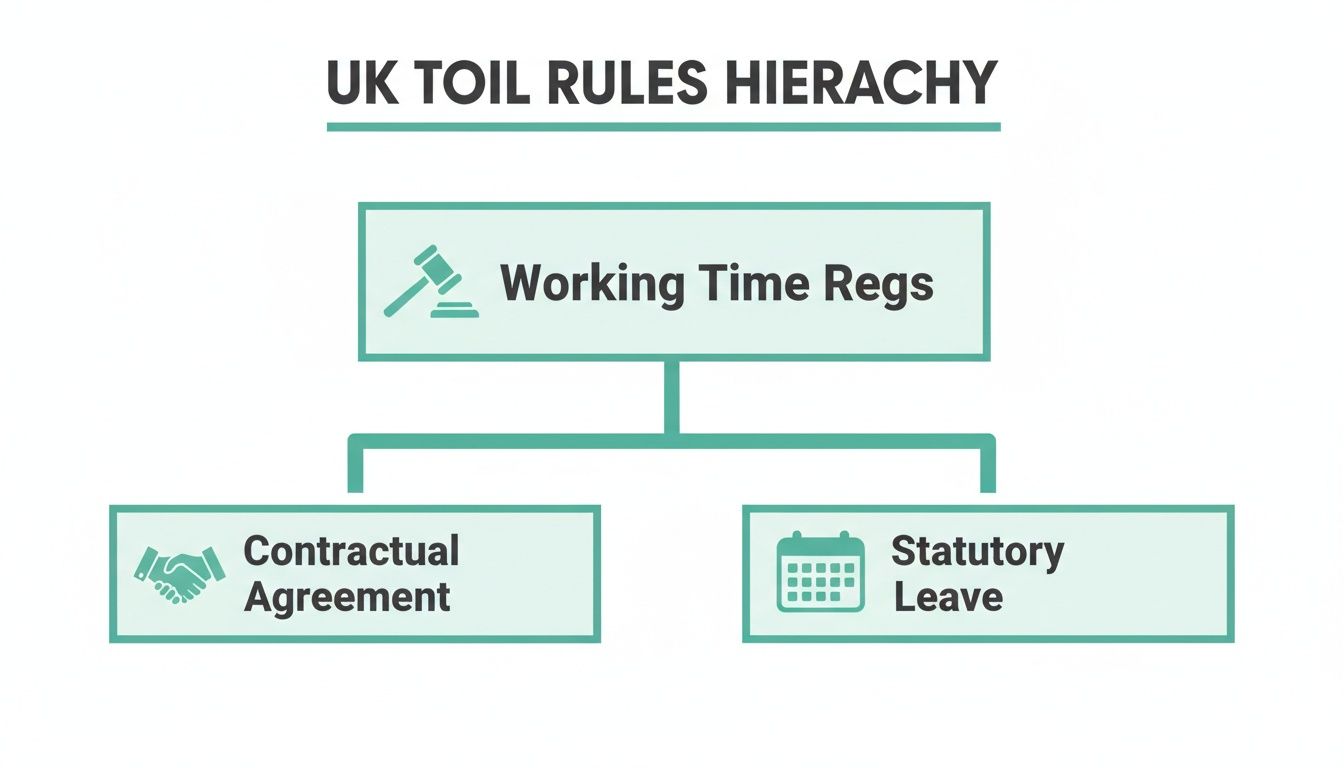
As you can see, while the Working Time Regulations provide a legal baseline, the nitty-gritty of how TOIL actually works is nearly always hammered out in a specific contractual agreement.
Setting Clear Boundaries and Expectations
Once you've sorted out who can earn TOIL and how, the next step is to set clear rules for how it can be used. If you skip this part, you risk creating an unmanageable liability, with staff banking huge amounts of leave that could cause chaos when they decide to take it.
A TOIL policy's true strength lies in its clarity. By setting expiry dates and usage rules, you protect the business from operational disruption while ensuring employees receive their well-earned rest in a timely manner. It’s about balance, not restriction.
Think about weaving the following rules into your policy to keep things fair and manageable for everyone.
Key Clauses for a Balanced Policy
To maintain control and fairness, you'll want to include these crucial clauses:
- Expiry Dates: This is probably the most important clause of all. State that any accrued TOIL must be used within a set timeframe, like within three months of being earned or by the end of your financial year. This prevents leave from piling up indefinitely.
- Usage and Approval: Just like annual leave, taking lieu days off should require a manager's approval. Your policy needs to outline the request process, including any notice periods and potential blackout dates during your busiest times.
- Maximum Accrual Cap: Put a sensible limit on how many TOIL hours an employee can have in their "bank" at any one time. For example, capping the balance at 15 hours encourages people to use their time off regularly and also helps flag potential workload problems before they get out of hand.
- Termination of Employment: What happens to an outstanding TOIL balance when someone leaves? Your policy must be explicit about this. Common approaches are requiring the time to be taken during the notice period or, less often, paying it out. If the time is simply forfeited, you must state that clearly.
Putting these components into a formal document creates a system that's transparent, predictable, and fair. If you're looking for more guidance on structuring leave policies, our template annual leave policy offers a solid framework. At the end of the day, a clear policy is the cornerstone of a healthy and respectful workplace.
Calculating and Tracking Lieu Days Without the Headaches
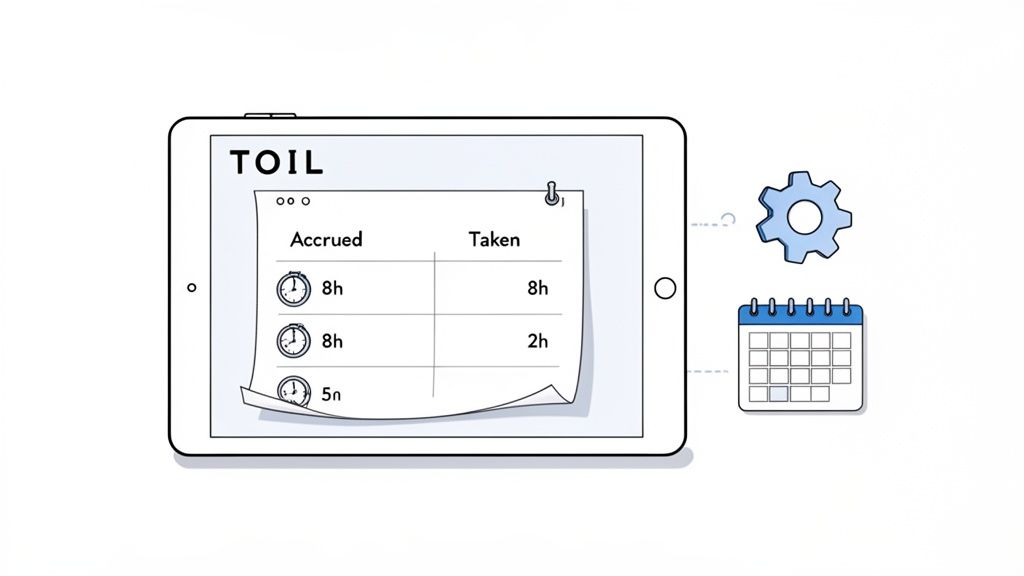
Once you've got your policy sorted, the real work begins. Getting lieu days off right boils down to two things: calculating the hours accurately and tracking them transparently. Without a solid system, even the fairest policy can turn into a mess of admin headaches, payroll mistakes, and frustrated employees.
The first step is deciding on a clear way to calculate how much time off someone earns. For most businesses, a simple and fair approach is best, but your policy might need a bit more nuance to handle different situations.
Common Calculation Methods
Your policy needs to spell out exactly how lieu days are earned. This gets rid of any guesswork and keeps things consistent for everyone. The most common ways to do this are:
- Hour-for-Hour Swap: This is the simplest model by far. If an employee works one extra hour, they get one hour of TOIL back. So, if Sarah stays late for three hours to hit a deadline, she banks three hours of lieu days off. Easy.
- Enhanced Rates for Unsocial Hours: Let’s face it, some extra hours are more disruptive than others. You might decide to offer a better rate for work done on weekends or bank holidays. For example, your policy could state that every hour worked on a Sunday earns 1.5 hours of TOIL, a fair way to reward that extra commitment.
The most important thing here is consistency. Whether you go for a simple swap or an enhanced rate, you have to apply it the same way for every eligible employee. That’s how you keep things fair and avoid disputes down the line.
By setting these rates out clearly, you create a system that everyone understands from the get-go. That kind of transparency is key to building trust in your TOIL programme.
The Pitfalls of Manual Tracking
For a lot of small businesses, the go-to tool for tracking almost everything is the humble spreadsheet. While it seems like a simple fix for managing lieu days off, it’s packed with hidden problems that can cause major headaches as your team gets bigger.
Manual tracking is a minefield of common issues that can wreck your whole system.
- Human Error: It just takes one typo in a formula or a forgotten entry to throw someone's balance off. These little mistakes add up over time, leading to big discrepancies that are a nightmare to sort out later.
- Lack of Real-Time Visibility: Spreadsheets are static. They don’t give managers or employees an instant, up-to-date look at how much time has been accrued and used. This means an employee might not know their real balance when they ask for a day off, and managers can’t see the full picture of who’s available.
- Administrative Overload: Keeping a spreadsheet accurate means constant manual updates from HR or managers. This admin work eats up precious time that could be spent on something far more important. As the team grows, it quickly becomes unmanageable.
These issues all lead back to one recurring problem: there’s no single source of truth. When different people have different versions of a spreadsheet, it’s impossible to know who is right, which opens the door to arguments and erodes trust.
Why Automated Systems Are the Answer
This is where a modern absence management system completely changes the game. By automating how you calculate and track lieu days off, you wipe out the risks that come with doing it by hand and create a smooth, clear experience for everyone.
Automated systems like Leavetrack provide a central, live record for all types of leave, which gives managers instant clarity on who’s off and why, preventing any scheduling clashes.
It also gives you a reliable audit trail for every single hour earned and taken, which is a lifesaver for payroll accuracy and staying compliant. The insights from HR data analytics can also be used here to spot trends and manage resources better.
An automated system becomes the definitive record, which employees and managers can access 24/7. This self-service approach lets staff check their own balances and make requests with confidence, cutting down the admin burden on HR. If you’re interested in centralising your leave management, have a look at our guide to employee holiday tracking. Making this switch saves countless hours and, more importantly, keeps your TOIL system fair, accurate, and easy to run.
Making Requests and Approvals for Lieu Days Painless

A great TOIL policy is only as good as the system backing it up. If requesting and approving lieu days off is a mess of email chains, verbal reminders, and crossed wires, the whole benefit falls apart. The engine that makes your TOIL system work is a smooth, transparent approval process that’s fair for everyone.
The trick is to find that sweet spot between giving employees the flexibility to use their hard-earned time and keeping the business running smoothly. It all comes down to a clear, simple workflow that everyone gets and can easily follow.
Setting Clear Guidelines for Requests
First things first, you need to establish some ground rules for how people request their lieu days off. These guidelines aren't about creating red tape; they're about preventing last-minute surprises and helping managers plan staffing so the business is never left in the lurch.
Your policy should spell out:
- Notice Periods: How much heads-up does an employee need to give? A common rule of thumb is asking for at least twice the length of the leave (e.g., two days' notice for a single day off).
- Blackout Periods: Are there times when leave is off-limits, like the end of the financial year or a big product launch? Make sure this is communicated clearly and well in advance.
- The Right Channel: Where do requests go? Pick one official channel for all leave requests. This stops things from getting lost in a sea of emails or Slack DMs and creates a solid audit trail.
A formal request process isn’t about bureaucracy; it’s about being fair and consistent. When everyone follows the same steps, it cuts out the confusion and helps managers make smart decisions based on who’s available.
By setting these expectations from the get-go, you empower your team to plan their time off responsibly, and you give managers the tools they need to manage their teams without the headache.
Empowering Your Team and Their Managers
The best way to handle requests for lieu days off is with a transparent, self-service system. When employees can log in, see their TOIL balance in real-time, and check the team calendar before they even ask, it cuts down on admin and stops scheduling clashes before they happen.
This kind of visibility is a game-changer, especially when people are planning their holidays. We all know how UK workers love to stack their leave around bank holidays—a clever booking over Easter can turn four days of leave into a nine-day break. That's fantastic for employees, but managers need a clear view to avoid leaving the department short-staffed.
For managers, the right system turns approvals from a time-consuming chore into a quick, simple task. Instead of digging through spreadsheets to check balances, they get a notification with everything they need in one place: the request, the employee's current TOIL balance, and any potential team clashes. Decisions can be made quickly and confidently, keeping everything moving. Our guide to the Leavetrack Chrome Extension shows just how easy this can be. This simple efficiency saves a huge amount of time and ensures the approval process never becomes a bottleneck.
Common TOIL Pitfalls and How to Avoid Them
Even with a perfectly written policy on paper, managing Time Off In Lieu can get messy. Lots of businesses fall into the same traps, turning a good-faith system into something that feels unfair and creates an administrative headache. Seeing these pitfalls for what they are is the first step to building a TOIL process that actually works for everyone.
One of the most common mistakes is applying the rules inconsistently. If one manager is a stickler for getting overtime pre-approved while another lets their team rack up lieu days off on the fly, you’re brewing a recipe for resentment. This kind of inconsistency chips away at trust and could leave you dealing with a messy dispute if someone feels they’ve been treated unfairly.
Another classic blunder is letting huge TOIL balances pile up. Without a clear cap or an expiry date, employees can hoard weeks of leave, creating a massive hidden liability. The moment they decide to cash it all in, you’re left with a huge operational hole, with teams suddenly understaffed and managers scrambling to find cover.
The Danger of a "Hero" Culture
A more subtle, but just as damaging, pitfall is creating an "always-on" culture where working extra hours is just the done thing. When employees feel they have to work late just to earn lieu days off, it stops being a flexible perk and starts becoming a symptom of burnout. This usually points to deeper problems, like unmanageable workloads or poor planning.
When long hours are the rule rather than the exception, TOIL just puts a plaster over the cracks. Instead of fixing the root cause—whether that’s being understaffed or having clunky processes—the business is just kicking the can down the road with time off that people are often too swamped to even take.
A healthy TOIL system should reward exceptional effort, not normalise overwork. If you notice specific teams or individuals consistently accruing high levels of TOIL, it's not a sign of dedication—it's a red flag for potential burnout and workload imbalance that needs immediate attention.
This is a real worry when you look at the bigger picture. Even with generous holiday allowances, UK employees are taking less time off than they’re entitled to, with unused leave hitting 5.3 days per employee in 2024. It shows that intense workloads are stopping people from getting the rest they need, a problem that a badly run TOIL system will only make worse. You can read more about this in the UK annual leave report from People HR.
Proactive Strategies to Avoid Common Traps
Dodging these traps isn't about just having a policy—it’s about actively managing it. You need clear rules and you need to keep an eye on how things are working in the real world. A solid system gives you the data to spot problems early and keep everything fair and balanced.
Here are a few practical steps you can take to keep your TOIL system on the straight and narrow:
- Enforce Consistent Pre-Approval: Make it a non-negotiable rule that all overtime has to be signed off by a manager before the work is done. This keeps things consistent across the board and gives managers a clear view of what’s happening with workloads.
- Use Reporting to Spot Trends: Get into the habit of reviewing TOIL data. A good absence management system lets you pull reports showing which teams or individuals are clocking up the most hours. That information is gold for flagging workload issues before they turn into burnout.
- Implement Clear Caps and Expiry Dates: Your policy has to be crystal clear on how much TOIL someone can build up (say, 15 hours) and when they need to use it by (e.g., within three months). This stops TOIL from spiralling into an unmanageable liability.
- Communicate and Train Managers: Make sure every single manager knows the TOIL policy inside and out. They’re the ones on the front line, so they need to be able to apply it fairly and have frank conversations with their teams about workload and what’s expected.
Got Questions About Lieu Days?
As we wrap up, let's tackle a few of the most common questions that pop up when dealing with Time Off In Lieu. Think of this as a quick-fire round to give you clear, practical answers for those tricky situations.
Can an Employer Force an Employee to Take Lieu Days Off?
In most cases, yes, but there's a big "if". You can only mandate that an employee uses their lieu days if your employment contract or official TOIL policy explicitly gives you that right.
You'll also need to provide reasonable notice—typically, this means giving at least double the length of the leave you're asking them to take. It’s a useful tool for managing large accrued balances or getting through quieter business periods without disrupting things later on.
What Happens to Accrued Lieu Days When an Employee Leaves?
This one is entirely down to your company policy. A well-written policy will spell out exactly what happens to outstanding lieu days off: are they paid out, must they be taken during the notice period, or are they forfeited?
Without that clarity, it can easily become a sticky point of contention when an employee is on their way out.
Your TOIL policy is the ultimate source of truth. Clearly defining what happens to unused leave upon termination protects both the business and the departing employee from ambiguity and potential disputes.
Does TOIL Apply Differently to Salaried vs Hourly Staff?
Yes, and it's a critical distinction to make. For hourly workers, their average pay per hour can never dip below the National Minimum Wage, and any TOIL arrangement has to respect that rule.
For salaried employees, their contracts often state they are expected to work the hours needed to get the job done. This makes their eligibility for lieu days off something that has to be explicitly defined in either their contract or the company’s TOIL policy.
Ready to ditch the messy spreadsheets and simplify your entire leave management process? With Leavetrack, you get a clear, central view of all staff leave, including accrued TOIL, making approvals and tracking effortless. Discover a smarter way to manage absence at https://leavetrackapp.com.