

How to Reduce Employee Turnover Proven Strategies for UK Businesses
Posted by Robin on 14 Feb, 2026 in
Losing good people isn't just an HR headache; it's a serious drain on your business. To really get a grip on staff turnover, you need to look beyond the obvious and dig into the root causes, from compensation and company culture to a lack of clear career progression. When you start actively listening to your team and investing in their growth and wellbeing, you create a place where your best talent actually wants to stick around.
Why High Staff Turnover Is Costing Your UK Business More Than You Think
High staff turnover is far more than an inconvenience—it's a financial black hole and a massive culture killer. When a valued team member hands in their notice, the obvious costs are just the tip of the iceberg. You’re immediately hit with recruitment agency fees, the cost of advertising the role, and the hours your managers sink into interviews instead of their actual jobs. These are the costs you can see on a spreadsheet.
But it's the hidden costs that often do the most damage. Productivity nosedives as the remaining team members are stretched thin trying to cover the gap, which is a fast track to burnout. You also lose a massive amount of institutional knowledge. Years of experience, client relationships, and hard-won process efficiencies just walk out the door. This disruption can stall projects, stifle innovation, and slowly chip away at morale as others start wondering, "Should I be looking too?"
For a deeper dive into how these related expenses stack up, check out our guide on how much absenteeism costs employers.
The True Scale of the Turnover Problem in the UK
To understand the financial hit, you first need to grasp just how big this problem is. Right now, the UK is wrestling with a major employee turnover challenge that’s putting a real strain on businesses.
Recent data shows the average employee turnover rate in the UK is a staggering 34-35%, which is way above the global average of 20%. The financial fallout is just as stark. Replacing an employee typically costs around 20% of their annual salary. For senior leaders or highly specialised roles, that figure can skyrocket to over 210%.
The framework below breaks down a simple, effective way to start tackling turnover. It’s all about diagnosing the real issues, building a culture that people want to be part of, and optimising your core HR processes.
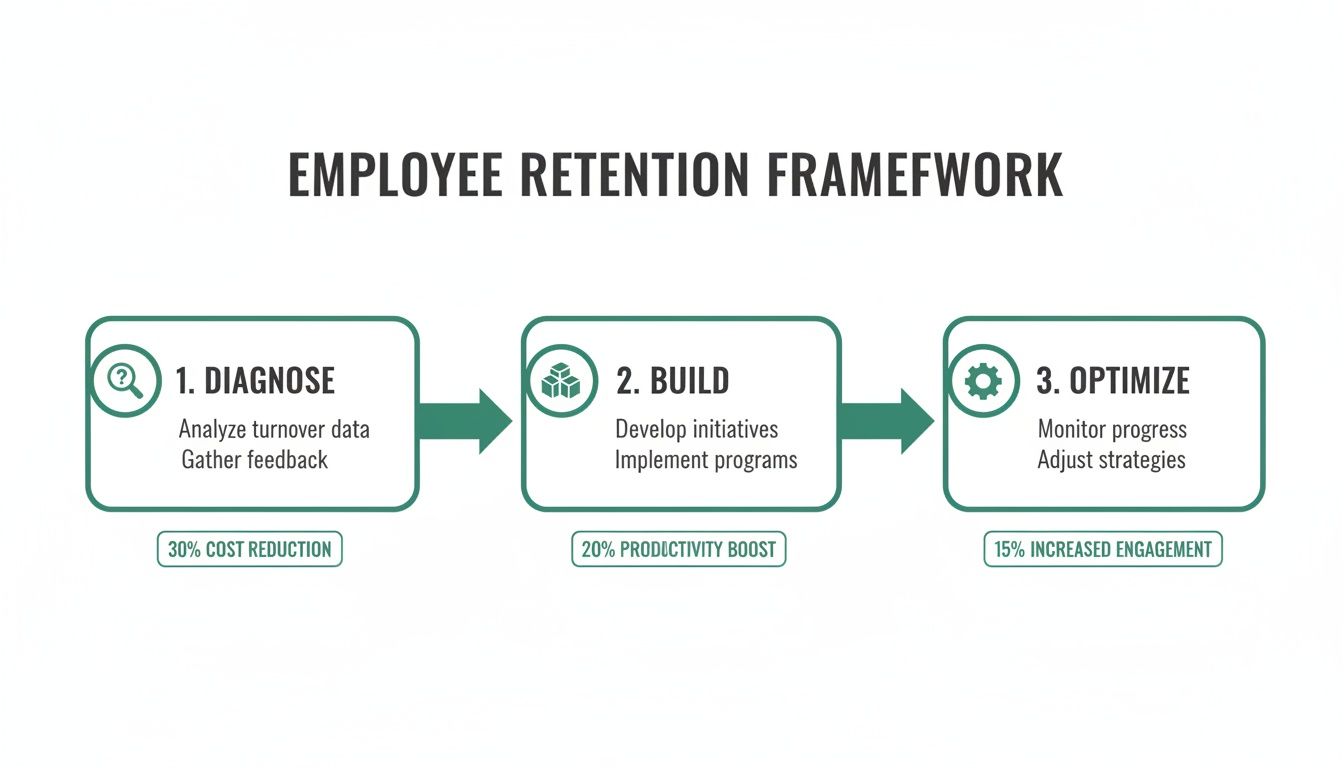
This roadmap simplifies your strategy into three core pillars, proving that you need a structured approach if you want to see long-term success. To really cut down on turnover, you have to stop being reactive. It's time to build a proactive strategy that gets to the heart of why people leave, implements retention tactics that work, and creates a workplace where your team feels valued and can see a future.
To get started, let's break down the key areas you'll need to focus on. These pillars form the foundation of a robust employee retention strategy.
Key Pillars of an Employee Retention Strategy
| Strategy Pillar | Primary Goal | Key Action |
|---|---|---|
| Diagnose | Uncover the true reasons for employee departures. | Conduct insightful exit interviews and pulse surveys. |
| Build | Create a supportive and engaging culture. | Develop career paths and improve manager training. |
| Optimise | Streamline core processes to reduce friction. | Implement fair leave policies and transparent systems. |
By focusing on these three areas, you can move from simply reacting to departures to proactively building an environment where people thrive. This guide will walk you through actionable steps for each pillar.
Find Out Why Your Best People Are Really Leaving
If you want to stop people from leaving, you have to stop guessing why they do. It's easy to blame salary or a flashy offer from a competitor, but that’s often just the surface story. The real reasons are usually deeper, more complex, and sitting right under your nose. The first step is to become a detective inside your own organisation.
Your mission is to get past the generic feedback and uncover the specific moments, frustrations, and broken promises that push your best people out the door. This isn't just about collecting data; it's about finding the stories behind the numbers.
Conduct Meaningful Exit Interviews
The standard exit interview is, frankly, a wasted opportunity. It’s a box-ticking exercise filled with vague questions that get polite, useless answers. You have to reframe the entire conversation to get to the truth. Asking "Why are you leaving?" just invites a safe, rehearsed response like "for a better opportunity."
Instead, ask questions that encourage storytelling. Try these:
- "What was the moment you realised you needed a new challenge?" This helps pinpoint specific triggers.
- "Can you describe a time you felt really energised and engaged here? What about a time you felt the opposite?" This reveals the peaks and valleys of your company culture.
- "If you were in my shoes, what are the first two things you would change?" This is a direct line to honest, constructive feedback.
By focusing on experiences rather than justifications, you'll gather insights you can actually act on.
Use Pulse Surveys to Gauge the Current Mood
Exit interviews tell you why people have already packed their bags. Anonymous pulse surveys can tell you who might be thinking about it. These are just short, frequent check-ins—a few questions sent out monthly or quarterly—that track the mood of your current team in near real-time.
Think of a regular pulse survey as an early warning system. A sudden dip in scores related to manager support or work-life balance can signal a problem brewing long before resignation letters land on your desk.
Keep the questions focused on the big drivers of retention, like:
- Manager Support: "I feel my manager genuinely cares about my wellbeing."
- Career Growth: "I see a clear path for my career development at this company."
- Workload: "My current workload feels manageable and sustainable."
The key is to keep them short and guarantee anonymity. That’s how you get honest answers. Tracking these trends lets you get ahead of issues before they become reasons to leave.
Analyse Turnover Data to Spot the Hidden Trends
Your own HR data is a goldmine, but only if you know how to dig. Don't just look at your overall turnover rate. You need to slice and dice the data to uncover patterns you’d otherwise miss. This is absolutely critical for figuring out where your retention efforts will have the most impact.
Start breaking down your turnover data by:
- Department: Is the marketing team a revolving door while engineering is rock solid? That might point to a problem with leadership or workload in one specific area.
- Manager: A manager with a consistently high turnover rate on their team is a massive red flag. This isn’t a coincidence; it’s a sign that they need immediate intervention and training.
- Tenure: Are you losing most people within their first year? This is a huge indicator that your onboarding is broken or that you're setting unrealistic expectations during the hiring process.
When you combine the personal stories from exit interviews with the hard numbers from surveys and HR data, you finally get the complete picture. You can stop making assumptions and start making informed decisions, putting your energy where it will actually make a difference.
Build a Culture of Growth from Day One
Employee retention isn't something you start thinking about when someone hands in their notice. The real work begins the moment an offer is accepted.
Those first few months are a make-or-break window where new hires decide if they've made the right choice. A disorganised, sink-or-swim introduction is a near-guarantee they'll keep one eye on the job market. To get a handle on turnover, you have to shift your focus from simply processing paperwork to actively integrating people into your company's culture.
This means going way beyond a day-one checklist. You need a thoughtful, structured onboarding experience. A well-designed 90-day plan gives people clarity and purpose, showing them exactly what success looks like in their first three months. It helps them build momentum and confidence right from the start.

A simple but incredibly powerful tactic is pairing new starters with a buddy—a friendly colleague who isn't their direct manager. This gives them a safe person to ask the "silly" questions, like how the coffee machine really works or the unspoken rules of team meetings. It accelerates their sense of belonging and helps them build the social connections vital for long-term commitment. We've got more practical advice in our guide detailing top strategies for effective employee onboarding.
Create Transparent Career Pathways
One of the top reasons people leave a job is feeling stuck. It’s that simple. If your team can't see a future with you, they'll start looking for one somewhere else. Vague promises of "growth opportunities" just don't cut it anymore. You need to show them a tangible path forward.
Creating clear career pathways is about more than just a list of job titles. It means outlining the specific skills, experiences, and performance milestones needed to get from one level to the next.
Think about it like this for a junior marketing role:
- Junior Marketing Executive (Years 1-2): The focus here is on mastering core campaign execution, data analysis, and content creation. A key milestone might be successfully managing a small campaign budget from start to finish.
- Marketing Executive (Years 2-4): At this stage, they should be developing strategic planning skills, mentoring junior colleagues, and taking ownership of a key marketing channel. Leading a cross-departmental project would be a great milestone.
- Senior Marketing Manager (Years 4+): Now it's about driving the overall marketing strategy, managing a team, and demonstrating a significant impact on business revenue.
This level of transparency removes the guesswork. It turns an employee's career from a question mark into a concrete plan they can work towards.
Invest in Meaningful Learning and Development
Showing people they have a future means investing in their skills today. This is a critical piece of the retention puzzle, and frankly, it's an area where many UK companies are falling short.
Data shows that only 59% of UK employees feel they have good opportunities to learn at their company. That's a worrying 12-point gap compared to the global average of 71%.
This gap is actually a huge opportunity for you. When you invest in your team's development, you send a powerful message: we value you as a person and we're committed to your long-term success with us.
Fostering a culture where employees feel valued and see a future is paramount. Consider strategies like ongoing training and professional development, including exploring practical advice on how to upskill employees to align their growth with your business goals.
Meaningful development isn't about ticking a box with a generic online course. It’s about offering a mix of opportunities that cater to different people and their career stages:
- Mentorship Programmes: Connect your seasoned leaders with emerging talent to share wisdom and provide guidance.
- Skill-Specific Workshops: Offer focused training on new software, project management techniques, or leadership skills that people actually need.
- Funded Certifications: Support employees in gaining professional qualifications that are relevant to their role and their future goals.
- Lunch-and-Learns: Create a space for internal knowledge sharing where team members can teach each other new skills over a casual lunch.
When you build a culture where learning is continuous and accessible, you create an environment that attracts and keeps ambitious, growth-minded people. It shows them they don’t need to leave to advance their careers—they can build their future right where they are.
Look Beyond Salary to Improve Work-Life Balance and Wellbeing
While fair pay is the bedrock of any solid retention strategy, it’s rarely the thing that makes your best people stick around for the long haul. Let's be honest, in today's world, people are looking for more than just a paycheque. They want to work for an employer who sees them as a whole person, someone who respects and supports their life outside of office hours.
This is where a real focus on work-life balance and wellbeing can become your secret weapon in reducing turnover.
Of course, conducting regular market reviews to keep your salaries competitive is non-negotiable. It's table stakes. But once you've ticked that box, the real work begins. The organisations winning the war for talent are the ones building a culture where people feel seen, supported, and trusted to do their best work.
And this doesn't have to break the bank. In fact, some of the most powerful initiatives are surprisingly low-cost, centring on flexibility and genuine mental health support.
Introduce Meaningful Flexibility
The demand for flexibility isn't just a passing trend; it's a fundamental shift in how people want to live and work. Offering flexible arrangements isn't just a perk—it's a powerful signal of trust. It tells your team you have confidence in them to manage their own time and deliver results, which builds a deep sense of loyalty and autonomy.
Think about implementing policies that make a tangible difference in someone's daily life:
- Flexible Start and Finish Times: Letting a parent start at 9:30 am so they can do the school run can be far more valuable than a small pay rise. It removes a massive daily stressor and shows you get it.
- Compressed Work Weeks: The option to work four longer days for a three-day weekend is a game-changer for many. It offers a huge boost for rest, hobbies, and personal projects.
- Hybrid Working Models: For roles where it's possible, a well-structured hybrid model offers the best of both worlds—you get the buzz and collaboration of the office, plus the quiet focus time at home.
These options acknowledge that your employees have lives, families, and commitments that don’t always fit neatly into a rigid 9-to-5 box.
A study on workplace flexibility found that a staggering 80% of employees said flexible work options had a positive effect on retention. It's a clear signal that autonomy over one's schedule is a high-value, high-impact benefit.
Prioritise Mental Health and Wellbeing
Burnout is one of the biggest drivers of voluntary turnover, full stop. A workplace that actively supports mental health creates a psychologically safe environment where people feel they can thrive without sacrificing themselves in the process. This has to go beyond just paying lip service to the issue; it means providing real, tangible resources.
Many high-impact wellbeing initiatives can be rolled out without a massive budget. For instance, a subscription to a mindfulness app like Headspace or Calm for all employees is a simple but effective start. Another powerful move is offering access to an Employee Assistance Programme (EAP), which provides confidential, professional counselling for any personal or work-related challenges they might be facing.
You could also organise workshops on topics that matter to your team, like stress management, financial wellness, or practical tips for digital detoxing. These actions send a clear, unambiguous message: we care about you as a person, not just as a cog in the machine. It’s this human-centric approach that builds a resilient, committed, and loyal workforce.
A holistic strategy that combines fair pay with genuine support for work-life balance and mental health is one of the most effective ways to reduce employee turnover. It's how you create a culture where people don't just work for you—they feel like they belong with you.
Fix Your Broken Leave Management Process
A clunky, unfair, or confusing leave process is a silent killer of team morale. It's one of those daily operational headaches that seems small on its own but grinds people down over time. When your team has to chase managers for approvals, argue over popular holiday dates, or feel the system is biased, it breeds resentment. This friction is a major contributor to burnout—a primary driver of turnover.
This isn’t just an admin headache; it's a culture issue. An inefficient leave system sends a clear message: the company doesn't trust its employees or value their time off. It creates unnecessary stress around the very thing designed to prevent it—taking a break. Clashes over who gets the Christmas week off or last-minute rejections because of poor staffing visibility can easily be the final straw for an already disengaged employee.
The good news? Fixing this is one of the most tangible ways to improve your employee experience. By getting this core process right, you show respect for your team's work-life balance and create a fairer, more predictable environment where people feel secure.
From Chaos to Clarity with Modern Tools
Moving away from messy spreadsheets or paper forms is the first, most crucial step. A modern absence management tool like Leavetrack transforms this common pain point into a smooth, transparent, and positive interaction. It brings everything into one place, giving both employees and managers the clarity they need to plan effectively.
The core problem with manual systems is the total lack of shared visibility. A manager might approve a request without realising two other team members are already scheduled to be off, creating a sudden staffing crisis. This leads to frantic reshuffling or, even worse, revoking already-approved leave—a massive blow to employee trust.
A study found that employees who feel their work-life balance is respected are 10% more likely to stay with their company. A seamless, fair leave process is a powerful and direct way to demonstrate that respect.
A dedicated system provides a single source of truth. Everyone can see the team calendar, requests are logged in one place, and approvals follow a consistent workflow. This simple change removes all the ambiguity and empowers everyone to make better decisions.
Here’s an example of a shared team calendar within Leavetrack, which gives managers immediate visibility into staffing levels.

This visual planner instantly prevents overlaps and ensures you always have the right coverage, turning approvals from a guess into an informed decision.
How a Streamlined System Reduces Turnover
Sorting out your leave management process has a direct impact on retention by tackling several key drivers of dissatisfaction head-on. It's not just about efficiency; it's about building a more stable and equitable workplace. If you're new to this, our complete guide to employee leave management systems is a great place to start.
Here’s exactly how a better system helps you keep your best people:
- Ensures Fairness and Transparency: Automated tracking and clear policies applied consistently to everyone eliminate perceptions of favouritism. When the rules are visible and applied equally, it builds trust.
- Reduces Managerial Burden: Managers are often a huge bottleneck. One-click approvals from an email or a Slack notification free them from admin tasks, letting them focus on actually supporting their team. This speed prevents requests from languishing for weeks.
- Prevents Burnout-Inducing Staff Gaps: That shared calendar is your best defence against understaffing. By seeing all planned absences in one view, managers can ensure critical projects are always covered, preventing the remaining team from getting overloaded.
- Empowers Employees with Autonomy: When employees can easily see their remaining leave balance and check the team calendar before making a request, they feel more in control. This autonomy is a huge component of job satisfaction.
By transforming a frustrating process into a frictionless one, you remove a significant source of daily stress and show a real commitment to your team's wellbeing. It's a practical, high-impact change that reinforces the message that you're building a workplace where people can thrive long-term.
Track Your Progress and Refine Your Retention Strategy
Putting new retention initiatives in place is a brilliant first step, but the real work starts when you begin measuring their impact. Tackling turnover isn't a one-off project; it’s an ongoing cycle of trying things, measuring what happens, and tweaking your approach. If you want to show the value of your efforts and make smart decisions, you have to track the right data.
This isn’t about getting bogged down in complicated reports. It's about focusing on a few key performance indicators (KPIs) that tell a clear story. By keeping an eye on these numbers, you can see what’s working, spot areas that still need attention, and prove the return on your investment to the higher-ups.
Identify Your Core Retention Metrics
To get a clear picture of what's happening, start by building a simple dashboard that tracks a handful of essential metrics. This gives you an at-a-glance view of workforce stability and how your team is feeling.
Your focus should be on the numbers that directly reflect how well your retention strategy is performing:
- Overall Turnover Rate: This is your foundational metric. Track it monthly and quarterly to see the big-picture trend and whether your efforts are starting to move the needle.
- New Hire Retention Rate: This one is crucial. Specifically measure how many new starters stay beyond the 90-day and one-year marks. A low rate here is a massive red flag, pointing to problems with your onboarding process or even who you're hiring in the first place.
- Employee Net Promoter Score (eNPS): It's just one simple question ("How likely are you to recommend our company as a place to work?") but it's an incredibly powerful gauge of overall morale and loyalty.
Don't just collect data—visualise it. A simple line graph showing your turnover rate decreasing over six months is far more impactful in a leadership meeting than a spreadsheet of raw numbers.
Create a Continuous Feedback Loop
Data tells you what is happening, but you still need feedback to understand why. Tracking KPIs is only half the battle. The other half is creating a culture where you’re constantly listening to your team and using their insights to fine-tune your approach. This turns your strategy from a static document into a living, responsive system.
For example, if the turnover rate in one department stays stubbornly high despite your new initiatives, it's time to dig deeper. You could use targeted pulse surveys or even just have some informal chats to find out what's really going on. It’s this feedback loop that allows you to adapt quickly. For more in-depth ideas on this, there are some great guides on how to improve employee retention.
Ultimately, your goal is to create a dynamic process. Use your metrics to spot the trends, then gather qualitative feedback to understand the context behind them, and adjust your retention efforts accordingly.
Got Questions About Reducing Turnover? We’ve Got Answers
When you're trying to get a handle on employee turnover, a lot of questions come up. It's a complex issue, so it's natural to have them. Here are some of the most common things I hear from business leaders and HR managers trying to build a solid retention strategy.
What’s a High Employee Turnover Rate in the UK, Anyway?
This really depends on your industry, but if you’re looking for a ballpark figure, the UK average is hovering around a pretty startling 34-35%. A restaurant or retail business will naturally see more churn than a law firm, but a sudden spike or a rate that’s way above your industry’s benchmark is a serious red flag.
As a rule of thumb, if your turnover is consistently creeping over 20%, it's time to dig deeper. At that point, the cost of recruiting, onboarding new people, and the lost productivity are really starting to hit your bottom line and destabilise your teams.
Can Small Businesses Really Afford Competitive Benefits?
Yes, absolutely. You might not be able to go toe-to-toe with a massive corporation on salary, but that's not the only game in town. Smaller businesses can, and often do, win on benefits that genuinely improve people's lives.
Often, these perks are more valuable to an employee than a small pay bump. Focus on the things that make a real difference:
- Genuine Flexibility: This could be flexible start and finish times, a compressed four-day week, or a few remote work days a month. It costs you very little but gives your team a huge amount of control over their lives.
- A Bit More Time Off: Offering even a few extra days of paid leave on top of the statutory minimum sends a powerful message that you care about their rest and wellbeing.
- A Genuinely Good Culture: You can't put a price on this. Building an environment where people feel trusted, recognised, and psychologically safe is one of the most powerful retention tools you have, and it doesn't cost a penny.
How Long Until We See Results from Our Retention Strategy?
This is where you need a bit of patience. Different actions get you results on different timelines. You’ll probably see some quick wins. For example, if you sort out your clunky, unfair leave approval system or just get managers to communicate more clearly, you can boost team morale in a matter of weeks.
For the bigger, more foundational changes—like rolling out proper career development paths or completely rethinking your onboarding process—you're looking at 6 to 12 months before you see a real, measurable drop in your overall turnover rate.
The trick is to track the leading indicators, not just the final turnover number. Keep an eye on employee engagement scores from pulse surveys and listen to the general chatter. These things almost always start improving long before the headline turnover figure shifts, telling you that you’re definitely on the right track.
Ready to fix the hidden frustrations driving your best people away? Leavetrack transforms your leave management from a source of stress into a seamless, fair, and transparent process that builds trust and prevents burnout. Discover how Leavetrack can help you retain your top talent.