
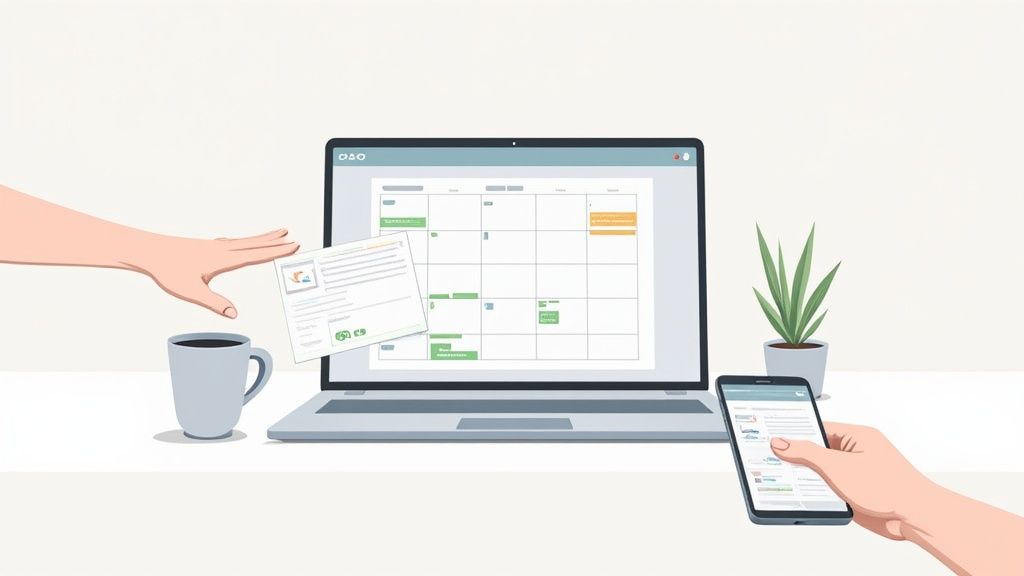
Master Annual Leave Requests That Get Approved
Posted by Robin on 19 Nov, 2025 in
When your schedule’s packed and you need to lock in some time off, a quick annual leave request does the heavy lifting. It’s a concise note that confirms your chosen dates, outlines handover arrangements and reminds everyone of your legal holiday entitlement.
First, skim your company policy alongside your statutory rights to make sure you’re covered. Then, pinpoint the best window for your break and map out who’ll handle your tasks while you’re away.
Quick Annual Leave Request Overview

- Confirm Statutory Entitlement against your company’s leave policy
- Detail Key Handover Tasks so colleagues know exactly what’s expected
- Draft a Polite Request listing dates, brief context and a thank-you
- Select the Right Channel – email, HR portal or team chat
A clear, considerate leave request sets the tone for a swift approval and keeps your team in the loop.
In the UK, everyone is entitled to 5.6 weeks of paid annual leave (that’s 28 days on a five-day week, usually including bank holidays). Many employers go further, offering over 30 days once public holidays are added. For the full research, see The State of Annual Leave Statistics for 2024-2025.
Key Steps At A Glance
Here’s a quick-reference summary to guide your request:
| Action | Purpose |
|---|---|
| Check Entitlement | Confirm leave rights |
| Pick Dates | Align with team calendar |
| Send Request | Submit via chosen channel |
| Review | Secure approval |
Use this table as your go-to checklist. Tick off each step and you’ll pave the way for a hassle-free leave approval.
Understanding Entitlements and Company Policy
Before you draft an annual leave request, you need to know exactly how much time off you’re entitled to in the UK. Your employer’s holiday policy clarifies whether bank holidays count towards your total and if you can carry unused leave into the next year.
Key Policy Variables
- Bank holiday inclusion often differs by industry
- Carry-over limits typically cap how many days you can rollover
- Notice periods and blackout windows can restrict your preferred dates
Even small policy details like these can affect when you book time off.
Industry Trends and Resources
In 2023, the average UK employee took 33.9 days of annual leave (including bank holidays)—a 12% drop since 2020. For an in-depth look at how different sectors compare, read the industry leave trends report and explore our guide on annual leave entitlement in the UK for a complete breakdown of your rights.
Timing Your Request
Once you’re crystal clear on your entitlements, scan team calendars for blackout dates, peak workloads and project deadlines. Aligning your leave plan with these dates boosts your approval chances and minimises disruption.
When you know your leave entitlements inside out, requests sail through and everyone stays on the same page.
Being confident about your policy shows respect for your team’s time and builds trust, turning a simple holiday request into a well-oiled process.
Drafting The Perfect Annual Leave Request

Kicking off your leave request with a warm, personalised greeting sets the stage. It demonstrates respect and makes your intention clear from the very first line.
Next, be crystal clear about the dates you need off and the total duration. Then, sketch out a simple handover plan so your team knows exactly who’s covering which tasks. This kind of foresight reassures everyone that projects stay on track.
- Friendly Opening that mirrors your usual tone
- Exact Dates and precise duration
- Clear Handover Plan assigning responsibilities
A concise, respectful leave request significantly boosts your chances of approval.
Real World Email Example
Try matching the style your manager prefers. If they’re chatty, keep it conversational; if they lean formal, use a concise, professional tone.
For more layout tips and sample wording, head over to our guide on Mastering the Requesting Annual Leave Email. You’ll find email templates that you can adapt in seconds.
It’s also helpful to attach a quick coverage chart or a brief status summary of your key projects. By anticipating questions, you save follow-up back-and-forth and show you’ve thought it through.
Finally, wrap up with a note of gratitude and an open invitation for any questions. Ending on a positive note keeps the dialogue friendly and transparent.
Managing Submission And Approval Process
In my years of juggling leave calendars, I’ve learned that picking the right way to send your request makes all the difference. It can shave days off approval times and cut down on mix-ups.
Choosing The Right Channel
Different teams favour different methods. Here’s what I’ve seen work best:
- Email keeps a clear, timestamped trail in your inbox.
- HR Portal centralises everything and even pings reminders when things slip.
- Face-To-Face Chat resolves questions instantly—and builds rapport.
Choosing The Best Moment
Timing is surprisingly powerful. People’s inboxes overflow on Monday mornings and then again before the weekend. If you can, aim for midweek afternoons when things are a bit calmer.
Keeping Communication Flowing
A quick, friendly nudge goes a long way. Instead of firing off daily “Any news?” messages, I:
- Wait three business days before following up.
- Phrase updates around “Just checking whether you’ve had a chance to look at my request.”
- Keep tone light—no one likes to feel nagged.
I often pair this with business process optimization strategies to streamline approvals even more.
This screenshot shows the Leavetrack submission screen.
Managers can approve or decline with one click, keeping everything transparent and fast.
Always follow up briefly and respectfully after three business days for status updates.
Tips To Maximise Your Leave Planning
Strategic leave planning is all about pairing your annual entitlement with weekends and bank holidays. A handful of days booked thoughtfully can transform a short break into a memorable escape.
For instance, booking 4 days around New Year can stretch into a 9-day retreat.
Similarly, an 8-day block in April can morph into a 16-day Easter holiday.
Align leave with weekends to boost rest and prevent exhaustion.
Leave Planning Examples
Here’s a quick glance at how a few well-placed leave days unlock longer breaks:
| Scenario | Total Days Off | Leave Days Used |
|---|---|---|
| New Year Getaway | 9 | 4 |
| Easter Holiday | 16 | 8 |
These examples show how thoughtful timing can turn minimal leave into extended time off.
With 28 days of standard leave, UK employees can unlock up to 65 days away each year. Learn more about leave stacking on Elle Read the full research.
To make the most of your time off, explore effective time management strategies.
- Stagger team leave evenly to ensure coverage and avoid burnout.
- Rotate leave dates to maintain continuity across projects.
Integrating Leavetrack In Your Annual Leave Routine
When you first connect Leavetrack to your calendar, the difference is noticeable immediately. Syncing both work and personal schedules gives you real time visibility, so you’re never caught off guard when a team member books time off.
Linking calendars also means you can:
- See upcoming holiday clashes at a glance
- Pull quick summary reports on leave history and overall team availability
Seamless Approval Flows
One of my favourite bits is the one-click approval feature. Rather than digging through a tunnel of emails, managers can approve requests right from a clean calendar overlay.

That screenshot captures exactly how intuitive it feels—no more back-and-forth, just swift decisions.
Smart Reminders And Reports
Automatic reminders pop up before key handovers, giving your colleagues enough time to prepare. Plus, Leavetrack can generate detailed reports on:
- Individual leave patterns
- Team coverage gaps
For even smoother booking, Learn how to book leave with ease using our new Chrome extension.
To keep everyone aligned, you can set up daily automatic Slack notifications for new leave entries and approvals. It really cuts down the admin and keeps the whole team in the loop.
FAQ
We’ve all hit those roadblocks when planning annual leave—what notice is needed, how to dodge date clashes, or what happens if part of your request gets declined. This FAQ dives into those questions with straight-talk advice drawn from real workplace scenarios.
Notice Requirements
Companies often expect two to four weeks’ notice for a standard time-off request. Always flick through your employee handbook first to confirm any specific rules.
- Double-check your policy for the exact notice period.
- Sync your planner with Leavetrack to pinpoint busy spells.
- Send your request via your HR portal (or agreed channel) well in advance.
Pro tip: Giving your manager a heads-up about tentative dates—before formal submission—helps them organise cover without surprises.
Resolving Conflicts
Holiday overlaps are common, but spotting them early keeps everyone happy. A little flexibility and transparency go a long way.
- Peek at your team’s shared calendar to flag clashes.
- Offer alternative dates that respect colleagues’ plans.
- Use Leavetrack’s clash-visualisation to map out fair rotations.
A quick chat over coffee often smooths things out—and might just land you your preferred break.
Adjusting Approved Leave
Life changes, and sometimes you need to tweak your dates after approval. As soon as you know, email your manager with the reason and a handover plan, then wait for the go-ahead before booking flights or hotels.
When only part of your leave is granted, celebrate the green-lit days and then work together on new slots for the rest. This shows you’re committed to the team’s needs.
“Flexibility after partial approval signals professionalism and care for the team.”
Follow these tips, and you’ll give your annual leave request the best shot at a smooth approval.
Key Takeaways
- Provide at least two weeks’ notice and verify any policy details.
- Flag overlaps early, propose rotations and keep your manager in the loop.
- Stay adaptable: honour approved dates and collaborate on any declined days.
Ready to simplify your annual leave request process? Give Leavetrack a try for real-time clarity on approvals and team visibility.