
Prioritizing mental health and time off work for UK Managers: A Practical Guide
Posted by Robin on 09 Feb, 2026 in
Having clear guidance around mental health and time off work isn't just a ‘nice-to-have’ for UK businesses anymore; it’s an absolute operational necessity. If you’re not actively addressing mental health-related absences, you’re going to feel the pinch on productivity, team morale, and your bottom line.
The Growing Impact of Mental Health on UK Businesses
Conversations about employee wellbeing have finally moved from the fringes right to the heart of business strategy. The old days of treating mental health as a taboo are gone, and in their place is a stark realisation of its real, tangible effects on the workplace.
Ignoring the warning signs of burnout and stress isn’t just about the risk of losing good people. It creates a culture of presenteeism—where staff are physically at their desks but mentally checked out. Frankly, that slow erosion of focus can be even more damaging than an outright absence.
The financial and operational cost is huge. When an employee takes unexpected time off, the knock-on effect is immediate. Colleagues get lumped with extra work, project deadlines start to slip, and managers waste precious time firefighting instead of pushing forward. Over time, this constant cycle of crisis management leads to wider team burnout, creating a pattern of absence that’s tough to break. If this sounds familiar, you might find some useful advice in our guide on three tips for overcoming burnout in the workplace.
The Numbers Don't Lie
Recent data really brings home just how critical this issue has become for UK employers. Let's look at the hard facts.
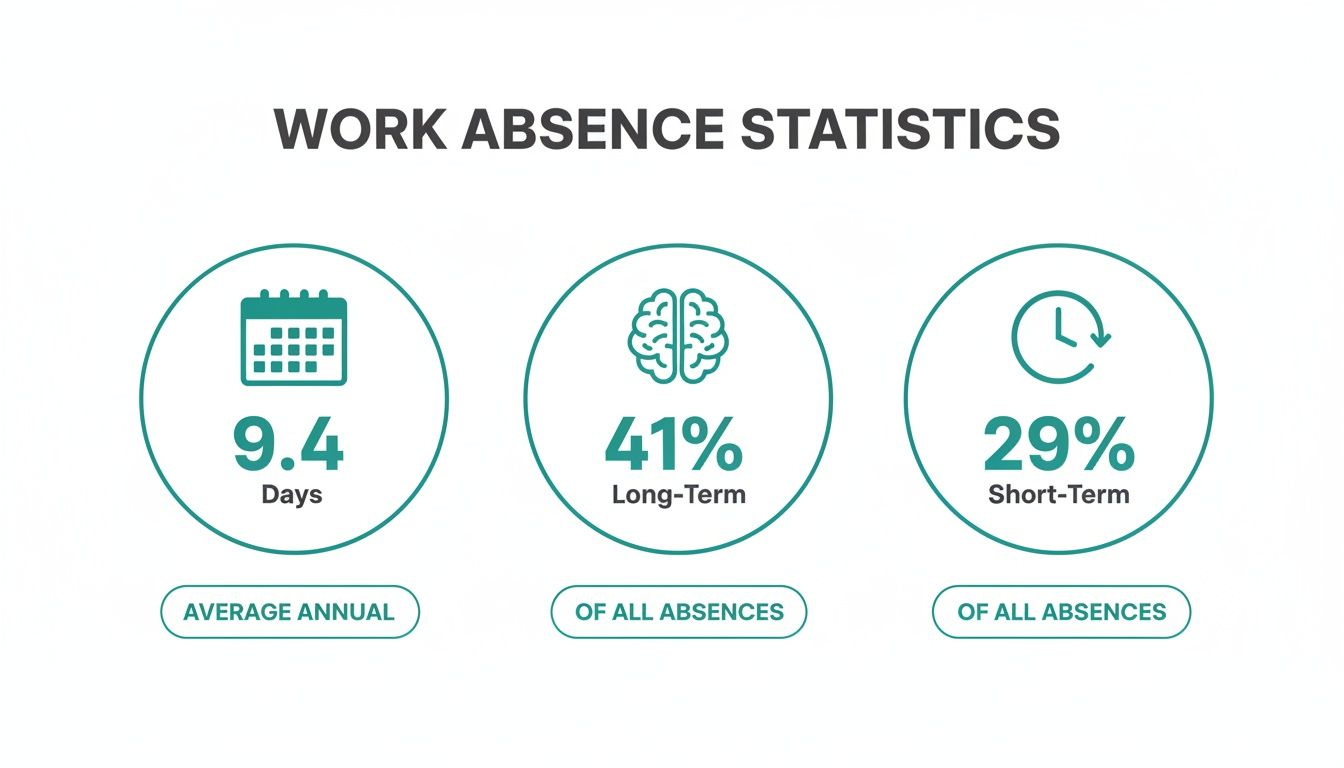
The latest statistics on mental health absences paint a clear picture of the challenge facing businesses.
Key Statistics on Mental Health Absence in the UK
| Statistic | Figure/Percentage | Implication for Your Business |
|---|---|---|
| Average Annual Absence | 9.4 days per employee | Higher operational disruption and potential for increased temporary staffing costs. |
| Primary Driver for Long-Term Absence | 41% of organisations cite mental ill health | Significant impact on project continuity, team stability, and long-term productivity. |
| Second Cause for Short-Term Absence | 29% of organisations cite mental ill health | Frequent, unpredictable gaps in workflow that can strain remaining team members. |
These figures show that mental health isn't a minor issue; it's a primary driver of both short and long-term leave, demanding a much more proactive and supportive approach from leadership.
The Manager's Crucial Role in Employee Wellbeing
While HR is responsible for setting the policy, it’s the line managers who are on the front line, shaping an employee’s day-to-day experience at work. Their actions—or indeed, their inaction—can either dial down workplace stress or crank it right up. This puts them in an absolutely essential role for supporting their team's wellbeing.
A supportive manager who creates a psychologically safe environment can massively reduce the chances of an employee needing to take extended leave for mental health reasons. They are the first line of defence in building a resilient, healthy team.
In fact, research suggests the managers' influence on employee mental health can be profound, highlighting just how much management style matters. Getting this right isn't about ticking a compliance box; it’s about building a sustainable, productive, and compassionate company that people genuinely want to be a part of.
Building a Clear and Compassionate Leave Policy

Ambiguity is the enemy of a supportive workplace. When people don’t know where they stand or what they’re entitled to regarding mental health and time off work, they often suffer in silence until they hit burnout. A well-crafted policy gets rid of the guesswork and gives your team permission to look after their wellbeing.
The goal isn't just to write another document that gathers digital dust. It’s about creating a living framework that genuinely helps your people. That means moving beyond generic statements and defining exactly what support looks like in your organisation.
Think of your policy as a signpost. It should guide managers on how to respond with confidence and reassure employees that their vulnerability will be met with professionalism and care.
Defining What Qualifies
One of the first hurdles is spelling out what counts as a valid reason for taking mental health leave. Unlike a broken arm, the reasons are often invisible, which makes having a clear definition absolutely essential for consistency. You don’t need to list every possible condition, but you should provide broad, inclusive categories.
This simple step helps managers apply the policy fairly and gives employees the confidence to ask for help without feeling like they have to justify a full-blown crisis.
Try framing it around the impact on their ability to work effectively. Good policy language might cover things like:
- Preventative Rest: Time taken to head off burnout or manage escalating stress before it becomes a major problem.
- Mental or Emotional Distress: Leave for conditions like anxiety, depression, or severe stress that are affecting focus and performance.
- Therapy and Appointments: Making it clear that time off for appointments with counsellors, therapists, or other mental health professionals is supported.
- Significant Life Events: Acknowledging that things like bereavement or serious family difficulties have a direct impact on mental wellbeing.
This approach shifts the focus from diagnosing a condition to simply recognising the impact on the person. It empowers your team to take proactive steps, which is far better than waiting until they reach breaking point. For more ideas, you might find our practical guide to taking stress work leave helpful.
Crafting a Confidential Request Process
How an employee requests time off is just as important as why. If the process is complicated or public, people simply won't use it. The key is to make it simple, private, and stigma-free.
No one should have to explain the intimate details of their situation to their entire team—or even their direct manager if they’re not comfortable. The process needs to protect their privacy while giving the business what it needs to manage resources.
The best systems handle a request for mental health time off with the same discretion and efficiency as any other medical leave. It’s about normalising the process, not treating it as some awkward exception.
A confidential process really only needs a few key things:
- A Designated Point of Contact: This is usually someone in HR or a specific senior manager trained to handle sensitive disclosures. Employees must know exactly who to go to.
- Simple Submission: Using an online system like Leavetrack lets an employee submit a request discreetly, without needing an immediate face-to-face conversation.
- Minimal Justification: The request shouldn't demand a detailed medical history. For short-term absences, a simple note like "taking a day for personal health reasons" should be enough, just as it would be for standard sick leave.
This structured approach removes the fear of judgement. It turns the act of asking for help into a straightforward administrative task, not a daunting personal confession.
Integrating Wellbeing Days into Your System
To truly embed this support into your culture, formalising it within your HR systems is the final piece of the puzzle. Calling it something proactive like a "Wellbeing Day" or "Reset Day" can fundamentally change how it’s perceived. It’s a shift from the reactive nature of "sick leave" towards a proactive investment in employee health.
Using a modern absence management system, you can easily create a custom leave type for this. And it’s not just a cosmetic change; the practical benefits are huge.
| Feature | Benefit |
|---|---|
| Custom Leave Type | Clearly labels the time off as proactive wellbeing, reducing stigma and encouraging people to use it. |
| Centralised Tracking | Lets HR monitor trends anonymously, spotting potential team-wide burnout without breaching privacy. |
| Simplified Approvals | Managers can approve requests with a click, making it as routine as a holiday request. |
By building this directly into your workflow, you send a powerful message. It tells your team that you don't just talk about supporting mental health and time off work—you've built the infrastructure to make it a seamless and accepted part of your company's culture.
How to Handle Sensitive Absence Conversations
 When an employee opens up about a mental health concern, that moment is a critical test of your company’s culture. How you, as a manager, respond can either build immense trust or cause irreparable damage. It's a delicate situation that requires a careful blend of empathy, professionalism, and a clear understanding of your role's boundaries.
The golden rule? Listen more than you speak. The employee has likely spent a long time thinking before approaching you. Your immediate priority is to create a safe, supportive space for them to share only what they are comfortable with. This isn't an interrogation; it's about support.
Your response sets the tone for everything that follows. A rushed, dismissive, or overly clinical reaction won't just discourage this individual—it will send a message to anyone else who hears about the experience.
First Response Best Practices
Whether the request for time off comes in person, on a video call, or through an email, your initial reaction is everything. The goal is simple: acknowledge their situation with compassion while keeping the focus on support and logistics, not on a diagnosis. Remember, you’re their manager, not their counsellor.
Always start by thanking them for their trust. Something as simple as, “Thank you for feeling comfortable enough to tell me this,” immediately validates their decision to speak up. It shows you recognise the courage it took.
From there, pivot to practical support. The conversation should be about what they need to get better and how the team can manage in their absence, not the specifics of their health condition.
A manager's primary responsibility is to facilitate support, not provide therapy. The most effective approach is to listen, show empathy, signpost to professional resources, and arrange the necessary time off.
Here are a few phrases that can help guide the conversation in the right direction:
- To show support: "I’m sorry to hear you’re going through a difficult time. The most important thing is for you to focus on your wellbeing."
- To discuss logistics: "Let’s figure out what you need in terms of time off. How can we best support you with your workload while you're away?"
- To maintain privacy: "You don’t need to share any more detail than you’re comfortable with. Our conversation will be kept confidential."
This approach respects their privacy while fulfilling your managerial duty to arrange cover and support their request for mental health and time off work.
What to Avoid Saying at All Costs
Knowing what not to say is just as important as knowing what to say. Certain phrases, even if you mean well, can come across as dismissive, judgemental, or intrusive. Saying the wrong thing by accident can undermine an employee’s confidence and make a tough situation even worse.
Steer clear of any language that minimises their experience or offers unsolicited advice. Your personal opinion on stress management isn't helpful here; what they need is professional guidance.
Here’s a quick list of phrases to strike from your vocabulary:
- Avoid: "I've been stressed before too, you just need to push through it."
- Why: This invalidates their struggle by comparing it to your own.
- Avoid: "Are you sure it's not just burnout? Maybe a long weekend is all you need."
- Why: This questions their own assessment and tries to diagnose the problem.
- Avoid: "Just try to be more positive."
- Why: This is dismissive, simplistic advice for what can be a complex health issue.
- Avoid: "What’s causing the problem?"
- Why: This is overly intrusive and pressures them to disclose private information.
Your focus should remain squarely on professional support. Stick to discussing work-related adjustments and pointing them towards the proper resources.
The Manager’s Role in Signposting
One of the most valuable things you can do as a manager is act as a signpost to professional help. You aren't expected to have all the answers, but you should know who does. This is where your company’s Employee Assistance Programme (EAP) or other wellbeing resources come into play.
After you've acknowledged their request and discussed the time off, the next step is to gently and confidentially offer information about the support available. Frame it as an option, not a command.
For instance, you could say: "While you're taking this time to focus on yourself, I just want to make sure you know about the resources available to you. We have a confidential EAP that offers free counselling, if that’s something you might find helpful. I can send you the details privately so you have them to hand."
This approach empowers the employee to seek help on their own terms, respecting their autonomy and privacy. It reinforces that the company is invested in their wellbeing beyond just approving their absence, turning a difficult conversation into a genuinely supportive interaction.
Managing a Supportive Return to Work
Getting an employee back to work after a mental health absence is a delicate moment. Get it right, and you reinforce that you're a supportive employer who genuinely cares. Get it wrong, and you can easily undo all the good that their time off achieved, leaving them feeling isolated and overwhelmed.
The key is to treat their return as a gradual process, not just flipping a switch back to 'on'. This isn't just about getting them back to their desk as fast as possible; it’s about helping them ease back into their role in a way that’s sustainable. This requires proper planning, open communication, and a real commitment to making adjustments.
When someone's been off with a physical illness, the path back is often clearer. With mental health, the challenges are less visible, which means the return needs even more empathy and careful thought. A supportive process shows the employee they're valued as a person, which is fundamental to rebuilding their confidence.
Structuring the Return-to-Work Conversation
That first chat about their return really sets the tone for everything that follows. Keep it informal, private, and focused entirely on them. This is not the time for a performance review or a catch-up on missed deadlines. It’s a supportive check-in to build a plan together.
A simple "How are you feeling about coming back?" is often the best place to start. It’s an open question that lets them guide the conversation and share what's on their mind. Reassure them the team is glad to have them back and that the priority is a smooth, comfortable transition.
In this chat, you'll want to agree on a few practical points:
- Communication Preferences: Ask how they’d prefer to let colleagues know they're back. Some might want you to send a brief team email, while others would rather tell people themselves. Go with what makes them comfortable.
- Initial Priorities: What will their first few days look like? Don't throw them straight into a high-stakes project. Instead, focus on low-pressure tasks that help them get re-acclimatised.
- Check-in Schedule: Agree on a plan for regular, brief check-ins. A few five-minute chats during the first week can be far more effective than one formal, hour-long meeting at the end of it.
Creating a Phased Return Plan
Jumping straight back into a full-time, high-pressure schedule can be a recipe for relapse. A phased return is one of the most powerful and effective adjustments you can offer, giving your employee the space to gradually rebuild their stamina. For a more detailed look at this, check out our guide on how to manage a phased return to work.
A phased return plan needs to be completely bespoke and designed with the employee. It's not about what you think is best; it's about what they feel ready to handle.
A successful return isn't measured by how quickly someone gets back to a full workload. It's measured by how sustainable their return is over the long term, preventing future absences and building resilience.
Here are a few things a phased return could include:
- Reduced Hours: Maybe they start with half-days or work three days a week, gradually increasing back to their contracted hours over a few weeks.
- Modified Duties: You could temporarily remove certain high-stress tasks, like major project deadlines or client-facing meetings, letting them focus on their core, manageable responsibilities first.
- Flexible Location: Offering a hybrid model where they can work from home on certain days can help them manage their energy and avoid the stress of a daily commute.
Planning this collaboratively gives the employee a sense of control over their recovery, which is absolutely vital for rebuilding their confidence. It’s how you turn a policy about mental health and time off work into meaningful, practical action. By managing their return with care, you not only support the individual but also build a more resilient and trusting team.
Staying Compliant with UK Employment Law
Navigating the legal side of mental health at work isn't just an HR box-ticking exercise. It's a core part of protecting your business and, more importantly, genuinely supporting your people. Getting this wrong can land you in serious legal trouble, but understanding your duties means you can act with confidence and compassion.
The UK's legal framework is built to protect employees, so a proactive approach is always your best bet. This isn't just about knowing the rules; it's about weaving them into the fabric of how you manage your team every single day.
The Equality Act 2010 and Disability
One piece of legislation every UK manager absolutely must get to grips with is the Equality Act 2010. Under this Act, a mental health condition can be classified as a disability if it meets a specific test. It has to be a "physical or mental impairment" that has a "substantial and long-term adverse effect" on an employee's ability to carry out normal day-to-day activities.
What does "long-term" mean in practice? Generally, it's a condition that has lasted, or is expected to last, for at least 12 months. This is a vital distinction. A few tough days due to stress won't qualify, but a recurring depressive disorder or a chronic anxiety condition almost certainly will.
When an employee's mental health condition meets this definition, it triggers a legal duty for you, the employer, to make reasonable adjustments.
Reasonable adjustments aren’t about giving someone an unfair advantage; they're about levelling the playing field by removing barriers. The whole point is to ensure an employee with a disability can do their job just as effectively as their colleagues. This is a legal requirement, not a 'nice to have'.
Making these adjustments is a non-negotiable part of managing mental health and time off work compliantly. To get a deeper understanding and ensure your approach is sound, it’s well worth consulting a Guide to Reasonable Adjustments for Mental Health at Work.
Your Duty of Care and Data Protection
Beyond the Equality Act, all employers have a general 'duty of care' to their staff. This simply means you must do everything you reasonably can to protect their health, safety, and wellbeing. This duty covers mental health just as much as it does physical safety. Ignoring clear signs of burnout or failing to tackle workplace stressors could be seen as a breach of this fundamental duty.
And then there's data. Any information an employee shares about their mental health is sensitive stuff—classified as 'special category data' under GDPR—and it requires the highest level of protection.
Here’s what that means in the real world:
- Keep it confidential: This information must be stored securely, with access limited only to those who absolutely need to know, like HR and the direct line manager.
- Have a clear purpose: You can't just collect this data for the sake of it. You need a lawful reason, such as managing sick pay or implementing those reasonable adjustments.
- Be transparent: Your team should know exactly how their health data is being used and stored. This should be clearly laid out in your company's privacy policy.
Navigating the legal requirements can feel complex, but breaking it down into actionable steps makes it much more manageable for line managers on the ground.
Manager's Quick Reference for UK Compliance
Here's a quick-reference table to connect the legal duties with the practical, everyday actions you need to take as a manager.
| Legal Duty (e.g., Equality Act 2010) | What It Means for Mental Health | Actionable Steps for Managers |
|---|---|---|
| Equality Act 2010 | A long-term mental health condition (lasting 12+ months with a substantial impact) can be a disability, requiring support. | - Proactively ask if any adjustments are needed. - Explore flexible hours, workload changes, or a quieter workspace. - Document all agreed adjustments and review them regularly. |
| Health & Safety at Work Act 1974 | You have a 'duty of care' to protect employees from mental harm at work, including stress and burnout. | - Conduct stress risk assessments for roles or teams. - Encourage regular breaks and check in on workloads during 1-to-1s. - Act on feedback from staff about workplace pressures. |
| GDPR & Data Protection Act 2018 | Employee health information is 'special category data' and must be handled with the highest level of confidentiality. | - Never discuss an employee's health with other team members. - Store any notes from conversations securely (e.g., password-protected). - Ensure you only share information with HR or occupational health on a strict need-to-know basis. |
| Employment Rights Act 1996 | Protects employees from being unfairly dismissed. Dismissal related to a mental health absence could be discriminatory. | - Follow your company's absence management and capability procedures to the letter. - Always seek HR advice before considering any formal action. - Keep detailed, objective records of all conversations and support offered before making any decisions about their employment. |
Ultimately, solid documentation is your best friend here. Keeping a confidential record of conversations, agreed adjustments, and return-to-work plans shows you've acted responsibly. It creates a professional paper trail that protects both the employee and the business, ensuring you've fulfilled all your legal obligations.
Putting the Right Tools in Place to Manage Absence
Trying to track staff leave using a patchwork of spreadsheets and email chains is a recipe for headaches. It creates a mountain of admin and, frankly, leaves you with massive blind spots. When you’re dealing with something as sensitive as mental health and time off work, this manual approach isn't just clunky; it's a real risk. It’s nearly impossible to spot trends, make sure everyone's treated fairly, and give managers the information they need to make smart decisions on the fly.
A proper absence management system changes the game completely. You move from chasing paper and reacting to problems to a much more proactive, informed way of working. The right tool acts as a single source of truth, giving you genuine clarity and control over every type of leave, from holidays to those last-minute wellbeing days.
This isn’t about micromanaging your team. It’s about building a system that’s supportive for your people and makes good business sense.
Gaining Instant Clarity and Control
The biggest immediate win you get from a system like Leavetrack is instant visibility. Picture a central team calendar where you can see who’s off, when, and for how long, all in one place. No more cross-referencing spreadsheets or digging through old email threads to figure out who’s actually available.
For managers, this clarity is a lifesaver. Let’s play out a common scenario:
An employee sends a Slack message at 8:30 am asking for a mental health day. Instead of that familiar panic about deadlines, the manager just pulls up the team calendar in their absence system. They can see straight away that while another team member is on holiday, there’s still enough cover for the day's critical tasks. With one click, they approve the request, and the calendar updates for everyone.
This is exactly how simple a one-click approval can be.
The whole thing is seamless, discreet, and takes seconds. It lets the manager show support without kicking off an admin nightmare or putting the team's work in jeopardy.
Spotting Trends and Cutting Out Errors
Beyond just handling individual requests, the right tech helps HR and leadership see the bigger picture. Are requests for mental health days popping up more in one particular department? Is there a spike in absences right before big project deadlines? Trying to spot these patterns manually is a lost cause.
An absence management system takes all that raw data and turns it into something you can actually use. It helps you pinpoint potential burnout hotspots and tackle the root causes of stress before they snowball into bigger, long-term absence problems.
With automated tracking and reporting, you can start to:
- Analyse absence trends by department, role, or even time of year. This gives you solid data to inform your wellbeing initiatives.
- Ensure consistency in how your leave policies are applied across the business, which is absolutely vital for fairness and staying compliant.
- Drastically reduce human error. Manual data entry is prone to mistakes, but automation ensures your leave balances and records are always accurate.
By bringing in the right tools, you’re not just saving time. You're minimising legal risks and building a workplace that’s more resilient, supportive, and organised.
Common Questions from UK Managers
Even with a rock-solid policy in place, managers on the ground will always have practical questions when an employee needs time off for their mental health. Knowing how to navigate these conversations requires a good grasp of your company's procedures and, just as importantly, your legal duties.
Here are some of the most common queries we see and how to handle them.
Can We Ask for a Doctor's Note?
Yes, you can, but the golden rule is consistency. You must treat a mental health absence exactly as you would a physical one.
For any absence that goes beyond seven calendar days, it's standard practice in the UK to ask for a 'fit note' from a GP. Nothing changes here.
For shorter periods, it all comes down to your company’s self-certification policy. The key is to apply the same process whether someone has the flu or is struggling with anxiety. This approach prevents any hint of discrimination and keeps the focus where it should be: on supporting your employee, not demanding proof.
What Are Reasonable Adjustments?
Reasonable adjustments are simply practical changes you make to help an employee with a long-term mental health condition do their job well. The best adjustments are never imposed; they’re worked out together with the employee.
Some common examples might include:
- Flexible start and finish times to avoid a stressful commute.
- A phased return to work after a longer period of absence.
- Temporarily lightening a particularly high-pressure workload.
- Moving someone to a quieter spot in the office if they find it hard to focus.
This isn’t about giving someone special treatment. It’s about removing barriers that get in the way of them performing at their best.
The real goal here is to create an environment where the employee can bring their best work, sustainably. A small, thoughtful adjustment can make a world of difference in preventing future absences and supporting someone's long-term wellbeing.
How Do We Track Absences Confidentially?
Tracking is vital for spotting patterns and understanding the health of your organisation, but confidentiality is non-negotiable. The solution is a secure, central system where access to sensitive information is locked down, usually to just HR and the direct manager.
Instead of a public team calendar showing a "Mental Health Day," use a more general and discreet term like "Medical Leave" or "Wellbeing Day." This lets HR analyse absence data for the business without ever exposing private health information. It perfectly balances the need for data with your duty of care to your people.
Gain full visibility and simplify confidential leave tracking with Leavetrack. See how our secure, centralised system can help you manage all types of absence with clarity and control.