
Stress Leave Workplace: A Manager's Guide to Managing Stress at Work
Posted by Robin on 06 Dec, 2025 in
Stress leave isn't a holiday. It’s a formal, necessary break an employee takes when their job has become so overwhelming that it's making them ill. This is a recognised medical leave, almost always backed by a doctor's fit note, to recover from the psychological toll of work-related stress, anxiety, or burnout.
What Stress Leave Means in the UK Workplace
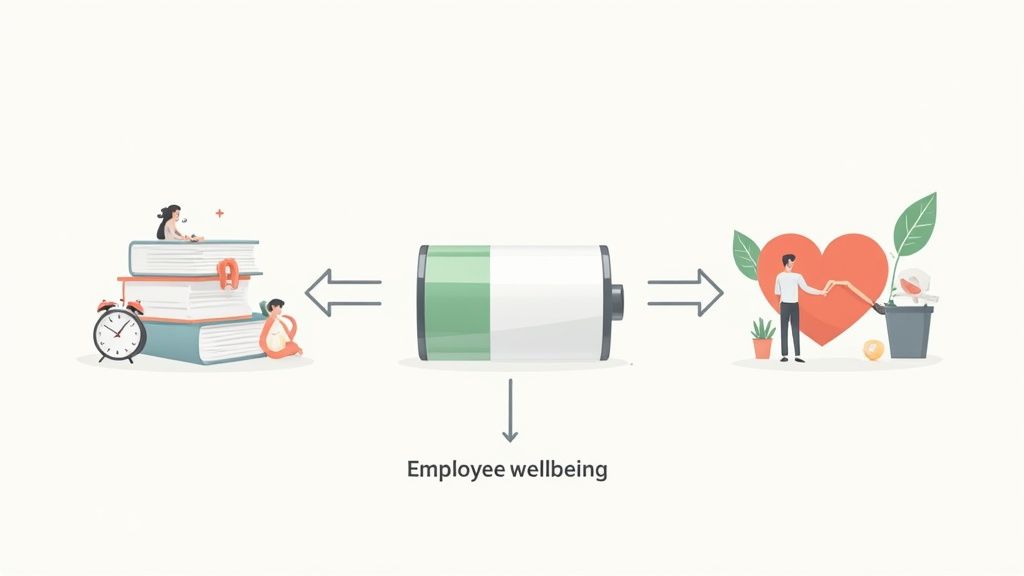
Managing work-related stress is no longer a simple HR checkbox; it's a critical business function. A great way to think about an employee's capacity for pressure is to see it as a battery. Daily tasks, deadlines, and workplace demands drain its power. Rest, support, and a positive environment are what recharge it.
But what happens when the demands are relentless and there’s no time to recharge? That battery doesn't just run low—it shuts down completely.
This shutdown is what we often call burnout, and it’s the point where stress leave becomes essential. It signifies that an employee is medically unfit to do their job because of the immense psychological pressure stemming directly from their professional life.
Understanding the Core Concept
You won't find "stress leave" written into UK law as a specific entitlement like maternity or paternity leave. Instead, it falls under the general umbrella of sickness absence. When a GP signs someone off for "stress," "anxiety," or "work-related stress," it’s handled just like any other medically certified absence.
The crucial difference is where the illness comes from. Unlike catching a cold or breaking a leg outside of work, stress leave points a finger directly at factors within the workplace itself. This puts a unique and serious emphasis on the employer's duty of care. A crucial first step for any manager is understanding mental health awareness and how it applies in a professional setting.
Acknowledging that workplace conditions can directly impact an employee's mental health is the foundation of effective stress management. It shifts the focus from purely individual wellbeing to shared organisational responsibility.
Why It Is a Growing Concern
The pressure to tackle workplace stress is more intense than ever, and it's easy to see why. A few key factors are driving this trend:
- An 'Always-On' Culture: Constant connectivity blurs the lines between work and home, making it incredibly difficult for people to properly switch off and recharge.
- Increased Workloads: Many companies are running leaner teams, which piles more pressure onto individuals to deliver more with less support.
- Economic Uncertainty: Worries about job security and finances outside of work can pour fuel on the fire of day-to-day stress on the job.
This guide will give managers and HR professionals a clear path for handling the complexities of stress-related absences. We’ll break down what counts as work-related stress, explain your legal duties, and show you how to build a supportive framework. Getting this right not only helps your employees recover but also protects your business, ensuring you stay compliant and build a healthier, more resilient culture for everyone.
The True Cost of Unmanaged Workplace Stress
When an employee takes stress leave, it’s easy to see it as just another line item on a spreadsheet: sick pay. But that’s just the tip of the iceberg. The real cost of unmanaged workplace stress is far greater, sending financial and cultural shockwaves right through your organisation.
Ignoring the root causes of stress-related absence is like trying to fix a leaky pipe by only mopping the floor. You’re dealing with the symptom, not the source, and the damage is quietly spreading behind the walls. The financial drain goes well beyond payroll, creating hidden expenses that can cripple productivity and stunt growth.
The Financial Ripple Effect
The most obvious hit is lost productivity. When a team member is off, their work doesn’t just disappear. It either piles up, creating a mountain of a bottleneck for when they return, or it gets dumped on already busy colleagues, stretching them thin and ratcheting up their own stress levels.
This kicks off a cascade of other direct and indirect costs:
- Recruitment Costs: You might need to bring in temporary cover, which means agency fees, onboarding time, and a learning curve that inevitably slows the whole team down.
- Increased Premiums: A high rate of stress-related claims can lead to your company's health and liability insurance premiums getting hiked up.
- Management Time: Managers and HR spend a huge amount of time handling the absence—from paperwork and planning cover to conducting sensitive return-to-work interviews.
The scale of this issue in the UK is staggering. Work-related stress, depression, and anxiety are the main drivers of lost working days. In fact, these issues were responsible for an estimated 17.1 million lost working days in 2024-2025. The total economic damage to UK businesses is estimated to be between £21.6 billion and £28 billion every year from sick leave, healthcare costs, and staff turnover. You can find more details in this analysis of work-related stress in the UK.
The Deeper Damage to Culture and Morale
Forget the balance sheet for a moment; the damage to your company culture can be even more corrosive. When a colleague goes on stress leave, it sends a powerful, unspoken message to everyone else. They see what happens when the pressure becomes too much to bear.
This can breed a climate of fear, where people are afraid to admit they're struggling. Morale plummets as the remaining team members feel overworked, unsupported, and start wondering if they’re next.
Unmanaged stress erodes trust and psychological safety. It transforms a collaborative environment into one where survival becomes the primary focus, stifling creativity, innovation, and genuine teamwork.
Ultimately, this all damages your employer brand. High staff turnover and a reputation for being a high-stress workplace will make it incredibly difficult to attract and keep top talent. Proactively reducing mental health absence in the workplace isn't just an HR initiative; it's a strategic necessity.
Investing in employee wellbeing is a direct investment in your company's long-term stability, resilience, and success. It's not an expense—it's the cost of doing business well.
Navigating Your Legal Duties as an Employer
When an employee needs time off for stress, it’s easy to feel like you’re stepping into a legal minefield. But understanding your obligations is the first step to managing the situation correctly. It’s not just about ticking boxes for company policy; UK employment law sets out clear duties designed to protect your team’s wellbeing. Getting this right helps you act confidently and create a genuinely supportive workplace.
At the core of it all is your 'duty of care'. Think of it as more than just providing hard hats on a building site. The Health and Safety at Work Act 1974 is clear that this duty extends to an employee's psychological health, too. In simple terms, the law requires you to ensure, as far as is reasonably practical, the health, safety, and welfare of all your employees at work.
This means you can't turn a blind eye to the causes of workplace stress. If you know that things like an unmanageable workload, a lack of support, or bullying are making someone ill, you have a legal obligation to step in and address them. Ignoring these problems isn't just bad for morale; it opens your business up to serious legal risk.
The Equality Act 2010 and Reasonable Adjustments
Things get even more specific when we look at the Equality Act 2010. While stress on its own isn't automatically classed as a disability, a long-term mental health condition that develops from it often is. If an employee's condition has a 'substantial and long-term adverse effect' on their ability to carry out normal day-to-day activities, they’re likely protected by the Act.
Once that threshold is met, your duty of care evolves. You are now legally required to make 'reasonable adjustments'. The goal here is to remove any barriers that put the employee at a disadvantage compared to their colleagues. It’s all about supporting their recovery and helping them stay in or return to work, potentially preventing a stress leave workplace absence from happening at all.
"A reasonable adjustment is a change to a provision, criterion or practice, or a physical feature of a workplace, to ensure a disabled person is not put at a substantial disadvantage. It’s a positive and practical duty that is fundamental to disability equality."
This isn’t about giving someone special treatment; it's about levelling the playing field so they can do their job. And the scale of this issue is huge. According to the Health and Safety Executive (HSE), workers in Great Britain lost a staggering 22.1 million working days in the last reporting year due to stress, depression, or anxiety. It's now the number one cause of work-related ill health. You can read more on the HSE's findings on days lost to ill health.
Practical Examples of Reasonable Adjustments
So, what does a 'reasonable adjustment' actually look like? The good news is they don't have to be expensive or complicated. Often, it's the small, thoughtful changes that have the biggest impact.
Here are a few common examples:
- Modifying Work Hours: This could be a phased return where someone gradually increases their hours, or simply allowing flexible start and finish times to miss the stress of rush-hour travel.
- Altering Duties: You might temporarily reassign a few high-pressure tasks to other team members, giving the employee some breathing room to focus on their core responsibilities.
- Changing the Work Environment: It could be as simple as moving someone to a quieter desk to help with concentration or encouraging them to take more regular short breaks away from their screen.
- Providing Support: This could involve offering access to an Employee Assistance Programme (EAP) for confidential counselling or ensuring they have more frequent, informal check-ins with their line manager.
The most important thing is to have an open, honest conversation with the employee about what would actually help them. Every person's situation is different, so a one-size-fits-all approach is doomed to fail. By understanding your legal duties and applying them with a dose of common sense and compassion, you not only protect your employee but your entire organisation.
Your Step-By-Step Process for Managing Stress Leave
When an employee tells you they need to take time off for stress, how you handle those first few moments is crucial. It sets the tone for everything that follows. Having a clear, practical process in place ensures you're not just being compliant and consistent, but also compassionate. This workflow will walk you through everything, from that initial conversation right through to getting them back to work successfully.
Handling a request for stress leave is a real skill. It demands a delicate balance of empathy, clear communication, and sticking to fair procedures. The aim is simple: support your employee's recovery while protecting the business's operational needs. Get it right, and it's a positive outcome for everyone.
The journey can be broken down into three core phases: disclosure, support, and return.
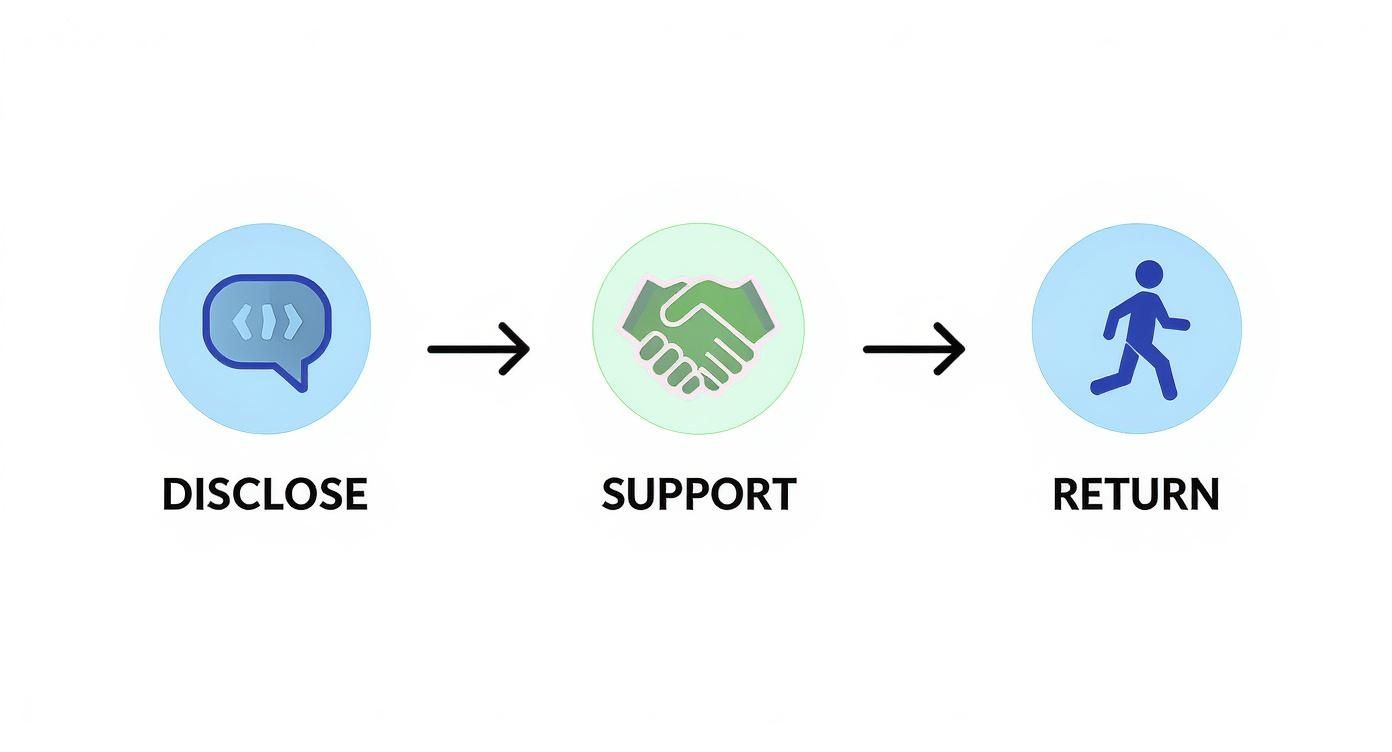
As you can see, this isn't a one-and-done task. It's a continuous flow, starting with a sensitive disclosure, moving into providing consistent support during their absence, and finally, planning a structured and sustainable return.
Step 1: Initial Disclosure and Empathetic Response
The whole process kicks off the moment an employee lets you know they're struggling. This conversation must be private, and your main job is to listen, not to jump in with solutions. Thank them for having the courage to speak up and immediately reassure them that their wellbeing is the top priority.
Avoid probing for specific medical details. Instead, keep the focus on the practical side of things, like when their leave might start and who the right person in HR is for them to talk to about the formal process. That initial empathetic response builds a foundation of psychological safety that is absolutely vital.
Step 2: Handling Medical Evidence and Documentation
Once the employee is officially on leave, you'll likely receive a fit note from their GP. This document is the cornerstone for managing their absence. It will confirm they aren't fit for work and might give a high-level reason like "work-related stress" or "anxiety."
- Confidentiality is Key: All medical information must be stored securely, with access strictly limited to essential HR staff and the employee's direct line manager. No exceptions.
- Log the Absence: Get the absence recorded in your management system straight away. A tool like Leavetrack centralises this, creating a secure, accessible record for authorised managers and taking the guesswork out of it.
- Understand the Fit Note: Read the note carefully. Pay attention to the recommended duration of absence and look out for any suggestions the GP has made for workplace adjustments when the employee is ready to return.
If the stress was triggered by a specific event at work, a structured approach like critical incident stress debriefing can be a powerful tool, helping to minimise the long-term impact on the entire team.
Responding promptly and compassionately to an employee's initial disclosure is the most critical step. It establishes a foundation of trust that will support a smoother recovery and return-to-work process.
Step 3: Maintaining Contact During the Absence
Staying in touch with an employee on stress leave is a fine art. The goal is to show support and keep them connected to the workplace, not to pressure them about when they're coming back. Before their leave even starts, agree on a communication plan. Ask them how often they'd like to be contacted and how they'd prefer it—a weekly email, a fortnightly phone call?
These check-ins should be about their wellbeing, not about work. Let them know they are a valued team member and that you're there for them. Sharing some positive team news can help them feel less isolated, but be careful to avoid anything that could pile on more stress. As they get closer to the end of their certified leave, you can then start to gently discuss the next steps.
Step 4: Planning a Phased Return to Work
A successful return to work is rarely like flicking a switch. A phased return is almost always the best approach, giving the employee a chance to ease back into their role and responsibilities gradually. This plan needs to be built with the employee, not just for them, and should take into account any medical advice on their fit note.
A solid phased return plan often includes:
- Reduced Hours: Starting with shorter days or fewer days per week.
- Modified Duties: Temporarily reassigning high-pressure tasks to other colleagues.
- Regular Check-ins: Scheduling frequent, informal chats to see how things are going and to make any necessary adjustments.
This is also the perfect time to think about longer-term strategies to prevent a recurrence. For a deeper look at this, our article on three tips for overcoming burnout in the workplace has some great advice. By following these steps, you create a supportive, structured pathway that helps your employees come back to work confidently and sustainably. And that’s a win for everyone.
Supporting Younger Workers Through Workplace Stress
We’re seeing a clear trend emerge in the modern workplace: younger employees are reporting far higher levels of stress than any other generation. This isn't a sign of weakness; it’s a signal that the pressures facing Gen Z and Millennial team members are unique and demand a different approach from leadership. Bridging this generational divide is absolutely key to building a resilient, inclusive team where everyone feels understood and supported.
For many younger workers, the line between work and life has become almost completely blurred. The 'always-on' culture, constantly fuelled by digital connectivity, means the pressure to be available doesn't stop when they leave the office. This digital presenteeism, combined with broader financial anxieties and sky-high expectations for career progression, creates a potent mix for stress and burnout.
Traditional, top-down management styles often miss the mark with these generations. They expect more than just a manager; they're looking for mentors who are genuinely invested in their growth, offer regular and constructive feedback, and build a culture of open, honest communication.
Understanding the Generational Divide
Recent data paints a stark picture of the generational split when it comes to mental health at work. The Burnout Report 2025 found that 35% of UK workers aged 18-24 took time off due to poor mental health caused by stress. For the 25-34 age group, that figure jumped from 23% to 29% in just one year, while instances of stress leave workplace absences actually went down among older workers.
Worryingly, a large number of these younger employees admitted they wouldn't feel comfortable speaking to their line manager about their stress. You can dive deeper into these findings in the full report on burnout and workplace stress.
This reluctance to speak up points to a critical need for psychological safety. Younger workers need to feel confident that showing vulnerability won't be held against them and that raising concerns about their workload or wellbeing will be met with support, not judgement.
"For younger generations, a supportive workplace culture is not a 'nice-to-have'; it is a fundamental expectation. They see their mental health as intrinsically linked to their job satisfaction and performance, and they expect their employers to see it that way too."
Targeted Strategies for Effective Support
To genuinely support your younger team members, you need to adapt your approach. Generic wellness initiatives, like a fruit bowl or a yoga app subscription, just won't cut it. Instead, you need to focus on creating a supportive ecosystem built on trust, flexibility, and genuine care.
Here are some targeted strategies that really resonate with the needs of Millennial and Gen Z employees:
- Promote Psychological Safety: Actively create spaces for open conversations about workload and mental health. This means training managers to respond with empathy and to normalise discussions around stress, making it a regular part of your check-ins.
- Offer Mentorship and Coaching: Pair younger employees with experienced colleagues who can provide guidance, act as a sounding board, and help them navigate tricky career challenges. This is about guidance, not just management.
- Implement Flexible Support Systems: Recognise that a one-size-fits-all approach is doomed to fail. Offer flexibility in working hours or locations where possible, and clearly define boundaries around out-of-hours communication to protect personal time.
- Provide Clear Career Pathways: Show them what their future at the company could look like. Regular, honest development conversations help manage expectations and reduce the anxiety that comes from feeling like you're stagnating.
By putting these strategies into practice, you can create an environment where younger workers don't just survive but actually thrive, feeling secure enough to do their best work without it costing them their wellbeing.
Streamlining Absence Management with Modern Tools
Trying to manage stress leave effectively with a spreadsheet is a bit like using a paper map in the age of GPS. Sure, it might get you there eventually, but it's inefficient, full of potential wrong turns, and gives you zero real-time intelligence about what’s actually happening on the ground.
Relying on manual systems like spreadsheets isn't just an admin headache; it's a genuine risk. Sensitive information, like fit notes detailing a stress leave workplace absence, can easily be stored insecurely or accidentally shared. This not only breaches confidentiality but makes it almost impossible to spot worrying wellbeing trends until they become full-blown crises. You end up in a constant state of reaction when you should be proactive.
From Manual Errors to Automated Insight
This is where a dedicated absence management platform completely changes the game. It turns a risky, time-consuming task into a strategic HR function. By bringing all your leave data into one secure, central hub, you create a single source of truth that only the right people can access.
Instead of hunting through old emails and messy folders, HR and line managers can get straight to what matters:
- Securely Store Documents: Fit notes and other medical correspondence can be uploaded directly to a confidential employee profile. No more unsecured files floating around.
- Automate Tracking: Absences are logged instantly, keeping records accurate and up-to-date without anyone needing to touch a spreadsheet.
- Maintain Clear Communication Logs: Every point of contact with an employee during their leave can be logged securely, ensuring a consistent and supportive approach from everyone involved.
For a deeper look into how this technology supports compliance, our guide on how absence management software can help streamline UK compliance today is a great place to start.
The real magic, though, is in the high-level, anonymised data these tools provide. Leadership gets to see the bigger picture without ever compromising an individual's privacy.
This dashboard gives you an idea of how a system like Leavetrack visualises absence data and team availability at a glance.

This kind of overview helps you spot patterns immediately. Is one department showing a much higher rate of stress-related absence? Now you have the insight to ask the right questions and make informed decisions that genuinely improve workplace health. It's about moving away from just fixing problems to proactively supporting your entire team.
Your Top Questions About Stress Leave, Answered
When you're dealing with a stress leave workplace situation, a lot of practical questions can pop up. Even with a great policy on paper, managers and HR teams often run into specific scenarios that need a clear, straightforward answer. This section cuts through the noise and tackles the most common questions we hear.
Think of this as your quick reference guide for handling those tricky "what if" moments. Getting the details right isn't just about being compliant; it's about building a supportive culture where your team feels understood and treated fairly.
Is Stress Leave Paid in the UK?
This is usually the first question on everyone's mind. The short answer is yes. Employees on stress leave are entitled to Statutory Sick Pay (SSP), as long as they meet the usual eligibility rules. That's the legal baseline you have to meet.
However, lots of companies offer a better contractual sick pay scheme as part of their benefits package. You absolutely must check the employee’s contract and your own sickness absence policy to know what your specific obligations are. A clear policy, applied consistently, stops any confusion and makes sure everyone is treated the same.
Can You Dismiss an Employee on Long-Term Stress Leave?
Dismissing someone on long-term stress leave is a minefield and comes with major legal risks. While it's technically possible, it should always be the absolute last resort.
Before you could even think about dismissal, you must follow a fair and detailed capability process. This means proving you’ve tried every possible way to support the employee, including:
- Making all reasonable adjustments to their job.
- Looking at alternative roles they could do within the company.
- Getting up-to-date medical reports to understand their long-term prognosis.
And here's the critical part: if the employee's condition is considered a disability under the Equality Act 2010, firing them could be classed as discrimination. You should always seek legal advice before taking any action in these situations to protect the business.
The golden rule is to support, not dismiss. Your focus has to be on helping the employee recover and return to work if at all possible. That’s how you fulfil your duty of care.
What Is the Difference Between Stress and Burnout?
People often use these terms interchangeably, but stress and burnout are two different things that need different kinds of support. Knowing the difference is crucial for providing the right help.
Stress is usually about over-engagement. You might see an employee who seems frantic, hyperactive, and emotionally wound up. They're clearly struggling but are still trying to push through it all.
Burnout, on the other hand, is a state of disengagement. It's what happens after long-term, unmanaged stress takes its toll. It’s defined by emotional exhaustion, cynicism, and a sense of hopelessness. An employee suffering from burnout has often pushed past the point of stress and feels like they have nothing left to give.
How Should I Communicate with an Employee on Stress Leave?
Communicating with someone on stress leave has to be done carefully and with real sensitivity. The aim is to be supportive, not to pile on more pressure. Before the leave starts, agree with the employee how and when they’d like to be contacted. A quick email once a week might be perfect for one person, while another might prefer a phone call every couple of weeks.
These catch-ups should be about their wellbeing, not about work deadlines or asking when they’ll be back. A simple, "Just checking in to see how you are and to let you know we're thinking of you," can make a world of difference. The key is to keep them in the loop without adding to their stress.
Managing absences, especially sensitive ones like stress leave, needs a system that is both solid and respectful of privacy. Leavetrack takes the place of messy spreadsheets, offering a secure, central platform that keeps all records accurate, confidential, and easy for authorised managers to access. See how Leavetrack can bring clarity and consistency to your absence management.