

What Is Gardening Leave A UK Guide for HR Managers
Posted by Robin on 30 Jan, 2026 in
Ever heard of gardening leave? It’s a practice, mainly in the UK, where an employee leaving their job gets paid to stay at home for their entire notice period.
Instead of working through their final weeks or months, they’re effectively "benched." The main reason? To stop them from walking out the door with a head full of sensitive company secrets and straight into the arms of a competitor. It’s a seriously strategic move for employers looking to protect their business.
Understanding What Gardening Leave Really Means
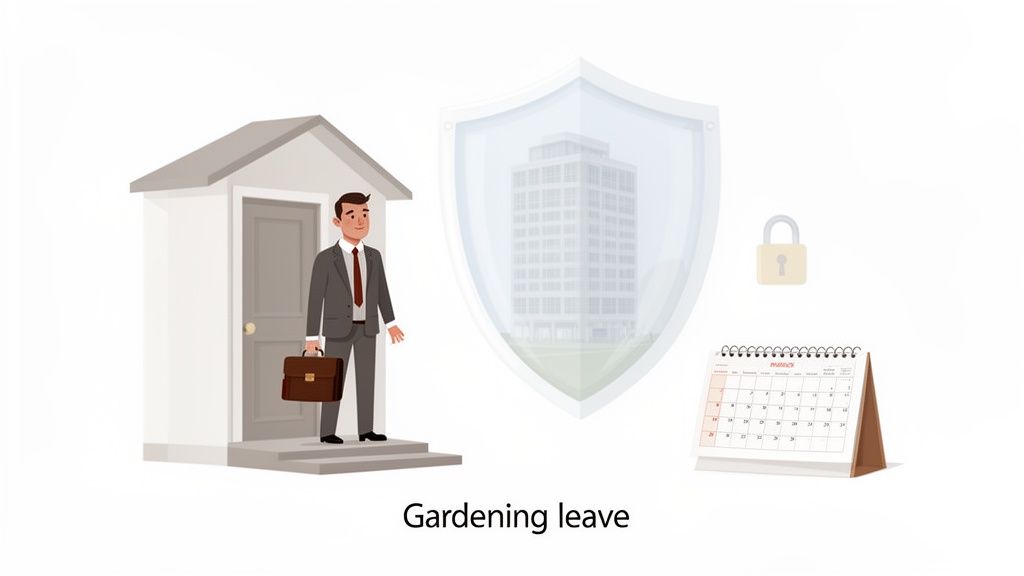
It’s best to think of gardening leave not as a paid holiday, but as a tactical "cooling-off" period.
Picture this: a key employee resigns, and they’re heading to a direct rival. That person is sitting on a goldmine of valuable, up-to-the-minute information. We're talking confidential client lists, upcoming product launches, or sensitive financial data.
Letting them work their notice period in the office is a huge risk. They could absorb even more strategic information—consciously or not—that could seriously damage your competitive edge once they leave. Gardening leave acts as a protective shield, cutting them off from the flow of new intel while their existing knowledge slowly becomes less current.
The Strategic Value for Your Business
Putting an employee on gardening leave isn't a punishment; it's a proactive, defensive play.
Imagine your star sales director at a mid-sized UK firm hands in their notice to join your biggest competitor. Placing them on gardening leave for their full three-month notice period (while continuing their pay, of course) immediately sidelines them from client contact and internal strategy meetings. It's a strategic shield for your business secrets, not just a polite way to say goodbye. You can dig deeper into how HR professionals use this tool by checking out this article from People Management.
To help clarify, here’s a quick summary of what gardening leave is all about.
Gardening Leave at a Glance: Key Features and Objectives
| Feature | Description |
|---|---|
| Paid Notice Period | The employee receives their full salary and contractual benefits but does not perform any work. |
| Restricted Access | Access to the office, company systems, emails, and confidential information is immediately revoked. |
| No Competitor Contact | The employee is typically barred from contacting clients, suppliers, or colleagues during this period. |
| Still an Employee | They remain officially employed, bound by all contractual duties of confidentiality and fidelity. |
| Strategic Timing | The period is designed to make their knowledge of the company’s current strategy and data less relevant. |
| Prevents Poaching | It creates a buffer that stops them from immediately trying to lure clients or colleagues to their new job. |
Ultimately, this table shows how gardening leave is a structured way to manage a high-risk departure.
At its core, gardening leave is an investment in business continuity. The cost of an employee's salary during this time is often a drop in the ocean compared to the potential damage from a data breach or losing a major client.
Essentially, you're creating a buffer zone. This period ensures the departing employee's influence and access fade away, giving your business the crucial time it needs to stabilise client relationships and secure its competitive position before they start their new role. It transforms a potentially messy exit into a controlled and manageable transition.
The Legal Foundations for Gardening Leave in the UK
Unlike statutory rights like sick pay or holiday leave, gardening leave isn't something an employer in the UK can just decide to use. You can’t simply tell an employee to stay at home during their notice period unless you have a clear, pre-existing legal basis to do so. That right has to be explicitly written into their employment contract.
If you don't have a specific clause, forcing an employee to stay at home could backfire spectacularly. It can be seen as a breach of contract on your part. After all, employees have a right to work, and denying them this without their agreement could lead to serious legal challenges, including claims of constructive dismissal.
This is why the employment contract is the absolute bedrock of any enforceable gardening leave strategy. A well-drafted clause gives you the authority you need and sets clear expectations for everyone, turning a potentially messy situation into a structured, legally sound process.
Crafting an Enforceable Clause
For a gardening leave clause to hold up under scrutiny, it needs to be carefully constructed. It’s not enough to just throw the words "gardening leave" into a contract; you need to spell out exactly what that period involves. UK courts have been very clear about this – ambiguity is your enemy.
A solid clause will state that the employer reserves the right, at its discretion, to require the employee to serve their notice period (or part of it) away from the office. It must also detail the specific restrictions that will apply during this time.
These restrictions are what protect your business interests, and they typically include:
- No contact with clients or suppliers: This stops the departing employee from poaching key relationships on their way out.
- No contact with colleagues: This helps minimise disruption and prevents attempts to lure other team members away.
- Revocation of access: This makes it clear that access to company property, IT systems, and devices will be cut off.
- Continued obligations: This reinforces that the employee is still bound by all their contractual duties, like confidentiality and loyalty.
Getting this level of detail into the contract means there's no room for misunderstanding when the time comes.
The key takeaway here is that an employer has no automatic right to simply withdraw an employee's duties. As legal analysis often points out, UK courts have consistently ruled that this requires clear contractual terms. Without them, it's the employer who is in breach. You can get more details on this legal perspective by reading this guide to gardening leave in the UK from Moonworkers.
The Crucial Test of Reasonableness
Even with a perfectly written clause, you’re not entirely in the clear. If challenged, UK courts will apply a "reasonableness" test. This means an employer must show they have a legitimate business interest to protect by putting the employee on gardening leave.
For example, stopping a senior director from taking a year's worth of strategic plans straight to a major competitor is a pretty clear legitimate interest. On the flip side, putting a junior team member with no access to sensitive information on a six-month gardening leave would almost certainly be seen as unreasonable and punitive.
The duration of the leave is a massive factor here. The courts will look closely at whether the length of the gardening leave is proportionate to the risk. For a senior employee, a three to six-month period is often seen as reasonable. Trying to enforce a 12-month period, however, would be much harder to justify unless there were truly exceptional circumstances. The goal is protection, not punishment, and the length of the leave has to reflect that.
It's also worth remembering how different types of leave can overlap. For instance, you'll need to correctly handle the employee's holiday entitlement when leaving a job during this period.
Employee Rights and Employer Duties During The Leave Period
Placing an employee on gardening leave doesn't sever the employment relationship—it just changes the scenery. They might be out of the office, but a clear set of mutual obligations remains firmly in place, governed by their employment contract. Getting to grips with the rights and duties for both sides is the key to a smooth, legally sound transition.
Think of it like a footballer being 'benched' but still part of the team. They aren't on holiday, and they certainly aren't unemployed. They're in a holding pattern, fully employed and bound by every term in their contract until their official leaving date.
The Employee's Continuing Obligations
Even though they’re working from their sofa (or, more likely, not working at all), an employee's contractual duties don't just vanish. Their main job is to stay available in the unlikely event you need them, but more importantly, they must stick to all the terms of their contract, both written and implied.
This means the duty of loyalty and confidentiality is in full force. They absolutely cannot do anything that would damage your business interests. Critically, this includes a complete ban on starting work for another employer, particularly a competitor.
Here’s a clear breakdown of what the employee cannot do:
- Start a new job: This is the big one. Doing so is a fundamental breach of their contract.
- Contact clients or suppliers: Any attempt to solicit business or keep relationships warm for a future employer is strictly forbidden.
- Disclose confidential information: All your trade secrets, client lists, and strategic plans are still protected.
- Poach colleagues: They can't try to convince other team members to jump ship with them.
Breaching any of these terms is serious business and can lead to legal action, including you seeking an injunction to stop them or suing for damages.
The Employer's Responsibilities
It’s not a one-way street. As the employer, your duties go far beyond just paying their basic salary. You have to provide their entire contractual pay and benefits package, just as if they were still at their desk. This is a crucial point; getting it wrong can land you in hot water with a breach of contract claim.
An employee on gardening leave is still legally employed. This means you must uphold every part of their contract, from pension contributions to health insurance. Failing to do so undermines the entire arrangement and exposes the business to unnecessary legal risk.
Your responsibilities almost always include maintaining:
- Full Salary: The employee must get their normal pay, on their normal payday. No exceptions.
- Contractual Benefits: This covers things like private health insurance, life assurance, a company car or car allowance, and any other perks they’re entitled to.
- Pension Contributions: Both your contributions and theirs must continue as usual.
- Accrual of Holiday: Their statutory and contractual holiday entitlement keeps building up throughout the entire leave period.
Handling these duties properly isn't just a legal checkbox exercise; it's a matter of professional integrity. If you're looking for ways to get a better handle on this, exploring strategies for effective absence management for UK businesses can offer some valuable insights into staying compliant and clear.
Handling Bonuses and Commissions
Bonuses and commissions often become the stickiest issue during gardening leave. Whether an employee is entitled to them depends almost entirely on the specific wording of their employment contract and the rules of any bonus scheme.
If a bonus is purely discretionary, you might have grounds to withhold it. But if it’s tied to company or individual performance that was already achieved before they went on gardening leave, they’ll likely have a strong claim to it. In the same way, entitlement to sales commission usually hinges on when the deal was closed versus when the payment comes through. Always check the contract wording carefully, and if there’s any ambiguity, get some legal advice.
Gardening Leave vs Non-Compete Clauses
When it comes to protecting your business after a key employee resigns, you've got two main tools in your kit: gardening leave and non-compete clauses. While they both aim to stop sensitive information from walking out the door and into a competitor's office, they work in completely different ways. Getting this distinction right is crucial for creating a departure strategy that’s both effective and legally sound.
Think of it like this: gardening leave is a shield you put up while the employee is still on your payroll. A non-compete clause, on the other hand, is a restriction that only kicks in after they’ve officially left. This difference in timing is huge and affects everything from pay to how likely you are to be able to enforce it.
The Core Mechanical Differences
The biggest difference comes down to employment status. An employee on gardening leave is, legally speaking, still your employee. They get their full salary and benefits, and they're still bound by all their contractual duties—including the duty of loyalty. This makes it an incredibly powerful and immediate way to stop them from joining a rival during their notice period.
A non-compete clause is a post-employment restriction. It’s an agreement that, for a set amount of time after their employment ends, the former employee won't work for a competitor in a specific area. The critical point here is that this period is unpaid. Because you're essentially restricting someone's ability to earn a living, courts look at these clauses very closely to make sure they aren't unfair or overly restrictive.
This fundamental difference creates a simple trade-off for employers:
- Gardening Leave: You pay for control and certainty during the notice period.
- Non-Compete Clause: You get protection after they've left without the cost, but with far greater legal uncertainty.
Why The Legal Landscape Is Shifting
This whole conversation has become much more important in the UK recently. The government has proposed changes that are set to shake things up, making gardening leave an even more appealing option for many businesses.
In the ever-changing world of UK employment law, the government plans to cap non-compete clauses at just three months. This shift is positioning gardening leave as the go-to buffer for senior staff departures. You can learn more about how new laws are set to curb non-competes on pinsentmasons.com.
This proposed change dramatically weakens the traditional non-compete. For a senior director with deep knowledge of your strategy, a three-month restriction is barely enough time to scratch the surface. In contrast, a well-drafted contract could allow for a much longer period of gardening leave, giving you a far more robust protective shield.
This legal shift makes gardening leave a more reliable and often more powerful strategy, especially for senior roles where notice periods of six to twelve months are common. You can effectively keep a key person out of the market for a substantial period, all while standing on solid legal ground.
A Direct Comparison
To make the choice clearer, let's put the key differences side-by-side. This direct comparison will help you decide which protective measure is most appropriate for your situation, highlighting the key legal and practical distinctions.
Gardening Leave vs Non-Compete Clauses Key Differences
| Aspect | Gardening Leave | Non-Compete Clause |
|---|---|---|
| Timing | Operates during the notice period. | Operates after employment has ended. |
| Payment Status | The employee receives full pay and benefits. | The former employee is unpaid. |
| Employment Status | The individual remains an employee. | The individual is a former employee. |
| Key Obligation | The employee is bound by their full contract, including the duty of loyalty. | The former employee is only bound by the specific restrictive covenant. |
| Enforceability | Highly enforceable if a clear clause exists in the contract. | Enforceability is less certain and subject to strict "reasonableness" tests by courts. |
| Primary Goal | To create a "cooling-off" period and make knowledge less current. | To prevent direct competition after the employee has left the business. |
| Strategic Advantage | Offers immediate control and prevents the employee from starting a new role. | Provides a longer-term restriction but with more legal hurdles and no cost. |
Ultimately, these two tools aren't mutually exclusive; many senior-level contracts will have both. However, as the legal framework tightens around non-competes, relying on a strong gardening leave clause is becoming the smarter, more dependable way to protect your business. It provides a paid, controlled, and legally sound buffer that ensures a departing employee's knowledge and influence fade long before they can be used against you.
Implementing Gardening Leave: A Practical Checklist
Knowing the theory behind gardening leave is one thing; putting it into practice smoothly and professionally is another challenge entirely. You need a clear, step-by-step process to stay compliant, protect the business, and treat the departing employee with respect. A disorganised approach can quickly create confusion and legal risk, undermining the very reason you’re doing it.
Think of it like decommissioning a ship. You wouldn't just turn off the engines and walk away. There's a formal process to secure the vessel, manage the handover, and make sure everything is documented correctly. This checklist provides that structured process, turning a potentially complex situation into a manageable workflow.
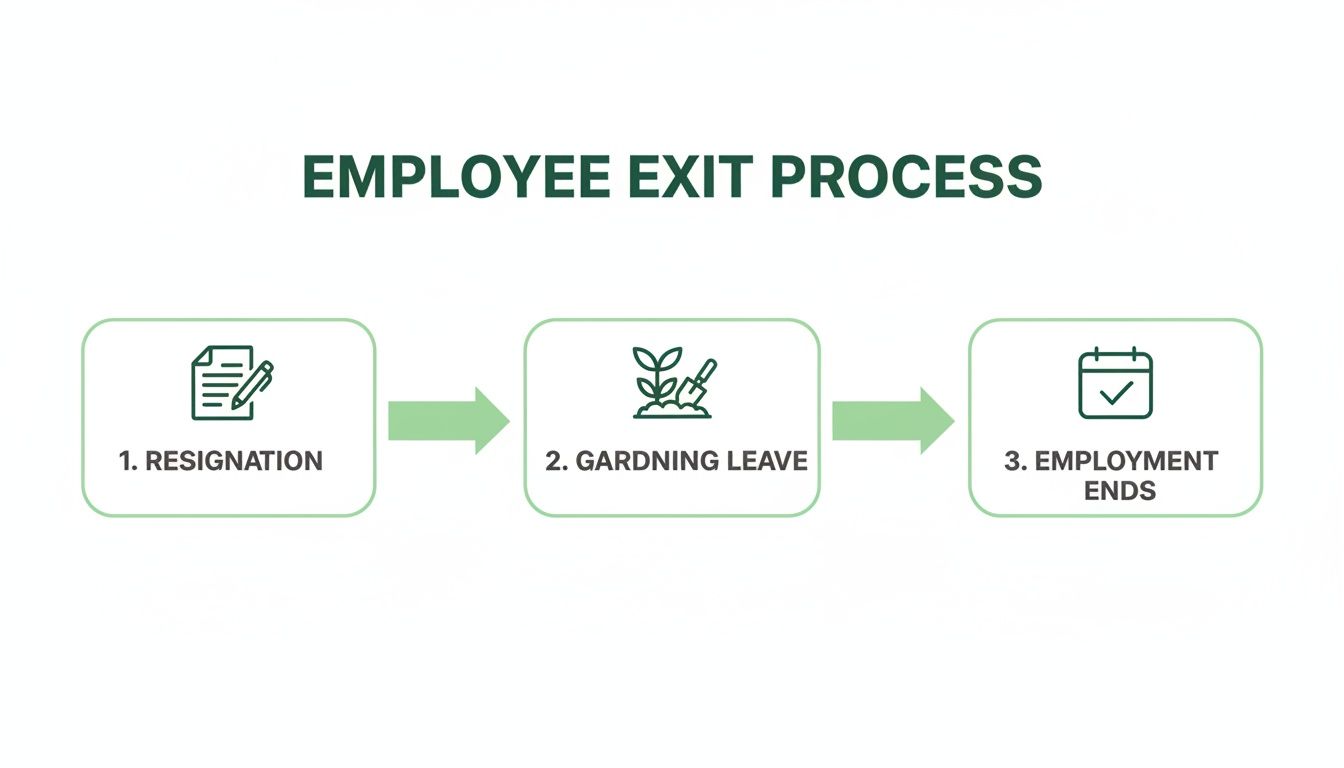
Step 1: Review the Employment Contract
Before you even think about mentioning gardening leave, your first port of call must be the employee's contract. This document is the legal bedrock for everything that follows. Without a specific, well-drafted gardening leave clause, you simply don't have the explicit right to place them on leave.
Check that the clause gives you the discretion to enforce it and clearly spells out the restrictions that will apply. If the contract is ambiguous or missing the clause altogether, you absolutely must seek legal advice before proceeding. Pushing ahead could leave you open to a claim of constructive dismissal.
Step 2: Hold the Initial Conversation
Once you've confirmed you're on solid legal ground, it's time to communicate the decision to the employee. This conversation needs to be handled with sensitivity and professionalism, ideally in a private, face-to-face meeting with an HR representative present.
During this discussion, you should:
- Be direct and clear: Explain that the company is exercising its contractual right to place them on gardening leave for their full notice period.
- Reiterate their obligations: Gently remind them they are still an employee and are bound by all their contractual duties, especially confidentiality and the restriction on working elsewhere.
- Outline the practicalities: Let them know what to expect regarding the handover, the return of company property, and how their final pay will be handled.
Step 3: Send a Formal Confirmation Letter
A conversation isn't enough. You must immediately follow up with a formal letter or email that documents everything discussed and legally confirms the start of the gardening leave period. This letter is a crucial piece of evidence if any disputes pop up later.
This communication should formally restate:
- The start and end dates of the gardening leave.
- The employee's obligation to remain available if needed.
- A clear reminder of their continuing contractual duties (confidentiality, loyalty, etc.).
- Instructions for returning all company property, like laptops, phones, and keycards.
- Confirmation that their salary and benefits will continue as normal.
When implementing gardening leave, employers and employees should consider practical steps such as how to set up a professional out of office message. This ensures that incoming communications are managed effectively while the employee is away from their duties, maintaining a professional front for clients and colleagues.
Step 4: Manage the Handover and Access
A seamless handover is vital for business continuity. This process needs to be swift and secure, starting right after that initial conversation. You'll need to arrange for the departing employee to transfer their ongoing projects, client contacts, and essential knowledge to a designated colleague.
At the same time, your IT department must revoke their access to all company systems. This means email, internal networks, software platforms, and building access. The goal is a clean break that prevents any further access to sensitive company information from the moment the leave begins.
Step 5: Communicate with the Team and Clients
Managing the message, both internally and externally, is key to preventing gossip and maintaining stability. Prepare a clear and professional communication plan for announcing the departure to the wider team. Keep the message simple, positive, and forward-looking, without getting into unnecessary detail.
For any client-facing roles, a proactive communication strategy is a must. The employee's manager or their successor should personally contact key clients to inform them of the change, reassure them of continued support, and introduce their new point of contact. This approach maintains client confidence and strengthens relationships. For more insights into structuring your internal policies, consider exploring our template for a simplified annual leave policy.
Common Questions About Gardening Leave
Even when you've got the basics down, gardening leave can throw up some tricky real-world questions. It's one of those areas where the theory is simple, but the practice can get complicated. Let's tackle some of the most common queries that land on an HR manager's desk.
Can an Employee Refuse Gardening Leave?
This question pops up a lot, and the answer is refreshingly straightforward: it all comes down to the contract.
If you have a well-drafted, explicit gardening leave clause in the employment contract they signed, then no, they can't refuse. Trying to do so would put them in breach of contract, giving you a very clear legal position.
But what if you don't have that clause? The tables are turned. Forcing an employee to stay home when you don't have the contractual right to do so could be seen as a breach of contract by the employer. This is risky territory and could even open the door to a constructive dismissal claim. It's a stark reminder that solid contracts are your best friend.
Does Holiday Entitlement Accrue During Gardening Leave?
Yes, it absolutely does. An employee on gardening leave is still, for all intents and purposes, employed until their last official day. This means their statutory and contractual holiday pay keeps building up right through the entire period.
It's common practice—and perfectly fine—to require the employee to take their remaining holiday allowance during their time on garden leave.
Key Takeaway: The best way to handle this is to spell it out clearly in the letter that puts them on gardening leave. A simple line stating they must use any accrued holiday during this period prevents any nasty surprises or arguments over a lump-sum payment for unused days later on.
Getting this right from the start means you won't be hit with a hefty holiday pay bill when their employment finally ends.
Can an Employer End Gardening Leave Early?
Yes, you can usually pull the plug on gardening leave early if you need to. This flexibility is useful if, for instance, the risk the employee posed to the business has passed sooner than you expected.
The typical way to do this is to terminate their employment and make a payment in lieu of notice (PILON) for the rest of the notice period.
There’s a catch, though. You can only do this if you have a PILON clause in their contract. Without one, ending their employment early could, once again, be a breach of contract. This really shows how having both gardening leave and PILON clauses gives you the maximum flexibility to manage tricky exits.
What Happens if an Employee Starts a New Job?
Starting a new job while still on gardening leave is a major no-no and a serious breach of contract. Even though they aren't in the office, they are still bound by their duty of loyalty to you, their employer. Working for someone else, particularly a competitor, is a direct violation of that duty.
If you find out an employee has jumped the gun and started a new role, you can take immediate legal action. Your options include:
- Seeking an injunction: This is a court order to force the employee to stop working for their new company.
- Withholding pay: You may be able to stop paying them from the moment they breached their contract.
- Suing for damages: If their actions have cost your business money, you could launch a claim to get those losses back.
Can an Employee Look for a New Job on Gardening Leave?
Yes, they can. The rules prevent them from starting a new job, not from looking for one. Attending interviews, talking to recruiters, and even negotiating a new contract are all perfectly acceptable activities.
In fact, this downtime can be an incredibly useful period for them to think about their next career move. For many, it’s a chance to reassess their goals. It might even be an opportunity to explore something completely new, like retraining after 40. As long as their new role doesn't actually begin until their contract with you has officially ended, they're in the clear.
Managing departures effectively is crucial, but so is handling day-to-day leave. Leavetrack provides a simple, centralised system to track all types of absence, from holidays to gardening leave, ensuring you always have a clear picture of who is off and when. Say goodbye to spreadsheets and hello to streamlined absence management. Learn more and start your free trial today.