
workplace stress leave: Your UK rights and how to apply
Posted by Robin on 12 Nov, 2025 in
In the UK, there's actually no specific legal category called "workplace stress leave." Instead, if you're signed off work due to stress, it's handled as sick leave for an illness like anxiety or depression. This means you have the same rights as any other employee who is off sick.
Clarifying What Stress Leave Really Means
When the pressures of the job become too much to handle, taking time off to get better isn't a sign of weakness—it's a medical necessity. It’s best to think of it less like a holiday and more like a recovery period, the same way you’d need time off for a physical injury. The real trick is telling the difference between normal workplace pressure and chronic, unmanageable stress.
A tight deadline might be motivating now and then, but constant excessive workloads, a total lack of support, or a toxic environment can lead to genuine illness. This is where the idea of workplace stress leave comes into play. It’s the mechanism that lets an employee step back and heal when their job has started to harm their mental health.
Workplace stress, depression, or anxiety is now the leading cause of sickness absence in the UK. Getting to grips with this type of leave is essential for both employee wellbeing and the health of the entire organisation.
The Purpose of Taking Leave
The main goal of this time off is simple: recovery. It’s a chance to reset, get professional help, and deal with the root causes of the stress without the daily grind making things worse. For employers, recognising and properly managing this kind of absence is a fundamental part of their duty of care.
Understanding stress leave means accepting it as a legitimate health issue. It's about building a system where people feel safe enough to admit they're struggling and can get the support they need. The key parts include:
- Medical Validation: The leave is usually backed up by a GP's 'fit note', which makes the health issue official.
- Focus on Recovery: The time is for healing and getting better, not just for being away from the office.
- Employer Responsibility: It’s a clear signal that something at work needs to be addressed to make sure the employee can return to a healthy environment.
By framing it this way, both employees and managers can handle the situation constructively. This helps pave the way for a healthier and more productive working relationship when the employee returns.
Understanding the Growing Need for Stress Leave
To really get a grip on why workplace stress leave is such a hot topic, you just have to look at the numbers. The scale of the problem here in the UK is massive, hitting not just individual wellbeing but the country's productivity as a whole. It's moved far beyond a niche HR issue and become a widespread crisis that's touching thousands of businesses.
The data really does paint a stark picture. In the UK, work-related stress, depression, and anxiety are now the single biggest reason people are off sick. It accounts for a staggering 16.4 million lost working days every single year. Let that sink in. That figure represents almost half of all cases of work-related ill health across the nation, making it clear that mental health struggles are the main driver behind employee absence. You can dig deeper into the impact of work-related stress from recent UK studies.
The True Cost of Burnout
The length of these absences is what really reveals how serious this is. On average, an employee suffering from a stress-related condition will take 21.1 days off work in a year. That’s a huge jump compared to absences for other common workplace problems.
Let's put that into perspective with some data on work-related absences in the UK.
Work-Related Ill Health Absences in the UK
| Reason for Absence | Average Days Off Per Year |
|---|---|
| Stress, Depression or Anxiety | 21.1 days |
| Musculoskeletal Disorders | 14.3 days |
| Physical Injuries | 6.8 days |
As you can see, the time needed to recover from stress and burnout is significantly longer. This isn't just a case of someone needing a long weekend; it highlights how deeply mental exhaustion can impact a person's ability to function.
This infographic does a great job of showing the journey from everyday workplace pressure to full-blown stress that requires time off.
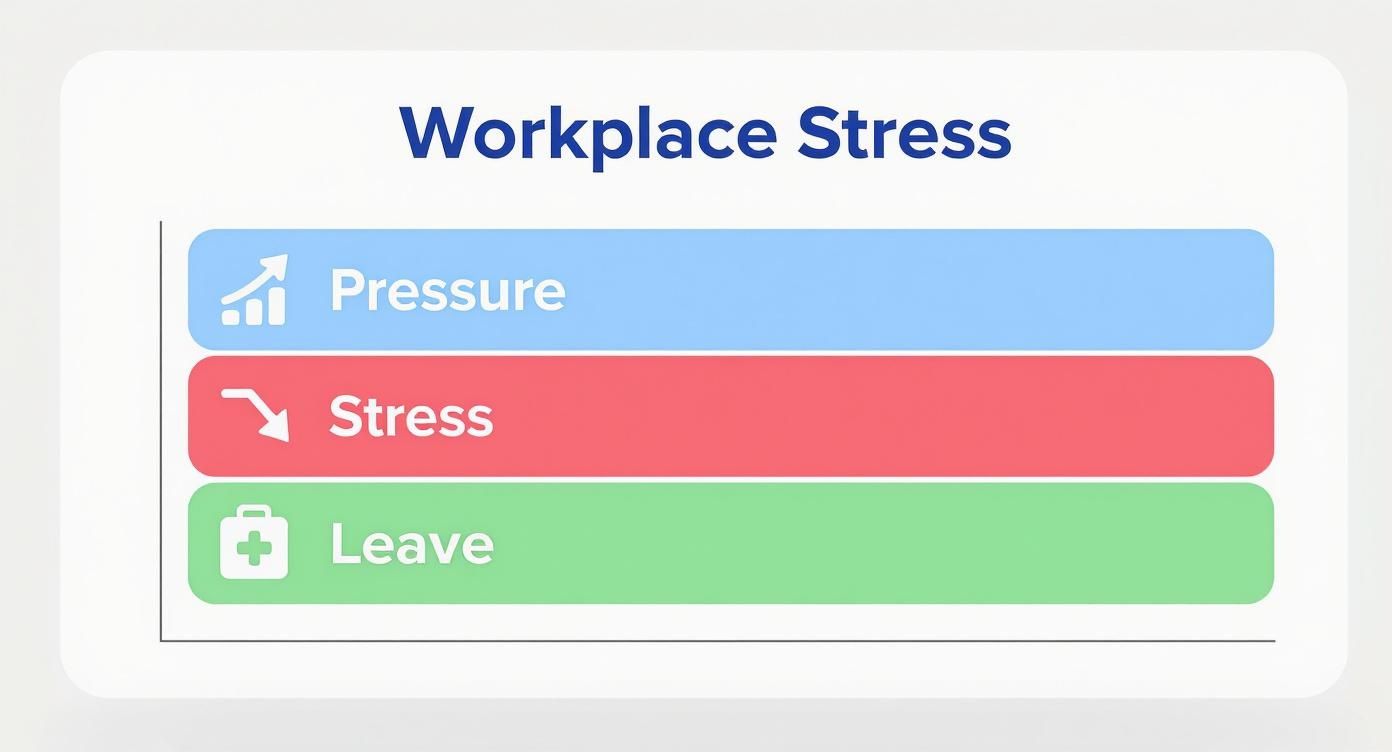
It’s clear that while a bit of pressure is normal, when it's left unchecked, it massively increases both the chances of an employee needing leave and how long they'll be gone.
This isn't just about "feeling overwhelmed" anymore; we're talking about a medically recognised state. Back in 2019, the World Health Organisation (WHO) officially classified burnout as an "occupational phenomenon."
Burnout is characterised by three dimensions: feelings of energy depletion or exhaustion; increased mental distance from one’s job, or feelings of negativism or cynicism related to one's job; and reduced professional efficacy.
This global recognition was a huge step. It validated the experiences of countless employees, confirming that the exhaustion and detachment they were feeling were legitimate results of chronic, unmanaged stress at work. It's not a personal weakness, but a systemic problem rooted in the work environment.
Why This Matters for Every Business
Getting your head around these statistics is vital for every business leader, HR professional, and frankly, every employee. These aren't just numbers on a spreadsheet; they represent real people who are struggling to cope with the demands of their jobs. For the business, this translates directly into lost productivity, higher recruitment costs to cover absences, and a serious dent in team morale.
Tackling the need for stress leave isn't just a box-ticking exercise or a policy document gathering dust. It's about building a culture where mental wellbeing is genuinely a priority, where the early signs of burnout are spotted, and where people feel supported when they need to recover. Acknowledging the sheer scale of the problem is the first, most crucial step towards creating healthier, more resilient, and ultimately, more successful workplaces.
Your Legal Rights and Employer Responsibilities
Trying to figure out your legal rights when taking time off for stress can feel like wading through thick fog. While you won’t find “workplace stress leave” as a specific term in UK law, that absolutely doesn't mean you’re left without protection. Your rights are actually anchored in much broader, more powerful legislation that every single employer has to follow.
At the heart of it all is your employer's fundamental duty of care. This isn't just a nice-to-have or a friendly suggestion; it's a solid legal obligation. It means your company must do everything reasonably possible to look after your health, safety, and wellbeing at work. Crucially, this covers both your physical and your mental health.
The Health and Safety at Work Act 1974
The main law that underpins this duty is the Health and Safety at Work Act 1974. People often think this act is all about preventing physical accidents—things like trips and falls—but its scope is much wider. It legally requires employers to assess and manage risks to employee health, and this definitely includes the risks posed by work-related stress.
If things at work like an impossible workload, bullying, or a total lack of support are causing you harm, your employer has a legal duty to step in and do something about it. Simply ignoring these problems is a breach of their duty of care.
A key takeaway is that your employer's legal responsibility is proactive, not just reactive. They must have systems in place to identify and mitigate stressors before they lead to serious illness.
This duty is the very foundation of your right to a safe working environment. When an employer breaches this duty and it leads to a recognised psychiatric illness, it can sometimes even form the basis of a personal injury claim, though that's a complex legal area. The first and most important step, however, is understanding that your employer is legally required to manage workplace stress.
The Equality Act 2010 Protections
When stress becomes severe and sticks around for a long time, another powerful piece of legislation comes into play: the Equality Act 2010. This act protects people from discrimination, and it can be incredibly relevant for anyone needing to take stress leave.
Under the Act, if a mental health condition has a "substantial and long-term adverse effect" on your ability to carry out normal day-to-day activities, it can be legally classified as a disability. This definition could cover conditions like severe anxiety, depression, or PTSD that might have been triggered or made worse by stress at work.
If your condition fits this definition, you're legally protected from discrimination. Even more, your employer now has a legal duty to make reasonable adjustments for you. These are changes to your job or workplace designed to help you manage your condition and stay in work.
These adjustments aren't just token gestures; they can be genuinely helpful changes like:
- Modifying your duties: Temporarily scaling back your workload or changing some of your key responsibilities.
- Altering your working hours: Offering flexible start times or a phased return to work after you’ve been off.
- Changing your place of work: Allowing you to work from home or moving you to a quieter spot in the office.
- Providing additional support: Making sure you have regular, supportive check-ins with your manager.
Getting your head around these protections is vital. It gives you the confidence to have constructive conversations with your employer, knowing that the law is on your side and requires them to support your recovery. For businesses, learning about reducing mental health absence in the workplace isn't just good practice—it's a massive part of meeting their legal and ethical duties.
How to Take Time Off for Workplace Stress
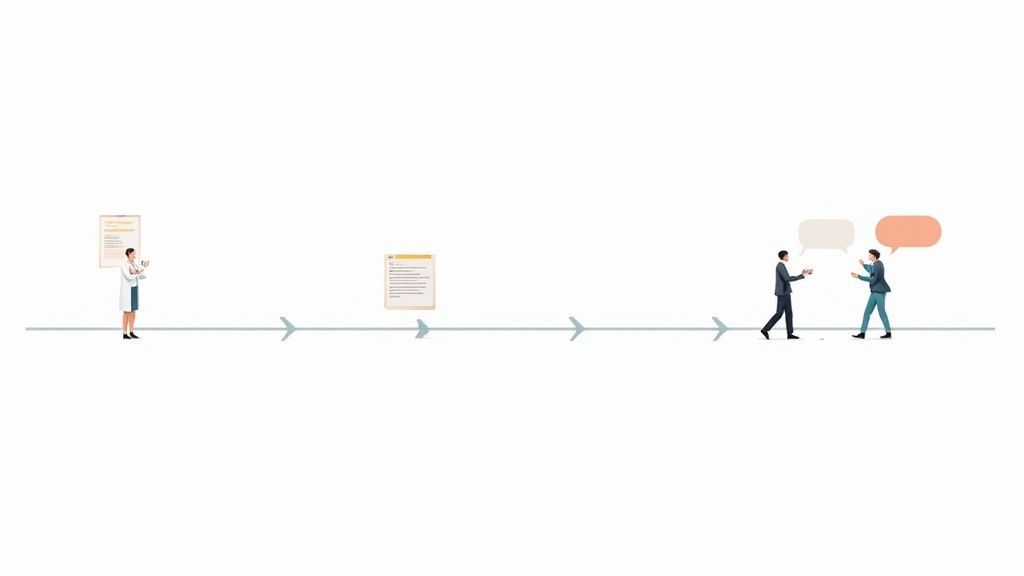
Realising you need to step away from work because of stress can feel like a huge, daunting step. The good news is, the actual process is probably more straightforward than you’re imagining. And it doesn't start with your boss—it starts with your GP.
Your first port of call is to book an appointment with your doctor to talk about how you're feeling. Be as open as you can about your symptoms and the specific work-related things that are contributing to them. If your GP agrees you're medically unfit for work, they'll issue a 'fit note', which is the official document you'll need to formalise your absence.
Starting The Conversation at Work
With your fit note in hand, you need to let your employer know as soon as you can. Just follow your company's usual sickness reporting procedure, whether that’s a quick call to your line manager or an email to HR.
You don't need to go into every single detail of your condition. Your fit note will likely say something like "work-related stress" or "anxiety," and that's all the medical validation your employer needs. Your conversation can be short and professional. Something as simple as, "Hi, I've just been to the doctor and they've signed me off for two weeks due to stress. I've sent the fit note over to HR."
Your privacy is paramount. While it might be helpful down the line to discuss work-related triggers (like a heavy workload or team dynamics) so things can improve, you are not obliged to share sensitive medical details beyond what's on your fit note.
Of course, getting to the root of the problem is key. It's always worth exploring effective strategies for managing work stress and achieving a healthier work-life balance, which can help prevent the need for leave in the first place or support you during your recovery.
Taking that first step can feel tough, so here’s a simple checklist to guide you through the process of requesting leave.
| Employee Checklist for Requesting Stress Leave | ||
|---|---|---|
| Step | Action Required | Key Consideration |
| 1. Acknowledge Your Needs | Honestly assess your mental and physical state. | Burnout isn't a sign of weakness; it's a sign you've been strong for too long. |
| 2. Consult Your GP | Book an appointment to discuss your symptoms and their link to work. | Your health is the priority. Be open with your doctor to get the right support. |
| 3. Obtain a Fit Note | If your GP agrees, they will issue a fit note confirming you are unfit for work. | This is the official medical evidence required by your employer. |
| 4. Review Company Policy | Check your staff handbook or contract for the sickness absence procedure. | Knowing the process reduces anxiety. Look for details on who to contact and when. |
| 5. Inform Your Employer | Contact your manager or HR promptly as per the company's policy. | Keep it simple and professional. You only need to share what's necessary. |
| 6. Submit the Fit Note | Send a copy of your fit note to the relevant person (usually HR). | This formalises your leave and triggers sick pay arrangements. |
| 7. Focus on Recovery | Use the time off to rest, recuperate, and disconnect from work. | Your only job during this time is to get better. |
Following these steps ensures you handle the situation professionally while prioritising your wellbeing.
Understanding Your Pay and Return
While you’re off, what happens with your pay will come down to your company's policy and your eligibility for Statutory Sick Pay (SSP). Here’s a quick rundown of what to expect:
- Company Sick Pay: Dig out your employment contract or staff handbook. Many businesses offer their own contractual sick pay, which often means you'll receive your full salary for a certain number of weeks.
- Statutory Sick Pay (SSP): If your company doesn't have its own sick pay scheme, or if you've used up your entitlement, you may be eligible for SSP. This is a minimum amount set by the government, which your employer pays.
- A Phased Return: When you feel ready to head back, you don’t have to dive straight into the deep end. Learning how to manage a phased return to work can make all the difference, letting you ease back in and rebuild your confidence at a comfortable pace.
Why Are Younger Generations Burning Out Faster?
If you look around the modern workplace, you might notice a trend: younger employees seem to be running on fumes far more than their older colleagues. It’s not just a feeling; there’s a genuine generational divide when it comes to stress, and the data paints a very clear picture. Workers under 25 are taking significantly more time off for stress than their more established counterparts. For any leader trying to build a resilient and supportive team, understanding this shift is non-negotiable.
The numbers don't lie. A recent Burnout Report found that a staggering 35% of UK workers aged 18-24 had to take time off due to poor mental health brought on by stress. That’s a massive jump compared to just 10% of workers aged 55 and over who needed the same kind of leave. This isn't just about the very youngest in the workforce, either. The rates for those aged 25-34 are also climbing, highlighting a clear pattern across both Millennial and Gen Z employees. You can dig into the full findings from the report on the generational burnout divide yourself.
So, what’s really going on here? It turns out, a few unique pressures are colliding to create a perfect storm for burnout among younger generations.
Economic Instability and Career Pressure
Many younger people stepped into the working world facing some serious economic headwinds. They’re often saddled with huge student loans and looking at a housing market that feels completely out of reach. For them, the pressure to perform isn’t just about climbing the career ladder—it’s about financial survival. This constant need to prove their worth in jobs that often feel insecure creates a baseline of anxiety that previous generations may not have faced so early on.
This is all amplified by the "hustle culture" that champions overwork as something to be proud of. To get a real sense of how systemic this can be, it's worth understanding work cultures that lead to severe burnout, such as the 996 work schedule.
The Digital Double-Edged Sword
While younger generations are digital natives, that familiarity comes with a heavy price. Technology has blurred the lines between work and home life to the point where they've almost disappeared. Answering emails late at night or being available on Slack around the clock isn't seen as going above and beyond anymore; for many, it’s just the unspoken expectation.
This ‘always-on’ culture prevents the mental disconnection necessary to recover from daily work stressors, accelerating the path from stress to full-blown burnout and the need for workplace stress leave.
This digital tether creates a unique kind of exhaustion. There's no real "off" switch, making it incredibly difficult to get the genuine rest needed to recharge. When you combine this constant connectivity with a greater willingness to talk openly about mental health, it makes sense why younger employees are not only feeling the burn more acutely but are also more likely to recognise it and take the necessary time off to recover.
A Manager's Guide to Supporting Your Team
 .
.
"The way an organisation handles an employee's stress leave is a direct reflection of its culture. Compassion, clear communication, and a structured plan for their return are not optional extras; they are fundamental to responsible management."
Navigating the Return to Work
Getting the return right is just as crucial as handling the absence. The goal here is a smooth, sustainable reintegration—not just throwing someone back into the deep end, which is often what caused the stress in the first place. A well-managed return-to-work plan is your best tool for preventing a relapse.
Consider putting these supportive measures in place:
- A Phased Return: Instead of jumping straight back to full-time, let the employee ease in by gradually increasing their hours over a few weeks. It helps them find their rhythm again without feeling totally overwhelmed.
- Flexible Hours: Offering a bit of wiggle room on start and finish times can be a huge help, allowing them to manage their energy levels and attend any necessary appointments.
- A Return-to-Work Interview: This isn't a performance review. Think of it as a supportive, informal chat to welcome them back, discuss any adjustments they might need, and agree on a realistic plan for their first few weeks.
- Modified Duties: Temporarily tweak their workload. Start them off with lower-pressure tasks to help them rebuild their confidence and capacity at their own pace.
By investing time in a thoughtful and humane approach, you do more than just help a valued team member recover. You build trust and resilience across your entire team.
Common Questions About Workplace Stress Leave
When you're dealing with stress, the last thing you need is more uncertainty. Let's clear up some of the most common questions that pop up around taking time off for workplace stress, so you know exactly where you stand.
Can I Be Dismissed for Taking Time Off for Stress?
It’s highly unlikely you could be fairly dismissed just for taking time off for stress. This is especially true for a short, properly documented absence supported by a fit note from your GP.
If your stress develops into a long-term condition that qualifies as a disability under the Equality Act 2010, you gain significant legal protection against unfair dismissal. That said, a very prolonged absence could eventually lead to a capability dismissal. But this would only be lawful after your employer has gone through a fair and thorough process, which must include exploring all reasonable adjustments to help you get back to work.
Do I Have to Explain the Exact Cause of My Stress?
You are not legally required to share every personal detail about your health. A GP's fit note that cites "work-related stress" or "anxiety" is usually enough for your employer, without needing to delve into the specifics.
However, being open about the work-related factors contributing to your stress—like an unmanageable workload or difficult team dynamics—can be really constructive. Sharing this information gives your employer a chance to make the changes needed to support your recovery and create a healthier environment for when you return.
Think of it this way: Burnout is the condition, and stress leave is the action. Burnout is a state of exhaustion caused by chronic, unmanaged workplace stress. 'Workplace stress leave' is simply the sick leave you take to recover from it. One is the cause; the other is the necessary time off to heal.
Managing any kind of employee absence can quickly get complicated. Leavetrack takes the headache out of the entire process, swapping messy spreadsheets for a clear, automated system. You can see who's off at a glance, approve requests with a single click, and make sure your policies are followed every time. Discover how Leavetrack can bring clarity to your absence management.