

A Complete Guide to Compassionate Leave in the UK
Posted by Robin on 08 Dec, 2025 in
Here's the simple truth about compassionate leave in the UK: it is not a guaranteed legal right. Instead, it's a discretionary benefit offered by employers to support staff through difficult personal times, such as a serious illness or death in the family.
Decoding Compassionate Leave in the UK

When an employee faces a personal crisis, figuring out their options for time off can be stressful. The term "compassionate leave" often adds to the confusion because it sits in a grey area between legal entitlements and company goodwill.
Think of it this way: the law provides a basic safety net for specific emergencies, but a good company policy is what offers genuine, flexible support during a broader range of tough situations. Getting your head around this distinction is the most important first step.
Statutory Rights vs Employer Policy
The UK government mandates certain types of leave that employers must provide. The one that's most relevant here is the right to a reasonable amount of unpaid time off for dependants to deal with an unforeseen emergency. This is a specific, legally protected right.
Compassionate leave, on the other hand, is a broader, non-statutory allowance that an employer chooses to offer. This means the company sets its own rules, including:
- Who is covered: Does it extend beyond immediate family to close friends or even pets?
- What situations qualify: Is it only for bereavement, or does it cover caring for a seriously ill relative?
- How much time is given: Will an employee get one day, or five?
- Whether the leave is paid: This is entirely up to the employer.
The core difference is that statutory rights are the legal minimum, while a compassionate leave policy reflects a company's culture and commitment to employee wellbeing. It's the difference between what an employer has to do and what they choose to do.
In practice, this means that compassionate leave in the UK remains largely a discretionary benefit. While many good companies do offer it, typically allowing between three and five working days, it isn't a guaranteed legal entitlement in most cases. You can explore more about leave statistics and trends in the UK to see how this compares with other types of absence.
This flexibility allows businesses to provide tailored support but also creates inconsistency for employees who move between jobs. To clear things up, the table below breaks down these key differences.
Compassionate Leave vs Statutory Rights at a Glance
This table gives a quick summary, comparing a discretionary compassionate leave policy against the key statutory rights that exist in UK law.
| Leave Type | Legal Status | Typical Reason | Is it Paid? |
|---|---|---|---|
| Compassionate Leave | Discretionary | Bereavement, serious illness of a loved one | At the employer's discretion |
| Time Off for Dependants | Statutory Right | Unexpected disruption to care for a dependant | No, it's unpaid |
| Parental Bereavement Leave | Statutory Right | Death of a child under 18 or stillbirth | Yes, if eligibility criteria are met |
| Sick Leave (Fit Note) | Statutory Right | Employee's own illness | Statutory Sick Pay (SSP) if eligible |
As you can see, what the law requires is quite specific, whereas a company's own compassionate leave policy is where real, human-centred support comes into play.
Understanding Your Legal Rights for Time Off
While most compassionate leave in the UK is down to an employer's goodwill, it’s crucial to know where you stand legally. There are some hard-and-fast rules that provide a basic safety net, setting the absolute minimum support a company must offer when emergencies strike.
The main piece of legislation here is the right to time off for dependants. This isn't a free-for-all for any family issue, though. It's specifically for those completely unexpected moments when someone who relies on you is in crisis. The law gives you a 'reasonable' amount of unpaid time off to deal with the immediate fallout.
Who Counts as a Dependant?
The legal definition of a 'dependant' is pretty straightforward. It covers:
- Your spouse, partner, child, or parent.
- Someone who lives with you (but not a lodger or tenant).
- Anyone who reasonably relies on you for help in an emergency, like an elderly neighbour you look after.
This right is all about tackling the unforeseen. Think of it as the law giving you breathing room. For instance, if your child's nursery calls because they’ve had a fall, or your partner is suddenly rushed to hospital, this right kicks in. It allows you to make urgent arrangements without worrying about your job security.
Parental Bereavement Leave and Pay
When it comes to bereavement, there is one specific area where the law provides for paid leave. This is Parental Bereavement Leave and Pay, now widely known as "Jack's Law."
This vital law gives employed parents the right to take two weeks of leave if they lose a child under 18 or experience a stillbirth after 24 weeks of pregnancy. Not only that, but eligible employees also get statutory pay for this time, much like maternity or paternity pay. This isn't discretionary; it's a legal requirement for every employer. Getting this right is so important, and you can find more guidance in our post on how to deal with bereavement leave requests.
Jack's Law marks a significant step, recognising that the loss of a child requires a level of support that goes beyond standard discretionary policies. It sets a legal benchmark for compassion in the most tragic of circumstances.
The Gaps in Legal Protection
But here’s the thing: the current legal framework has some major gaps. While Jack's Law is a huge step forward for bereaved parents, there is no statutory right to time off for the death of a parent, partner, sibling, or anyone else. This is where a company's own compassionate leave policy becomes absolutely essential. It's also worth remembering that other difficult life events need support, and it's helpful to be aware of things like employee rights for fertility treatment, which can be an equally challenging time.
This gap in legal protection is widely acknowledged. Public opinion is clear: people feel grieving employees deserve more support. An Ipsos survey, for example, found that a massive 87% of UK adults think paid bereavement leave should be extended to cover the loss of other close relatives and friends.
This shows a growing expectation for employers to step up where the law falls short, pushing companies to create policies that are more humane, comprehensive, and in tune with what their people actually need.
How Much Compassionate Leave Is Normal and Is It Paid?
When a personal crisis hits, two questions almost always jump to an employee's mind: "How much time can I take?" and "Will I get paid?" For compassionate leave in the UK, the answers aren't set in stone. They depend almost entirely on your employer's policy, not a specific law.
It helps to know what's typical, though. Most UK companies that have a compassionate leave policy offer between three to five working days of paid time off. This has become something of an unwritten industry standard, often seen as enough time to handle the immediate practicalities, like arranging a funeral or being by the side of a seriously ill relative.
But here’s the problem. That standard timeframe often doesn't come close to what an employee actually needs. Those first few days after a loss are a blur of shock and logistics. The real process of grieving and putting things back together takes much, much longer.
The Mismatch Between Policy and Reality
Grief simply doesn't fit into a tidy three-day box. It's messy, unpredictable, and deeply personal. While a few days off might cover the most urgent tasks, it’s rarely enough time for someone to mentally and emotionally process what's happened before they’re expected to be back at their desk.
This isn't just a feeling; the numbers back it up. A recent poll highlighted a stark reality: 21% of bereaved employees said they desperately wished they’d been given more time off to manage their grief. Even more telling, the survey found that over half (55%) of bereaved employees took up to eight weeks to feel ‘normal’ again at work, with 13% taking even longer. You can read more about these findings on how bereaved employees feel about workplace support.
This data reveals a serious disconnect. A standard five-day policy, however well-intentioned, can feel painfully inadequate when an employee is facing weeks or months of emotional recovery. It makes you realise compassionate leave isn't just an HR box to tick—it’s a vital part of supporting long-term employee wellbeing.
A compassionate leave policy isn't just about giving time off; it's about acknowledging the human reality that people need space to heal. A rigid, minimal allowance can inadvertently pressure employees to return to work before they are ready, potentially leading to burnout and reduced productivity.
Is Compassionate Leave Paid?
This is the second big question, and the answer is surprisingly straightforward: pay for compassionate leave is almost always at the employer's discretion.
There’s no law that says an employer has to pay for this type of leave, with the single exception of Parental Bereavement Leave. For any other situation, like the death of a parent, partner, or sibling, whether you get paid comes down to what's written in your company's policy.
Good practice, however, is for companies with a formal policy to offer full pay for the standard three-to-five-day period. It’s a powerful way to show they’re committed to supporting their staff. Any time taken beyond this initial period is usually handled in a few different ways:
- Unpaid Leave: The company might agree to a longer period of absence, but without pay.
- Annual Leave: Employees may be asked to use some of their holiday entitlement to extend their time off.
- Sick Leave: If the emotional distress leads to illness, like severe anxiety or depression, an employee might be signed off sick by their GP.
Ultimately, how much time is offered and whether it’s paid says a lot about a company's culture. A flexible and generous approach signals that the organisation values its employees as people, not just as cogs in a machine. It builds loyalty and trust, showing that the company will be there with real support when life takes a difficult turn. That’s how you build a truly compassionate—and resilient—workplace.
How to Create a Fair Compassionate Leave Policy
Putting together a compassionate leave policy is about much more than just ticking a legal box. A thoughtful, well-crafted policy is a genuine cornerstone of your company culture. It sends a clear message that you see your employees as whole people and that you’ll support them through life’s toughest moments. Get this right, and you'll build trust and loyalty that lasts.
Building this framework doesn't need to be a huge headache. It's about thinking clearly through who the policy is for, what situations it covers, and what kind of support you can realistically offer. The aim is to create something fair, flexible, and simple for everyone to understand when they need it most.
This diagram shows the gap that often exists between a standard, tick-box policy and what an employee actually goes through. It really highlights why a more human-centred approach is essential.
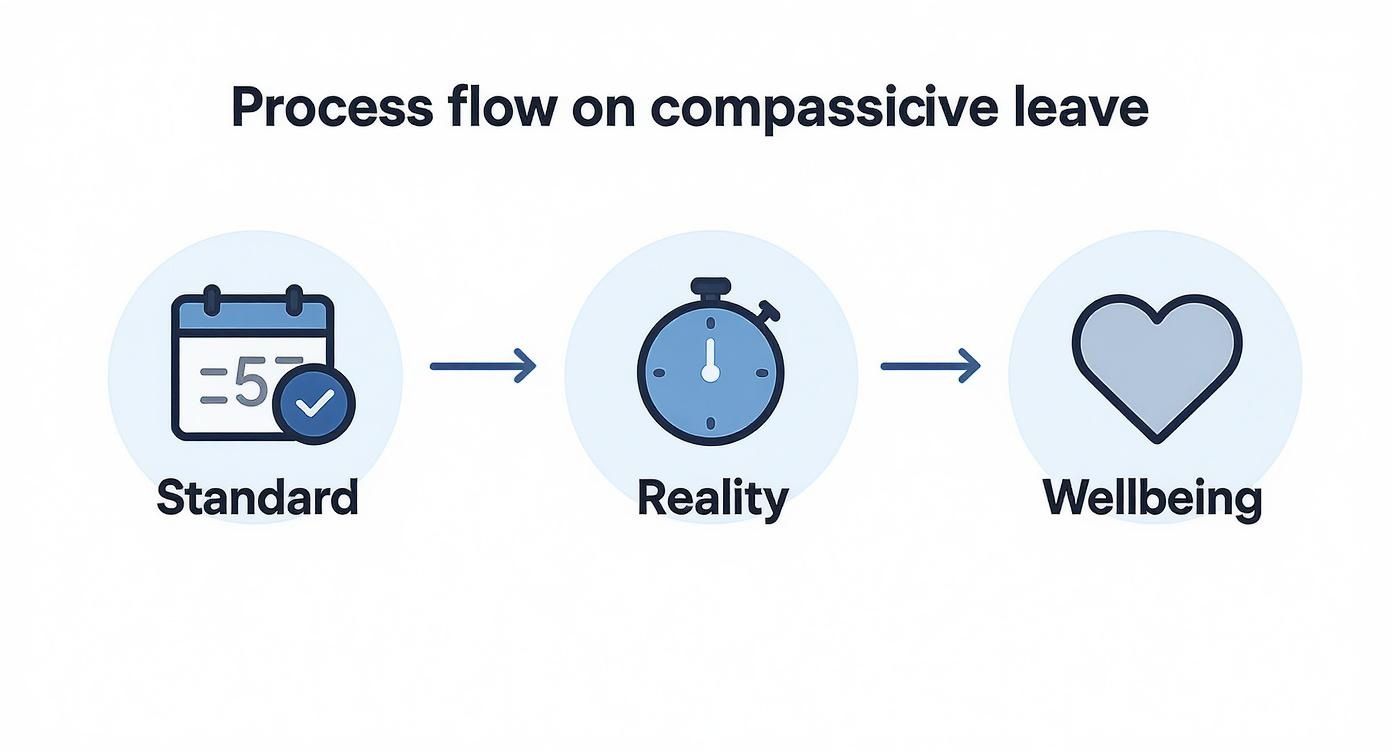
As you can see, while a standard 3-5 day policy gives some immediate breathing room, the reality is that recovery takes much, much longer. That’s why ongoing wellbeing support should be a critical part of your thinking.
Defining Scope and Eligibility
First things first, you need to decide who and what your policy actually covers. The legal minimum for "time off for dependants" is quite narrow, but your company policy can (and should) be broader and more inclusive. This is your opportunity to show real compassion.
Start by asking a few key questions:
- Who is covered? Are you sticking to immediate family like spouses, parents, and children? Or will you extend it to include partners, grandparents, siblings, or even close friends who are practically family? Some modern policies are even starting to recognise the very real grief that comes with losing a pet.
- What situations qualify? Is this policy just for bereavement? Or will you also cover other tough situations, like caring for a family member with a critical illness or supporting a partner through a traumatic event like a miscarriage?
A great policy has clear guidelines but isn't completely rigid. It should provide a solid framework that still empowers managers to use their judgement. Adding a simple clause like "leave may be granted for other exceptional circumstances" gives you the flexibility to handle unique situations with the empathy they deserve.
This kind of inclusive approach is becoming more and more important. For example, campaigns like 'Leave for Every Loss' are pushing for better support for people who experience pregnancy loss before 24 weeks—a situation that statutory bereavement leave doesn't currently cover. A strong, flexible policy can help you bridge that gap.
Outlining Leave Allowance and Pay
Next up, you need to get crystal clear on the practical details. When someone is in crisis, this is the information they'll need straight away, so being explicit helps reduce any extra stress.
Make sure your policy spells out:
- Paid Leave Duration: State exactly how many days of paid compassionate leave an employee can take. The industry standard is often 3-5 days, but have a think about whether that's really enough for your company culture.
- Unpaid Leave Options: Acknowledge that the initial paid period might not be enough time. You should outline the process for requesting extra unpaid leave so employees know it's an option.
- Use of Other Leave: Clarify if people can use their annual leave to extend their time off. This gives them a bit more control over their own recovery.
Being upfront about pay is absolutely crucial. By stating that the initial period is fully paid, you remove a massive financial worry at a time when someone is least able to deal with it. It’s a small detail that can make a world of difference.
A clear table can make these components easy to digest when you're drafting your policy.
Essential Components of a Compassionate Leave Policy
| Policy Component | Key Considerations | Example Wording Snippet |
|---|---|---|
| Eligibility | Define who is considered a 'dependant' or 'close family member'. Be as inclusive as your culture allows. | "This policy applies to all employees and covers the death or serious illness of a spouse, partner, child, parent, sibling, grandparent, or other close relation." |
| Scope of Events | List qualifying events like serious illness, injury, or bereavement. Include a clause for manager discretion. | "Leave can be requested for bereavement, to provide care for a dependant with a critical illness, or to deal with the immediate aftermath of a traumatic event affecting a close family member." |
| Paid Leave Allowance | Specify the number of paid days provided. Typically 3-5 days is a starting point. | "Employees are entitled to up to 5 working days of fully paid compassionate leave per instance." |
| Additional Leave | Explain options for extending leave, such as using annual leave or taking unpaid time off. | "Additional time off may be granted as unpaid leave or by using annual leave entitlement, subject to line manager approval." |
| Request Process | Detail who to notify and what information is needed. Keep it simple and stress-free. | "To request leave, please notify your line manager as soon as reasonably possible. You will need to provide the reason for your absence and an expected duration." |
Having these elements clearly defined ensures your policy is not only compassionate in spirit but also practical and fair in its application.
Establishing a Clear Request Process
Finally, the process for actually requesting leave needs to be as simple and painless as possible. The very last thing an employee needs during a crisis is to jump through complicated administrative hoops.
Your policy should map out a clear path:
- Initial Notification: Who’s the first person to contact? This is almost always their direct line manager.
- Required Information: What do they need to provide? Keep this to the absolute minimum—usually just the reason for the absence and how long they think they'll be off. Reassure them that you won't be asking for detailed proof.
- Communication: How will you stay in touch? Set expectations for gentle, supportive check-ins, not pressure to get back to work.
A straightforward procedure empowers both the employee and their manager to handle a difficult situation with confidence and sensitivity. For a good example of how to structure this kind of process, have a look at our guide which includes a template annual leave policy; the structural principles are very similar.
Managing Leave Requests with Empathy and Efficiency

When an employee needs compassionate leave, how you handle the request is just as important as the policy itself. This is a moment that demands a delicate balance: genuine human support on one side, and clear, efficient administration on the other.
Get it wrong, and you add a layer of stress to an already awful time. But get it right, and you reinforce trust and show that your company culture is more than just words on a poster.
For managers and HR teams, the goal is a simple, supportive, and consistent process. This isn't about ticking boxes. It’s about providing a sense of stability when an employee’s world has just been turned upside down.
The Manager’s Role in a Crisis
As a line manager, you're usually the first person your team member will speak to. Your initial response sets the tone for everything that follows. The focus should always be on reassurance, not interrogation.
When an employee reaches out, your immediate priorities are simple:
- Listen and Acknowledge: Start by expressing sympathy. A simple, "I'm so sorry to hear that, please take the time you need," makes a world of difference.
- Keep Questions Minimal: You only need the essentials. Stick to the general reason for the absence (like a family bereavement or serious illness) and a rough idea of how long they might be away.
- Reassure Them About Work: Take practical worries off their plate. Let them know you’ll sort out their urgent tasks and that their only priority right now is their family.
Whatever you do, avoid asking for intrusive details or any kind of ‘proof’. Trust is paramount here. It's also worth remembering the immense pressure on those providing long-term care for a seriously ill family member; understanding concepts like preventing caregiver burnout can help you offer more meaningful support.
HR’s Responsibility for Consistency and Record-Keeping
While managers provide that immediate, human support, the HR team is there to make sure the process is fair, consistent, and correctly documented. Consistency is key to a fair workplace and avoids any hint of favouritism.
The HR function is responsible for:
- Applying the Policy Fairly: Make sure every request for compassionate leave is handled according to the company policy, no matter the employee's role or department.
- Maintaining Confidential Records: All information about the leave must be stored securely and confidentially. This protects the employee’s privacy and keeps you compliant with data protection laws.
- Providing Information: Act as the go-to resource for both the employee and their manager, clarifying details on pay, duration, and what the options are for extending leave if things take longer than expected.
A robust, well-documented process ensures that compassion is delivered consistently across the entire organisation. It protects both the employee and the business, making sure support is given fairly and without administrative error.
Streamlining the Process with Absence Management Systems
Let's be honest, handling these sensitive requests manually with emails and spreadsheets is clunky and prone to error. This is where a dedicated absence management system becomes an invaluable tool for any HR department.
A centralised dashboard gives HR and managers an instant view of who is off and why, ensuring cover can be arranged without any fuss. These systems let employees log requests discreetly, and managers can approve them with a single click, which automatically creates a secure, confidential record.
This centralisation ensures everyone is working from the same information—critical for maintaining consistency. If you're looking to improve your internal processes, a great place to start is our guide to employee leave management systems. It explains how technology can lift the administrative burden, freeing your team up to focus on providing real, human support.
Got Questions About Compassionate Leave? Here Are Some Straight Answers
Even with a crystal-clear policy on the books, real-life situations always throw up tricky questions about compassionate leave in the UK. Let’s be honest, when emotions are running high, the last thing anyone wants is to wade through confusing rules. This section cuts through the noise to give you straightforward answers when you need them most.
Navigating time off during a difficult period should be simple. Below, we tackle the most common queries we see, helping both employees and managers handle these sensitive moments with confidence and care.
Does Compassionate Leave Cover the Death of a Pet?
This question comes up more and more these days, and it’s a really valid one. The short, legal answer is no; there’s no legal requirement for a UK employer to give you time off for the death of a pet.
However, many forward-thinking companies are starting to recognise just how devastating losing a pet can be. While it's still rare to see 'pet bereavement' written into a formal policy, a flexible and human approach often allows a manager to grant a day or two of discretionary leave.
Your first step should always be to check the company's compassionate leave policy. If it’s not mentioned, the best thing to do is have an open, honest chat with your line manager about what’s happened.
Can I Take Compassionate Leave for a Close Friend?
Whether you can take time off for a close friend really comes down to your employer's specific policy. It's important to know that the statutory "right to time off for dependants" is very narrow and does not cover friends, no matter how close you are.
This is exactly why a company’s own compassionate leave policy is so vital. A good one will clearly define who is covered. Some policies stick strictly to immediate family, but many are now much broader, often including partners or anyone who could be considered "next of kin."
Companies that genuinely care about their team's wellbeing are often more willing to interpret their policies flexibly. If the wording is a bit vague, a manager might have the discretion to approve leave based on your specific circumstances.
What Evidence Do I Need to Provide for Compassionate Leave?
For short periods of compassionate leave, especially in the first few days, most reasonable employers won’t ask for any formal proof. The request is almost always taken on trust.
Think about it – these situations are highly sensitive and emotional. Piling on an administrative burden by demanding evidence can feel thoughtless and shows a real lack of empathy. It's about treating people like adults during a tough time.
If an absence needs to extend beyond the initial paid allowance, an employer might reasonably and sensitively ask for some kind of confirmation. This would typically be something simple like a funeral notice. It is extremely rare for an employer to ask for a death certificate.
Your company policy should spell out what, if anything, is needed. For employers, the golden rule is to handle this with the utmost sensitivity. The focus should be on supporting your employee, not on paperwork.
What Is the Difference Between Compassionate and Bereavement Leave?
These two terms are often used as if they mean the same thing, which can get confusing. They're definitely related, but there’s a subtle and important difference.
Bereavement Leave: This is very specific. It refers to time off taken after a death. It’s purely for grieving and dealing with the practical things that follow a loss, like arranging and attending a funeral.
Compassionate Leave: This is a much broader, umbrella term. It can cover bereavement, but it also includes other serious personal crises. For instance, you might take compassionate leave to care for a family member with a sudden, life-threatening illness or to support your partner after a traumatic event.
Basically, all bereavement leave is a type of compassionate leave, but not all compassionate leave is for bereavement. Your employer’s policy is the final word here and will clarify exactly which situations are covered.
Does Leave Cover Pregnancy Loss Before 24 Weeks?
Historically, this has been a painful gap in UK employment law. The official Statutory Parental Bereavement Leave only kicks in after a stillbirth from 24 weeks of pregnancy, leaving parents who experience loss earlier with no legal right to time off.
Thankfully, this is changing. Following powerful campaigns like "Leave for Every Loss," the government is now working to amend the law to introduce a new right to bereavement leave for pre-24-week pregnancy loss. This is a huge step forward in recognising that grief isn’t defined by gestation.
While this new right isn't law just yet, many employers with solid compassionate leave policies already provide this support. It’s a perfect example of how company policy can—and should—step up where statutory rights are still playing catch-up.
Handling these difficult conversations and tracking leave properly requires a solid system. Leavetrack makes the whole process simpler, providing a clear, confidential, and easy-to-use platform for everyone. To see how you can manage all types of leave with empathy and efficiency, find out more at https://leavetrackapp.com.