

A Guide to Managing Absence at Work
Posted by Robin on 24 Oct, 2025 in
When we talk about workplace absence, we're not just talking about someone calling in sick with the flu. It's any time an employee isn't at their post during scheduled hours. This could be anything from a minor illness to a serious, long-term condition. Getting a clear picture of what this actually covers is the first step to managing its real-world impact on your business.
Understanding the Real Impact of Absence at Work
That empty desk is so much more than a minor headache; it's a quiet drain on your company's health and stability.
Think of your team as a high-performance engine. When one part is missing, the whole system feels the strain. It doesn't run as smoothly or efficiently. This ripple effect creates both obvious and hidden costs that can slowly but surely erode your business from the inside out.
The direct financial hit is the easiest to spot. Things like statutory sick pay, contractual pay, and the cost of hiring temporary cover are all tangible expenses that you can see on a balance sheet. But those numbers only tell a fraction of the story. The true cost of absence runs much, much deeper, hitting everything from productivity and team morale to customer satisfaction.
The Hidden Operational Costs
Look beyond the payroll expenses and you'll find significant operational hurdles. When an employee is unexpectedly away, their workload doesn't just vanish into thin air. It has to be redistributed among the remaining team members, who are often already working at full capacity.
This sudden pile-on of responsibilities can quickly lead to:
- Reduced Productivity: Colleagues taking on extra, unfamiliar tasks are naturally less efficient. They're stretched too thin, trying to keep their own plates spinning while juggling someone else's.
- Project Delays: Critical deadlines can easily be missed when a key person isn't there. This disrupts project timelines and can start to damage client relationships.
- Lower Quality Work: When people are rushed and overburdened, mistakes happen. The quality of your products or services can start to slip, which is a dangerous path to go down.
The Impact on Team Culture
Perhaps the most damaging fallout from persistent absence is the toll it takes on your workplace culture. When some team members are frequently away, it's only natural for resentment to build among those who consistently have to pick up the slack.
This constant disruption can lead to a nosedive in team morale, a spike in stress levels, and a much higher risk of burnout for your most reliable people. Over time, this can poison the collaborative spirit you've worked so hard to build.
Ultimately, tackling absenteeism isn't just about cutting your sick pay bill. It's a strategic investment in your company's operational strength, team cohesion, and long-term success.
Why Are Your Employees Really Absent?
If you want to get a proper handle on absence in your business, you have to understand what's really driving it. It’s all too easy to lump every missed day into the "sick day" bucket, but the reality is often much more complicated. The reasons people are off work can range from a quick, unavoidable illness to deeper, more persistent challenges that need a far more thoughtful approach.
Think of it like a tree. The leaves you can see are the short-term issues – the common colds, flu bugs, and dodgy stomachs that make up a huge chunk of unplanned time off. These are usually straightforward and resolve themselves pretty quickly, but they still add up and can easily disrupt team momentum.
Digging Deeper into Long-Term Absence
The real challenges, though, are hidden beneath the surface in the root system. These are the long-term or recurring absences, and they’re driven by much more serious issues. Getting to grips with these is the key to creating a supportive and resilient workplace.
Common causes of long-term absence often include:
- Musculoskeletal Issues: Things like chronic back pain or repetitive strain injuries are a leading reason for prolonged time off, and they often stem from the nature of the job itself.
- Chronic Health Conditions: Ongoing illnesses like diabetes or heart disease need constant management and can lead to regular or extended periods away from work.
- Acute Medical Conditions: An unexpected surgery or a serious illness can take an employee out of the picture for a significant amount of time, requiring careful planning for their eventual return.
The Growing Importance of Mental Health
Beyond physical health, mental health has now moved front and centre as a primary driver of workplace absence. Problems like stress, anxiety, and burnout aren't just personal struggles; they have a direct and measurable impact on your team's availability and performance. The relentless pressure to perform can lead to a state of emotional and physical exhaustion that simply makes work impossible.
Recent data paints a stark picture. UK absence rates have hit their highest point in a decade. And while minor illnesses are still the top reason for short-term leave, a staggering 79% of UK employers now point to mental health as the number one cause of long-term absence. This is a massive shift, showing that psychological well-being is every bit as critical as physical health. You can see a full breakdown of these trends from a recent WTW report.
An employee battling severe anxiety isn't just "having a bad day." They might be facing mental hurdles so overwhelming that focusing on a task, collaborating with colleagues, or even leaving the house feels like an insurmountable challenge.
Recognising these different pressures is the first step. When you start to look beyond the empty desk and understand the major reasons for absenteeism in the workplace, you can begin to build a more supportive—and ultimately, more productive—environment for everyone.
How Absence Trends Differ Across the UK Workforce
Absence from work isn’t some uniform problem that affects every business in the same way. The reality is far more complex. Different parts of the workforce experience absence in completely distinct ways, and a one-size-fits-all policy just won’t cut it.
If you dig into the data, a fascinating picture starts to emerge. An employee’s age, gender, and even the sector they work in all play a massive role in shaping absence patterns. Understanding these nuances is the first step towards moving beyond generic solutions and actually addressing the specific pressures your people are facing.
This infographic breaks down some of the most common reasons people are off work, highlighting where your team might need the most support.
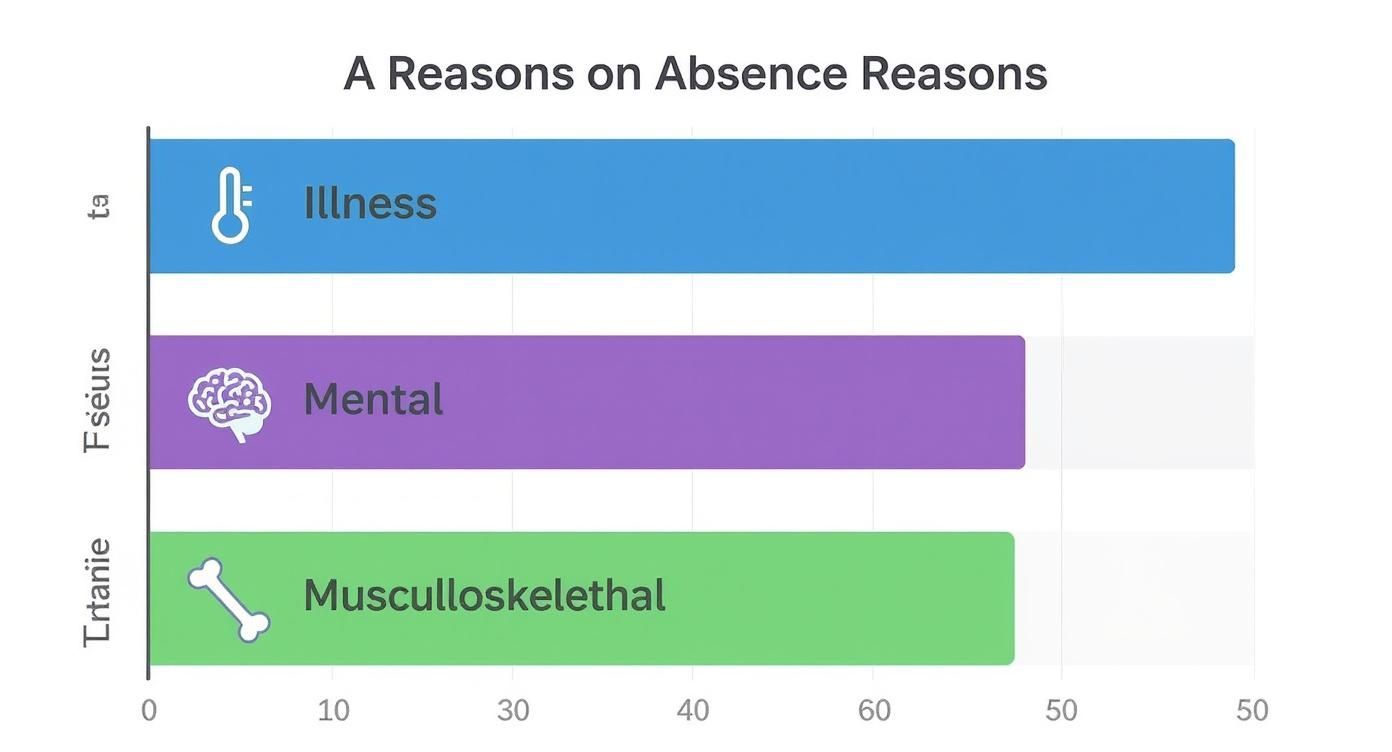
As you can see, while minor illnesses are always a factor, the bigger drivers are often mental health struggles and musculoskeletal problems. These are the issues that can really take a toll.
Public vs Private Sector Disparities
One of the starkest divides is between the public and private sectors. The numbers don't lie: public sector employees are 60% more likely to take a sick day than their private sector counterparts.
This gap isn’t just a coincidence. It often comes down to fundamental differences in job security, organisational culture, and the very nature of the work. Jobs in healthcare, education, and social care, for example, often involve high levels of stress and emotional labour, which can easily lead to burnout and mental health-related absences.
Generational and Gender Differences
Demographics also tell a compelling story. The latest UK figures show a staggering 149 million working days were lost to sickness in 2024, and the data reveals clear splits across age and gender.
Women, for instance, consistently report higher rates of sickness absence than men. This is a long-standing trend, often linked to differing societal roles, caring responsibilities, and specific health challenges. You can dive deeper into the official figures with this helpful breakdown of UK sickness absence statistics.
Interestingly, younger generations like Gen Z tend to take fewer sick days than their older colleagues. The reasons are complex – it could be anything from different attitudes towards work to a greater fear of falling behind, leading to more presenteeism.
This all points to one critical truth: employers have to understand the varied pressures facing their specific workforce. A manager in a public sector hospital is dealing with a completely different set of challenges to one running a private tech startup. Your absence management strategy needs to reflect that reality.
UK Absence at Work A Snapshot of Key Demographics
The data on sickness absence in the UK reveals significant variations across different demographic groups. Understanding these trends is crucial for employers looking to create fair and effective absence management policies that address the root causes, rather than just the symptoms.
| Demographic Group | Key Finding | Potential Implication for Employers |
|---|---|---|
| Public vs. Private Sector | Public sector workers have a significantly higher absence rate (2.8%) compared to the private sector (1.7%). | Public sector roles may involve higher stress or different sick pay schemes, requiring tailored well-being initiatives. |
| Gender | Women consistently show higher sickness absence rates than men across almost all age groups. | Employers should consider factors like caring responsibilities and gender-specific health issues in their support systems. |
| Age | Sickness absence rates tend to increase with age, with workers aged 50-64 having the highest rates. | Older workers may face more chronic health conditions, highlighting the need for flexible working and health support. |
| Organisation Size | Larger organisations (500+ employees) report higher absence rates than smaller ones. | Smaller businesses may have a different culture or closer monitoring, while large firms need robust, scalable absence policies. |
Ultimately, the data shows that absence is not a monolithic issue. By recognising the unique challenges faced by different segments of their workforce—from older employees to those in high-pressure public sector jobs—employers can move towards a more empathetic and effective approach to managing health and well-being at work.
The Hidden Costs of an Absent Employee
When an employee is off, the impact is never just about one person's empty chair. Think of it like a ripple in a pond; their absence is the splash, but the waves disrupt workflows, timelines, and even customer experience across the whole business. The direct cost of sick pay is obvious, but it’s often the smallest part of the problem.
The most immediate effect lands squarely on the shoulders of their colleagues. Suddenly, people are forced to juggle their own duties with unfamiliar tasks, causing a serious drop in overall efficiency. This constant stop-start not only slows projects down but also ramps up the risk of mistakes as people get stretched thin.
The Overburdened Team Effect
This reshuffling of work isn't just an operational headache; it takes a real human toll. When your most reliable people are constantly asked to pick up the slack for others, it's a fast track to burnout and resentment.
It’s a toxic cycle that’s hard to break:
- Team morale plummets as the workload starts to feel unbalanced and unfair.
- Stress levels spike for the employees who are always there, making them more likely to get sick themselves.
- Engagement drops because people feel overworked and undervalued.
Over time, this erodes the collaborative spirit you’ve worked so hard to build. The cultural damage can be far more expensive and difficult to fix than any temporary dip in output. For a deeper dive, you can learn more about how to calculate the real cost of absenteeism for employers.
Quantifying Lost Time and Productivity
The scale of this issue in the UK is massive. In the 2023/24 period alone, a staggering 33.7 million working days were lost in Great Britain due to work-related ill health and non-fatal injuries.
What’s driving this? The vast majority were due to stress, depression, or anxiety, which accounted for a huge 16.4 million days lost. People suffering from these conditions were off work for an average of 21.1 days per case, which really shows the severe, long-term impact of poor mental wellbeing.
An absent employee doesn’t just mean one person's work isn't getting done. It means several people are now doing their own jobs less effectively, creating a cumulative drag on productivity that hits your bottom line.
Ultimately, the hidden costs of absence at work are substantial. They show up in delayed projects, declining service quality, and a strained team culture. Tackling absenteeism proactively isn't just about managing schedules; it’s about protecting your company’s operational stability and, most importantly, your people.
How to Build a Fair and Effective Absence Policy
A great absence policy isn’t about punishment. Think of it as a clear, consistent, and supportive framework that helps everyone understand what’s expected of them. It gets rid of the guesswork and makes sure things are fair, which is absolutely vital for building trust.
Putting together a solid policy is your first line of defence against the operational chaos that uncontrolled absence at work can cause. The aim is to create a blueprint that protects the business while also looking after your employees' well-being.
Finding that balance is key. A policy that feels too harsh can make people reluctant to take time off when they genuinely need it, which only leads to presenteeism and burnout. On the flip side, a policy that's too vague just opens the door to confusion and misuse.
Defining Your Core Components
Your policy should be a practical guide, not a dense legal document that nobody reads. It needs to clearly map out the essential steps that both employees and managers have to follow.
Start with the basics. Your policy should spell out:
- Reporting Procedures: Who should an employee contact if they can't come to work? By what time? And how should they do it? A phone call to their direct manager is usually best—not a last-minute text.
- Certification Requirements: When do you need a doctor's fit note? In the UK, this is typically for any absence that lasts longer than seven calendar days.
- Return-to-Work Interviews: These informal chats are brilliant. They're a chance to check in with an employee after they've been off, show you care, and spot any recurring issues before they become bigger problems.
Authorised vs Unauthorised Absence
Clarity is your best friend when defining different types of leave. Your policy has to draw a clear line between authorised absence (like approved holidays or a scheduled hospital appointment) and unauthorised absence (like not following the reporting rules or just not showing up). This distinction is the bedrock of managing attendance fairly and consistently across the company.
When you're building a fair and compassionate framework, it's also crucial to plan for specific, sensitive situations. For instance, creating clear guidelines for grieving is paramount. Understanding modern bereavement leave policies can offer real insight into how to properly support employees through their most difficult moments.
The real test of your policy is whether it’s applied the same way for everyone, from a junior team member to a senior manager. Fairness isn’t negotiable; it’s the foundation of a healthy workplace culture.
Legal Duties and Compliance in the UK
Finally, your policy must be legally sound. In the UK, that means it needs to align with key legislation, especially the Equality Act 2010. This act protects employees from discrimination and requires employers to make "reasonable adjustments" for those with disabilities.
Your policy isn't just an internal document; it's a statement of your legal responsibilities. Deciding whether an employee's condition counts as a disability is a legal call, not a medical one, but it has to be informed by proper medical advice, often from an Occupational Health specialist. A well-written policy ensures you meet these duties, protecting both your people and your business.
Proactive Strategies That Actually Reduce Absence

Managing absence once it happens is one thing, but preventing it in the first place? That’s the real game-changer. It’s all about shifting from a reactive firefight to a proactive mindset that builds a workplace where people are genuinely healthier and more resilient.
This isn’t about trying to get rid of sick days altogether—that’s just unrealistic. It's about creating an environment where your team is less likely to become unwell to begin with.
Think of these strategies less as business expenses and more as smart investments. They pay dividends in loyalty, engagement, and productivity, ultimately making your business stronger from the inside out.
Proactive vs Reactive Absence Management Strategies
To truly grasp the difference, it helps to compare the two approaches side-by-side. Reactive strategies are about damage control, while proactive ones are about building a solid foundation.
| Strategy Type | Example Actions | Primary Goal | Long-Term Business Impact |
|---|---|---|---|
| Proactive | Flexible working, wellness programmes, EAPs, open mental health dialogue. | Prevent the root causes of absence (e.g., stress, burnout). | Increased loyalty, higher engagement, reduced turnover, improved productivity. |
| Reactive | Return-to-work interviews, disciplinary action, tracking absence rates. | Manage and document absence after it has already occurred. | Can create a culture of mistrust, addresses symptoms not causes, may lead to presenteeism. |
As you can see, simply reacting to absence is a short-term fix. A proactive approach, on the other hand, cultivates a healthier, more sustainable workplace for everyone.
Fostering a Supportive Culture
The bedrock of any effective absence reduction plan is a culture of genuine support. When your employees feel valued, heard, and cared for, they are far more engaged and much less likely to suffer from work-related stress—a huge driver of long-term absence at work.
This all starts with open, honest communication. You need to create a space where people feel safe talking about their mental health or workload before they hit a breaking point. To build a truly fair approach, it's also vital to understand factors that can impact employees differently, such as ADHD in the workplace, which might influence attendance patterns and require more tailored support.
High-Impact Practical Initiatives
A great culture is essential, but it needs to be backed up by tangible policies. Practical steps show you’re serious about wellbeing and can have a dramatic impact on your absence rates.
Here are a few key initiatives to consider:
- Flexible Working Options: Things like remote work, flexible start times, or compressed work weeks give people the autonomy to manage their personal lives. This reduces stress and helps prevent burnout.
- Employee Assistance Programmes (EAPs): A good EAP offers confidential counselling and support for all sorts of issues, both personal and professional. It helps staff get ahead of problems before they spiral.
- Promoting Mental Health Awareness: Run workshops, share resources, and normalise conversations around mental health. Just as importantly, train your managers to spot the early warning signs of distress in their teams.
A proactive approach addresses the root causes of absence, like burnout and stress, rather than just managing the symptoms. It’s the difference between fixing a leak and building a stronger roof.
Putting these measures in place creates a powerful buffer against the common drivers of workplace absence. For even more ideas, you can explore these additional five ways of reducing absenteeism in the workplace.
Ultimately, by investing in your team’s health, you create a positive cycle: supported employees are more present, productive, and committed to helping your company succeed.
Common Questions About Managing Absence at Work
When you're a manager, handling absence at work throws up some tricky situations. You're constantly balancing empathy for your team with the need to apply company policy fairly. Having clear, confident answers is key.
Let's tackle some of the most common questions managers face.
How Should We Handle Frequent Short-Term Absences?
A string of short, unplanned absences can often cause more chaos than one long-term sick leave. The secret to managing this is to be proactive and, above all, consistent.
Make a habit of holding a return-to-work interview after every single absence, no matter how brief. It doesn’t have to be a formal grilling; a simple chat is often enough. This shows the employee you’ve noticed they were away and gives you a chance to spot any underlying issues.
If you start seeing a pattern emerge without a solid medical reason, that’s your cue to begin your formal attendance management process.
Whose Medical Advice Should We Follow?
It's a classic dilemma. An employee is on long-term sick leave, their GP says one thing, and your company's Occupational Health (OH) adviser says another. Who do you listen to?
While you should always consider medical input from all sides, you're generally entitled to rely on the advice from your own OH adviser. They have the advantage of understanding your specific workplace and can suggest practical, reasonable adjustments to help someone return. Ultimately, the legal decision on what is "reasonable" rests with you, the employer.
How Do We Support an Employee on Long-Term Sick Leave?
The worst thing you can do is let them feel forgotten. Maintaining contact is absolutely crucial. Regular, sensitive communication helps the employee feel valued and connected to the team.
Agree on a communication plan upfront – how and when you'll check in. The focus should always be on their well-being, not on pressuring them to come back before they're ready.
When the time feels right, work with your OH team to map out a phased return. This could involve reduced hours or lighter duties to ease their transition back into the workplace, giving them the best possible chance of a successful and sustainable return.
Simplify your absence management and get a clear view of your team's availability with Leavetrack. Discover how our online system can save you time and streamline your processes.