

A Guide to Staff Absence Management
Posted by Robin on 15 Nov, 2025 in
So, what exactly is staff absence management? Think of it less as just tracking sick days and more as a strategic approach to handling why, when, and how your people are away from work. It’s about creating clear policies, fair procedures, and a supportive environment to manage everything from holidays to unexpected illness. The goal? Minimise disruption and keep the business running smoothly, all while looking after your team's wellbeing.
The Hidden Costs of Unmanaged Employee Absence

Staring at an empty desk is more than just a minor inconvenience; it’s a symptom of a much bigger problem brewing under the surface. When an employee is off, the obvious costs like sick pay are just the tip of the iceberg. The real damage runs much deeper, sending ripples across the entire organisation.
Picture your team as a finely-tuned machine. If one crucial part suddenly goes missing, the others have to work harder, faster, and under a lot more strain to pick up the slack. This constant firefighting is completely unsustainable and kicks off a chain reaction of negative effects.
Beyond the Obvious Financial Drain
The most immediate hit is financial, but it’s about far more than just one person's salary. Productivity doesn't just dip because one person is away; it plummets because their colleagues have to drop what they're doing to cover essential tasks, often without the right knowledge or context.
The numbers really bring this into focus. Workplace health issues are estimated to cost UK employers a staggering £85 billion every year in lost productivity and related expenses. With roughly 150 million workdays lost to sickness annually, the financial weight is enormous.
This constant disruption also creates a huge administrative headache. Managers get bogged down reorganising workflows, communicating changes, and shuffling paperwork instead of focusing on their actual jobs. This hidden cost is a massive drain on your leadership team's time and energy. You can dig deeper into how to calculate the cost of absenteeism here.
The Impact on Team Morale and Culture
Perhaps the most corrosive hidden cost is the slow erosion of team morale. When absences become a frequent and unmanaged issue, the employees left behind are often lumbered with heavier workloads and a lot more stress. This can quickly lead to:
- Resentment: People get frustrated when they feel absence policies are a lottery, or that they’re always the ones left to carry the extra weight.
- Burnout: Constantly covering for absent colleagues is a fast track to exhaustion and disengagement, which ironically, just increases the risk of more people going off sick.
- A Drop in Quality: Overworked and stressed employees are far more likely to make mistakes, which can hit the quality of your work and even damage customer relationships.
An inconsistent approach to staff absence doesn't just mess up the rota; it chips away at the trust and fairness that hold a positive workplace culture together.
Ultimately, letting absence go unmanaged sends a clear signal that the organisation is reactive, not proactive. It exposes you to broader human capital risks and how to stop them. Putting a proper plan in place isn't just about cutting costs—it's about building a reliable, supportive, and productive environment for everyone.
Understanding Why Employees Are Absent

To really get a handle on absence, you first have to understand the 'why' behind it. It's a bit like being a detective; you can’t solve the mystery without figuring out the motive. An employee's absence is rarely a simple, one-off event. More often, it's a complex puzzle involving everything from genuine illness and personal crises to burnout and workplace stress.
Simply tallying up days off doesn't cut it. A proper staff absence management approach digs deeper to unearth the root causes. Doing this allows you to provide the right kind of support and, ultimately, build a healthier, more resilient team.
This means shifting away from just tracking excuses and instead cultivating a culture of trust. When employees feel they can be open about their health and wellbeing, you can finally start addressing the real drivers of absence, not just the symptoms.
The Main Categories of Absence
To help make sense of it all, employee absence usually falls into a few key categories. Each one calls for a slightly different response, and knowing the difference is the first step towards creating a fair and effective policy.
Before we dive into the specific reasons people might be off work, let's group them into some common types. This table helps to categorise the main kinds of employee absence, outlining their typical causes and duration to help you spot patterns.
Common Types of Staff Absence and Their Drivers
| Absence Type | Common Causes | Typical Duration | Management Focus |
|---|---|---|---|
| Short-Term Sickness | Colds, flu, stomach bugs, minor injuries. | 1-7 days | Return-to-work interviews, pattern monitoring. |
| Long-Term Sickness | Serious illness, surgery, chronic conditions. | 4+ weeks | Structured support, phased return, occupational health. |
| Unauthorised Absence | No permission, no valid reason, "pulling a sickie". | Varies | Investigation, disciplinary procedures. |
| Dependant/Carer's Leave | Child's illness, family emergency. | Typically 1-2 days | Empathy, clear policy, flexibility. |
| Compassionate Leave | Bereavement. | Varies by policy | Compassion, support, flexibility. |
Understanding these distinctions is crucial. You wouldn't manage a case of the flu the same way you'd support someone recovering from major surgery. Tailoring your approach shows you're not just managing numbers, but looking after your people.
Of course, there are countless factors that can lead to someone being off work. You can explore some of the other major reasons for absenteeism in the workplace to build a fuller picture of the challenges your team might be facing.
Modern Drivers Reshaping Attendance
The world of work is changing, and so are the reasons people are absent. Recent trends paint a clear picture of a workforce facing new and significant health challenges. In fact, data shows UK employees took an average of 9.4 days off sick in the past year.
This spike is largely driven by long-term health conditions, which now affect a staggering 8.7 million working-age people in the UK. This isn't about the odd cold; it's a fundamental shift in employee wellbeing.
Understanding that absence is often a symptom of a deeper issue—be it physical health, mental wellbeing, or workplace stress—is the key to shifting from a reactive to a proactive management style.
Two of the biggest modern drivers are mental health and musculoskeletal problems. Stress, anxiety, and depression have become leading causes of long-term absence. At the same time, issues like back pain continue to be a persistent problem, especially as working habits evolve.
One of the most effective ways to get ahead of these issues is by investing in your team’s health. Exploring some innovative workplace wellness program ideas can give you a direct route to tackling the root causes of absence. By recognising these modern challenges, you can build a support system that truly meets your employees' needs.
How to Build a Fair and Effective Absence Policy
A great absence policy isn’t some rigid rulebook designed to catch people out. Far from it. It’s a supportive framework that brings clarity for everyone, from the newest hire to the senior management team. Think of it as the foundation of your house; without a solid one, your entire approach to managing absence becomes wobbly, inconsistent, and likely to crumble under pressure.
This section is a practical blueprint for building a policy that’s robust, fair, and legally sound. We’ll break down the essential components into simple, actionable steps. The goal is to create a document that empowers both managers and employees by setting clear, predictable expectations right from the start.
When you get this right, you remove the guesswork. Everyone knows where they stand, and they know they’ll be treated equitably. That alone is a massive win for a healthy workplace culture. It turns absence management from a reactive headache into a structured, supportive process.
Define Clear Reporting Procedures
First things first: everyone needs to know exactly how to report an absence. Any ambiguity here is a recipe for chaos and frustration. Your policy must spell out precisely who to contact, how to do it, and by when.
For instance, is a quick text to their line manager okay, or do they need to phone a specific department? Get specific and set a clear deadline, like, "Employees must call their line manager no later than one hour before their scheduled start time." This simple rule stops managers from wasting their morning chasing ghosts and wondering who’s actually coming in.
This isn't about being overly strict for the sake of it. It’s about creating a reliable channel of communication so the team can reorganise the day's workload with minimal disruption. It also gives the manager an early opportunity to check in on the employee's wellbeing.
Explain Fit Notes and Certification
Your policy needs to be crystal clear on what’s required for medical evidence. Here in the UK, an employee can self-certify for the first seven calendar days they're off sick. After that, they need to provide a fit note (what we used to call a sick note) from a healthcare professional.
Make sure your policy outlines this process simply:
- Self-Certification: Specify how an employee should self-certify for absences up to seven days. This is usually just a simple internal form they fill out when they get back.
- Fit Notes: Explain that a fit note is needed from the eighth day of absence onwards. It should be sent to HR or their line manager as soon as they have it.
- "May Be Fit for Work": This part is key. Detail how you'll handle fit notes that suggest an employee could return with adjustments, like a phased return or different duties. It shows you’re focused on helping them get back on their feet, not just ticking a box.
Structure Return to Work Interviews
A return to work interview is probably one of the most powerful tools you have in managing absence, but only if it’s done right. This should never, ever feel like an interrogation. It’s a supportive, informal chat to welcome the employee back and make sure they’re genuinely ready to be there.
The goal of a return to work interview is not to challenge the absence, but to understand its cause, offer support, and identify any workplace factors that may have contributed to it. A consistent process shows you care about employee wellbeing beyond their productivity.
These conversations are brilliant for helping managers spot recurring issues or underlying health problems early on. They also act as a gentle deterrent to the odd non-genuine sickie, as people know a friendly chat will always happen when they return. Your policy should make it mandatory to hold one after every single absence, no matter how short, to ensure total consistency.
Set Consistent Trigger Points
To manage absence fairly across the board, you need a system that flags when patterns of absence might be becoming a concern. This is where trigger points come in. These are simply predefined thresholds that, when crossed, prompt a more formal, supportive conversation.
For example, a trigger might be:
- Three separate instances of absence within a rolling three-month period.
- Ten days of total absence within a rolling twelve-month period.
Now, this is the crucial part: hitting a trigger should not lead to automatic disciplinary action. It’s a mechanism to start a supportive conversation, figure out if there are underlying issues, and discuss what help the company can offer. This approach keeps you fair, supportive, and compliant with UK legislation like the Equality Act 2010, by focusing on support long before you even think about discipline.
Mastering the Return to Work Conversation
How you welcome an employee back can make or break their entire experience. This moment is so much more than a box-ticking exercise; it's a real chance to show you care, rebuild that team connection, and make sure their transition back is as smooth as possible. Too often, this chat feels like an interrogation when it should feel like a supportive dialogue.
Think of a coach helping an athlete get back on the pitch after an injury. The conversation isn't about blame or suspicion. It’s about understanding their readiness, spotting any potential hurdles, and working together on a plan for a safe and sustainable comeback. That’s the mindset you need.
Adopting this approach turns a simple process into a powerful way to boost morale, trust, and long-term wellbeing. Getting this conversation right is a cornerstone of great absence management.
The Three Pillars of a Supportive Conversation
A truly effective return to work chat is built on three simple actions: asking the right questions, listening properly, and planning together. Nail this structure, and the meeting will be both productive and compassionate, setting the stage for a positive return.
Ask Open Questions: Start by welcoming them back and asking how they're feeling now. You don't need to pry into their medical condition. Instead, focus on their fitness for work. Good questions sound like, "Are there any adjustments we can make to help you settle back in?" or "Is there anything about your role you're concerned about?"
Listen Actively: This is about more than just hearing their words—it's about understanding what’s really being said. Pay attention to their tone and body language. Show you're listening by summarising what you've heard, like, "So it sounds like you’re ready to be back, but the morning commute might be a challenge for the first week or so."
Plan Together: The final step is to create a clear plan that you both agree on. This isn't about you dictating terms; it's a joint effort. Discuss what support might help and sketch out what the next few days or weeks will look like. This collaborative approach empowers the employee and proves you’re committed to their wellbeing.
Common Pitfalls and How to Avoid Them
Even with the best intentions, it's easy to get these sensitive discussions wrong. One of the biggest mistakes is making assumptions about why someone was off or what they're capable of now. This can leave them feeling judged or completely misunderstood.
Always stick to the facts and the information you have, like what's on a fit note. Another common error is poor documentation. If you don't properly record the conversation, the reasons for absence, and the agreed plan, you open the door to inconsistencies and potential legal headaches down the line.
A well-documented return-to-work conversation is not just an administrative record; it’s proof of your organisation's commitment to a fair, consistent, and supportive absence management process.
Finally, inconsistency is a massive pitfall. If managers handle these conversations differently across the business, it breeds feelings of unfairness and kills morale. Make sure every manager is trained to follow the same supportive process.
Structuring a Successful Return
Sometimes, jumping straight back into a full workload isn't realistic or even safe. In these cases, you need a more structured approach. This is where options like a phased return become invaluable. For employees recovering from a long-term illness or injury, gradually increasing their hours or responsibilities can make all the difference. You can learn more about how to manage a phased return to work in our detailed guide.
Another key tool is making temporary adjustments to their duties. This could mean removing physically demanding tasks or allowing more flexible working hours for a while. For more complex situations, getting guidance from an Occupational Health specialist can provide expert advice on creating a safe and effective return-to-work plan. Acting quickly is crucial here. An employee has a 96% chance of returning to work after a four to six-week absence, but this plummets to below 50% if they are off for over a year. You can read the full research on how proactive support sustains workforce participation to see just how important this is.
Using Data to Improve Your Absence Strategy
Are you just tracking absence, or are you actually understanding it? To get ahead of the game with your staff absence management, you need to turn raw numbers into a genuine strategic asset. Without data, you're essentially flying blind, making decisions based on guesswork instead of solid evidence.
Think of your absence data as a navigation system for your business. It doesn't just show you where you are right now; it helps you plot a much better course for the future. By monitoring the right metrics, you can spot emerging trends, identify departments that might need more support, and recognise individuals who could be struggling before a small issue snowballs into a major problem.
This data-led approach allows you to make informed decisions that boost both employee wellbeing and business performance. It’s all about seeing the story behind the numbers.
Key Metrics Every Organisation Should Monitor
To get started, you need to know what to measure. While every business is unique, a few core metrics provide a powerful snapshot of your workforce's health and attendance patterns. Focusing on these will give you the clarity you need to take meaningful action.
Some of the most insightful metrics include:
- Absence Frequency Rate: This tracks how many separate instances of absence happen over a set period, regardless of how long each one lasts. A high frequency rate can point to underlying issues, even if the total number of days lost is low.
- Lost Time Rate: This calculates the percentage of total available working hours that have been lost to absence. It gives you a clear, bottom-line picture of the overall impact on productivity.
- The Bradford Factor: This is a formula (S² x D, where S is the number of separate absences and D is the total days of absence) that gives extra weight to frequent, short-term absences, which are often the most disruptive to a team's rhythm.
Using these metrics isn't about catching people out. It's about identifying patterns that signal a need for support. A high Bradford Factor score, for instance, should trigger a supportive conversation, not an automatic disciplinary warning.
Turning Insights into Action
Once you start tracking this data, the real work begins: interpreting what it’s telling you. Are absences spiking in a particular team? Is there a seasonal trend you were never aware of? This is where your data becomes a powerful tool for positive change.
For example, if you notice one department has a consistently high absence frequency rate, it might point to issues with workload, management style, or team morale. This insight lets you intervene with targeted support, like management coaching or a team wellbeing workshop, rather than applying a clumsy, one-size-fits-all solution.
This infographic outlines the simple, human-centric steps that your data should lead to, kicking off with a structured return-to-work conversation.
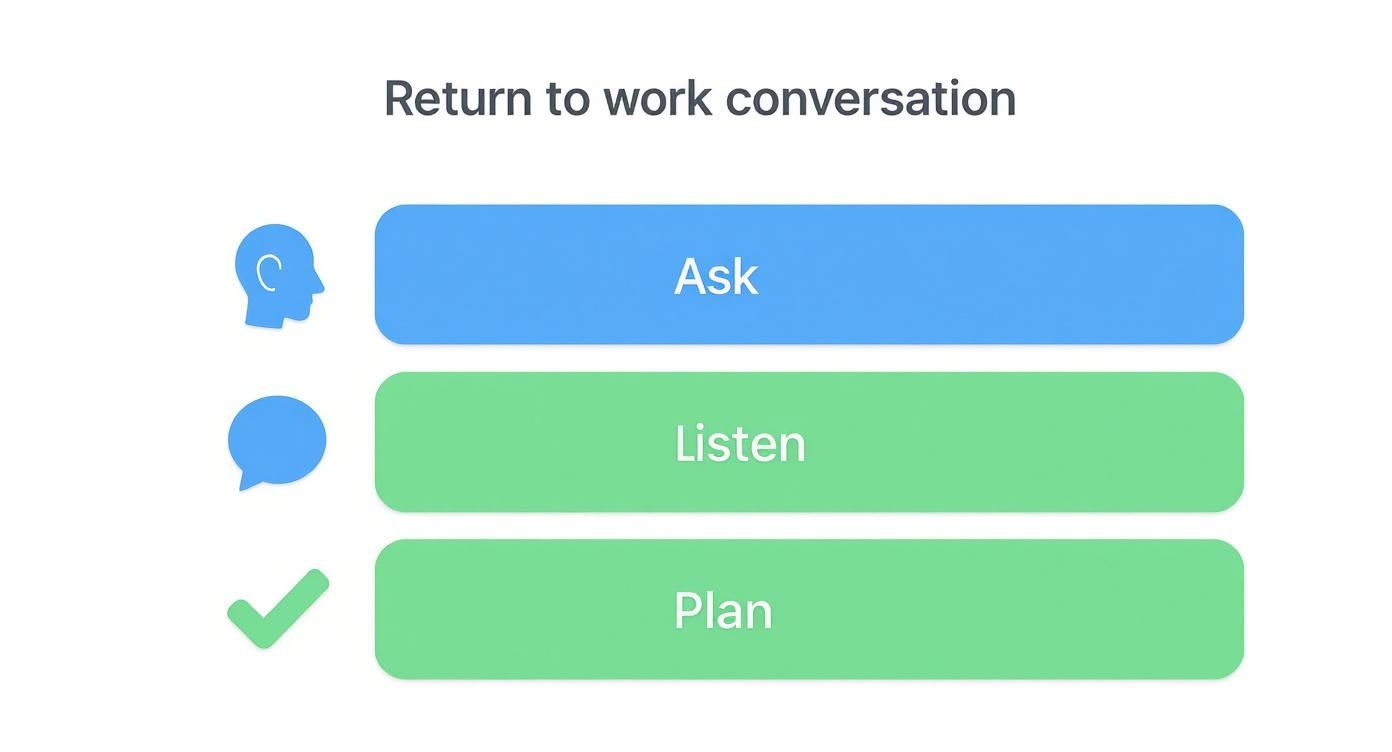
The process shown here—Ask, Listen, and Plan—is the practical application of your data-driven insights. It ensures every conversation is supportive, constructive, and focused on finding a way forward.
Choosing the Right Absence Management Software
If you're still wrestling with spreadsheets and a chaotic inbox to track who's off when, you’re making life harder than it needs to be. It's a familiar story, but these manual methods are sluggish, riddled with errors, and give you absolutely no strategic insight. Moving to dedicated absence management software is like ditching a paper map for a GPS – the difference in real-time accuracy and efficiency is night and day.
The right platform takes your business beyond just logging days off and into the realm of proactive staff absence management. It brings all your leave data into one place, automates the boring admin, and gives managers the clarity they need to plan ahead. This isn't just about saving time; it's about equipping your team with the tools to make smarter, data-driven decisions.
Defining Your Core Requirements
Before diving into demos and sales pitches, take a step back and figure out what you actually need. Every business is unique, so a one-size-fits-all solution is rarely the answer. Start by asking a few straightforward questions to nail down your list of must-haves.
Think about these points:
- Team Size and Complexity: How many people are you managing? Are you spread across different locations or countries with their own public holidays?
- Approval Workflows: Is a simple nod from a line manager enough, or do you have more complex, multi-step approvals for certain types of leave?
- Integration Needs: Does this tool need to play nicely with your existing payroll, HRIS, or calendars like Outlook and Google Calendar?
- Reporting and Analytics: What information do you really need to see? Are you after basic reports on sick days, or do you want to dig deeper into absence trends and patterns?
Answering these questions first will save you a world of pain. It helps you quickly filter out the tools that won't work and zero in on the software that genuinely fits how your business operates.
Essential Features to Look For
Once you have your requirements clear, you can start looking at what different platforms offer. A solid absence management tool should do more than just record time off; it should actively make the whole process simpler and better for everyone involved.
At a minimum, you should be looking for a platform that includes:
- A Centralised Team Calendar: A visual planner that shows who is off and why is non-negotiable. It gives you instant clarity on who’s available and helps stop clashes before they happen.
- Automated Leave Requests and Approvals: The system should make it dead simple for staff to request time off and for managers to approve or deny it with a click, whether that’s from their email or a tool like Slack.
- Customisable Leave Policies: Your software has to bend to your rules. It needs to handle everything from annual holidays to sickness and compassionate leave, exactly as your policy dictates.
- Real-Time Reporting Dashboards: Getting instant access to reports on absence rates, individual leave records, and emerging trends is crucial for making informed decisions.
A key benefit of dedicated software is its ability to move absence management from a reactive chore to a proactive strategy. It provides the visibility and tools needed to support managers and address issues before they escalate.
Unfortunately, many organisations are still stuck putting out fires. The State of Absence Report found that over a third of HR leaders admit their companies only react to absence issues after they’ve already become a problem, especially when it comes to mental health. Switching to a proper software solution is a massive step towards building a proactive framework that can genuinely support your team. Find out more about how proactive strategies improve data visibility and empower managers.
Your Staff Absence Questions, Answered
Let's be honest, handling staff absence can feel like walking a tightrope. You're balancing legal duties, business needs, and genuine concern for your team's wellbeing. To help you find your footing, here are some straight answers to the questions we hear most often from managers and HR pros.
What’s the Deal with the Bradford Factor? Should We Even Use It?
You’ve probably heard of the Bradford Factor. It’s a simple formula (S² x D, where 'S' is the number of separate absences and 'D' is the total days absent) designed to flag frequent, short-term absences. The kind that can be more disruptive than one long stretch of sick leave.
Think of it as a smoke alarm, not a fire extinguisher. It’s a useful tool for spotting a potential pattern, but it should never be the only reason you take disciplinary action. Its real value is as a trigger—a prompt to sit down with your employee and have a supportive conversation to understand what’s really going on.
A word of caution: relying too heavily on the Bradford Factor can land you in hot water. It can unfairly penalise people with chronic health conditions or disabilities, creating some serious legal headaches under the Equality Act 2010. Use it to start a dialogue, not to jump to conclusions.
How Do We Handle Absence When Our Team Is Remote?
Managing absence for remote staff really boils down to two things: clear communication and trust. Your absence policy needs to be crystal clear about how remote workers should report in sick. A quick phone call is often much better than a Slack message or email, as it gives you a chance to check in properly and gauge how they're really doing.
You can't just rely on spotting someone looking unwell in the office anymore. That's why regular check-ins and virtual one-to-ones are so important. They help you spot the early signs of burnout or disengagement before they turn into a longer absence. And remember, return-to-work interviews are just as crucial for your remote team. A video call works perfectly and ensures everyone gets the same level of support.
When Should We Bring in Occupational Health?
Think of Occupational Health (OH) as your expert medical advisor. You should make a referral when you need impartial, professional advice on an employee's fitness for work and how you can best support their return. It’s a positive, proactive step.
There are a few key moments when an OH referral makes sense:
- Long-term absence: Usually, this is when someone has been off for four weeks or more.
- Recurring short-term absences: If you're seeing a pattern, it could point to an underlying health issue that needs a professional opinion.
- When you need help with adjustments: OH can provide invaluable advice on making reasonable adjustments for a disability or health condition.
Crucially, you must get the employee's consent before making a referral. The whole point isn’t to challenge their illness, but to work together to find a safe and sustainable way for them to come back to work.
Tired of chasing down leave requests in messy spreadsheets? Leavetrack gives you a clear, central hub for planning and approving staff leave, so you can get back to managing your team, not your admin. Discover how Leavetrack can save you time and hassle today.