

A Manager's Guide to Phased Return to Work Plans
Posted by Robin on 03 Dec, 2025 in
A phased return to work is a structured, temporary plan designed to help an employee ease back into their role after a period of absence. It’s a vital strategy for looking after your people, retaining valuable talent, and keeping sickness-related costs down.
Understanding the Value of a Phased Return to Work

When someone’s ready to come back after a long-term absence, expecting them to jump straight back into their full duties from day one is often unrealistic. More than that, it can be counterproductive. A phased return to work programme bridges that tricky gap between being off sick and being fully productive again, creating a supportive pathway that benefits everyone involved.
The core idea is to temporarily modify an employee’s duties, hours, or work patterns. The goal is to gradually reintroduce them to their responsibilities, preventing the overwhelm that can easily lead to a relapse and more time off. Think of it as a rehabilitation period for their professional life, whether they're recovering from surgery, managing a chronic condition, or returning after mental health leave.
More Than Just a Nice-to-Have
Getting these plans right has become standard practice for good reason. According to the Chartered Institute of Personnel and Development (CIPD), a phased return is one of the top three support measures offered by UK organisations. An impressive 43% of employers now provide them as a direct response to rising absence rates, which have climbed from a pre-pandemic average of 5.8 days to 9.4 days per employee.
This isn’t just about managing statistics; it’s about acknowledging the reality that over 8 million working-age people in the UK live with long-term health conditions. A well-structured plan offers immense benefits for both sides.
Below is a quick summary of why a phased return to work programme is such a powerful tool.
Key Benefits of a Phased Return to Work Programme
| Benefit for Employee | Benefit for Employer |
|---|---|
| Provides a gentle, less stressful re-entry into the workplace. | Significantly lowers the risk of re-absence, which is costly and disruptive. |
| Allows them to rebuild confidence and stamina at a manageable pace. | Helps retain valuable, experienced staff, avoiding recruitment costs. |
| Reduces anxiety about returning to full responsibilities immediately. | Demonstrates a commitment to employee wellbeing, boosting morale. |
| Helps them feel valued and genuinely supported by their employer. | Ensures a smoother transition and quicker return to full productivity. |
Ultimately, a well-managed programme shows you understand that recovery doesn't end the moment an employee walks back through the door.
A well-managed phased return acknowledges that recovery doesn't end the moment an employee walks back through the door. It’s a proactive investment in their long-term health and a strategic move to ensure business continuity.
Of course, getting this right is crucial. Missteps can make an already stressful situation worse for the employee and create administrative headaches for managers. Understanding the common challenges of managing employee absences is the first step toward building a more supportive and efficient system. A structured, empathetic approach turns a potentially difficult transition into a positive and productive experience for the entire team.
Meeting Your Legal and Health Obligations
Before you even think about sketching out a schedule for a phased return, it’s crucial to get your head around the legal landscape. In the UK, that conversation always starts with the Equality Act 2010. This bit of legislation is fundamental – it protects employees from discrimination and puts a clear responsibility on employers to make ‘reasonable adjustments’ for those with a disability.
Now, a ‘disability’ under the Act is a pretty broad term. It’s defined as a physical or mental impairment that has a ‘substantial’ and ‘long-term’ negative effect on someone's ability to do normal daily activities. Many situations that call for a phased return—from recovering after surgery to managing a chronic illness or mental health challenges—can easily fit this definition. In fact, a phased return is often seen as a textbook example of a reasonable adjustment.
Getting this wrong isn't just bad management; it can land you in hot water with discrimination claims and serious legal trouble. The trick is to be supportive and proactive from the very first conversation about a potential return.
Navigating Medical Advice with Occupational Health
While a GP's fit note is a good starting point, it’s often short on the practical details you need to build a safe and effective plan. This is exactly where Occupational Health (OH) proves its worth. An OH assessment gives you an impartial, expert view on an employee’s fitness for work and, most importantly, the specific adjustments they might need.
You should seriously consider an OH referral when:
- The employee has been off for a while (say, more than four weeks).
- The reason for their absence is complicated, like a mental health condition or a musculoskeletal injury.
- You're not sure if the employee’s condition could be a risk to themselves or others at work.
- The GP has suggested adjustments, but you need more specific advice to implement them safely.
When you make the referral, don’t be vague. A simple "Are they fit to return?" won't cut it. You need to give the OH advisor context. Send them the job description and ask specific, targeted questions.
Example OH Referral Questions:
- Can the employee currently perform the core duties outlined in their job description?
- If not, which specific tasks are they unable to manage right now?
- What specific adjustments (e.g., reduced hours, modified duties, ergonomic equipment) would you recommend to support a successful return?
- Could you suggest a timeline for a phased return, including how to gradually increase hours or duties?
- Is it likely that the employee's condition is covered by the Equality Act 2010?
The feedback you get from OH gives you a solid, evidence-based foundation for your plan. Properly assessing an employee's medical fitness for work is a core part of this, making sure they can do their job without putting their health at risk.
Confidentiality and Data Protection
Throughout this process, you’ll be handling some very sensitive personal and medical information. It is absolutely vital that you manage this with the strictest confidence, sticking to the rules of GDPR and the Data Protection Act 2018.
Medical details should only be seen by those who have a genuine need to know—typically HR and the employee’s direct line manager. The rest of the team doesn't need to know the ins and outs of their colleague's health. Your communication should focus on the practical side of things, like their working hours, not the reasons behind them.
Keeping things confidential isn't just a legal box-ticking exercise; it's the bedrock of trust. An employee who feels their privacy is respected is far more likely to be open and engaged as they navigate their return to work.
Good record-keeping is your best friend when it comes to compliance. Documenting everything—from the initial meeting and OH reports to the final agreed-upon plan—creates a clear paper trail. This is where understanding why accurate absence tracking is crucial for compliance really pays off, helping you apply policies fairly and protect the organisation.
How to Create a Practical Return to Work Plan
Once you've handled the essential legal and health checks, it's time to get down to the business of crafting a supportive, practical phased return to work plan. This isn't something that can be handed down from on high; it has to be a collaborative process. Think of it less as a set of rigid rules and more as a flexible framework built on open conversation and a shared goal: getting your employee back on their feet.
The whole process kicks off with the return-to-work meeting. This chat sets the tone for everything that follows. It's your chance to really listen, understand their current capabilities, and agree on what a successful return looks like for them.
Conducting the Initial Return to Work Meeting
The main goal here is to create a safe space for an honest conversation. Try to find a private, informal spot, away from the usual office buzz. Remember, the employee is likely feeling a bit anxious or unsure, so your job is to be reassuring and focus on finding solutions together.
You'll want to centre the discussion on a few key areas:
- Their Point of View: Start with open questions. "How are you feeling about coming back?" or "What are your biggest concerns right now?" This gives you real insight into their mindset and any worries they might have.
- Medical Guidance: Gently go over the recommendations from their GP's fit note or an Occupational Health report. Position it as a helpful guide for both of you, focusing on the practical suggestions for making things work.
- Setting Initial Goals: Don't talk about their full role just yet. Instead, focus on what they feel they can manage in the first week or two. Breaking it down into small, achievable steps is a great way to build confidence right from the start.
This meeting is all about building trust. The more an employee feels involved in shaping their own plan, the more committed they'll be to making it a success.
Structuring Graduated Hours and Duties
The heart of any phased return to work is the gradual ramp-up of hours and responsibilities. There’s no magic formula here; every plan needs to be tailored to the individual, their role, why they were off, and the medical advice on the table.
A four-week plan is a pretty common and effective approach. For someone in an admin role recovering from surgery, for instance, it could look something like this:
- Week 1: Kicking off with three half-days (say, 9 am to 1 pm), focusing only on low-pressure tasks like catching up on emails and team updates.
- Week 2: Moving up to four slightly longer days (maybe 9 am to 3 pm), reintroducing one or two core tasks like data entry or simple reports.
- Week 3: A full five-day week but with slightly shorter hours (like 9 am to 4 pm), taking on more complex duties but still steering clear of tight deadlines.
- Week 4: Back to full hours, but with regular check-ins to make sure the workload isn't becoming overwhelming.
For a more physical role, you might focus more on modifying duties than hours. A warehouse operative could come back full-time but be restricted to light packing for the first few weeks, with a clear instruction to avoid all heavy lifting until they’ve fully recovered.
The best plans are built to be flexible. What looks great on paper might need a tweak after day one. Treat the plan as a living document, not a contract set in stone.
This simple flow chart really captures the essence of the process: assess the situation, consult with everyone involved, and then build the plan from there.
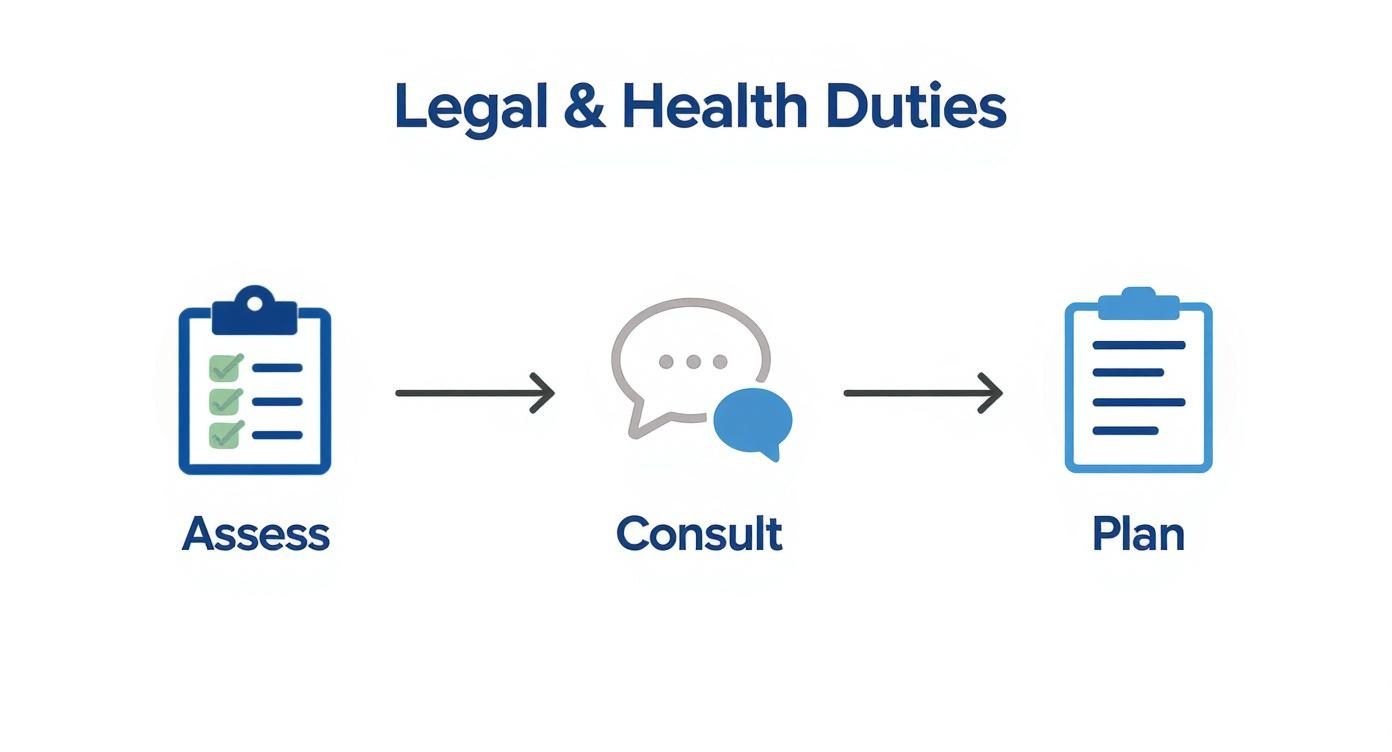
It’s a great reminder that a successful outcome is the result of careful thought and collaboration, not just ticking a box.
Putting It All on Paper
Getting the plan down in writing is absolutely essential. It provides clarity for the employee, their manager, HR, and even payroll. It doesn't need to be a long, complicated document—a simple one-page summary is often all you need.
Make sure your plan clearly outlines:
- Start and End Dates: The expected timeframe for the phased return.
- Weekly Schedule: A simple breakdown of working days and hours for each week.
- Modified Duties: A list of what the employee will be doing, and just as importantly, any tasks they should avoid.
- Review Dates: Scheduled check-ins (weekly is ideal) to chat about progress.
- Key Contacts: The go-to person if they're struggling or have questions.
Documenting these details stops misunderstandings in their tracks and gives everyone a clear reference point. When people know what to expect, it lowers anxiety and lets the employee focus on what matters: their recovery and getting back into the swing of things. Our guide on tips to help your employees safely return to the office offers more ideas for creating a welcoming environment.
Here’s a sample timeline to give you a feel for how a four-week phased return can be structured to gradually increase hours and responsibilities.
Example Phased Return to Work Timeline (4-Week Plan)
This table shows a sample schedule for an office-based role, demonstrating how to build up capacity steadily over a month.
| Week | Working Hours / Days | Key Responsibilities | Review Focus |
|---|---|---|---|
| Week 1 | Mon, Wed, Fri (10am-2pm) | Reading emails, attending team meetings, light administrative tasks. | Energy levels, comfort at workstation, initial feedback. |
| Week 2 | Mon-Thurs (9am-3pm) | Resuming client communication, working on one small project. | Workload manageability, any pain or fatigue, social reintegration. |
| Week 3 | Mon-Fri (9am-4pm) | Managing regular project work, taking on a few more complex tasks. | Confidence levels, ability to handle increased responsibility. |
| Week 4 | Mon-Fri (Full Hours) | Resuming normal duties, with high-pressure tasks reintroduced cautiously. | Readiness for full return, final adjustments needed. |
This kind of structure gives the employee a clear, predictable path forward. It helps them see their own progress week by week, giving them a real sense of achievement as they get closer to being back at full strength.
Communicating the Plan
Once you've worked with your employee to create a solid phased return plan, the next step is all about communication. Honestly, how you handle these conversations—both with the individual and the wider team—can make or break the whole process. It's a real balancing act between providing clarity, setting the right expectations, and keeping things confidential.
Good communication starts with the employee who's coming back. Even though you've built the plan together, it's vital to have one last, clear chat before their first day. Run through the schedule again, confirm their adjusted duties, and make absolutely sure they know who to talk to if they have any worries. This isn't just about logistics; it’s about showing your support and calming any last-minute nerves they might have.
Talking to the Returning Employee
This conversation needs to be both empathetic and practical. Frame the plan as a supportive tool designed to help them succeed, not a list of rigid rules. It's your chance to build their confidence and make sure you're both on the same page about what the first few weeks will look like.
A few key things to cover:
- Confirm the practicals: Double-check start times, working days, and their main tasks. No room for ambiguity here.
- Set expectations: Gently explain what’s expected of them and, just as importantly, what they can expect from you in terms of support and regular check-ins.
- Discuss team communication: This is crucial. Ask them what they are comfortable with you sharing with the team. This empowers them and shows you respect their privacy.
Briefing the Wider Team
This is where managers often feel the most pressure. Your team will naturally be curious, and they need to understand how a colleague’s return might temporarily affect workloads. But let's be crystal clear: the employee’s right to privacy is paramount. You cannot disclose any medical details or the reasons for their absence.
Keep your message positive, professional, and focused purely on the operational side of things. You're not sharing gossip; you're managing team resources.
"Just to let you all know, we're really pleased to have [Employee's Name] coming back on [Start Date]. To help them ease back in, they'll be working a temporary, adjusted schedule for a little while. This might mean we need to shuffle a few priorities to support them, and I'd really appreciate everyone’s help during this period."
This simple, straightforward approach gives the team the necessary information without breaching confidentiality. It sets a supportive tone and manages expectations from the get-go.
Managing Workload and Preventing Resentment
It's completely normal for team members to worry about picking up extra work. If tasks are being redistributed, you have to address this head-on to stop burnout or resentment from creeping in. Be clear that the situation is temporary and that you have a plan to manage the workload fairly.
The key is to focus on solutions and shared responsibility. This could involve:
- Reprioritising tasks: Hitting pause on some non-urgent projects for a short time.
- Distributing work thoughtfully: Don't just dump everything on one person. Share the load across the team based on everyone's capacity.
- Acknowledging their effort: A simple "thank you for your flexibility" goes a surprisingly long way in making people feel valued.
This kind of proactive management is especially important given the pressures many employees are already under. In the UK, stress, depression, or anxiety accounts for a staggering 17.1 million lost working days each year, making up 50% of all work-related ill health. You can read more about the impact of workplace stress and potential solutions to see just how vital a supportive environment is. Fostering a culture where team members help each other out isn't just good for morale; it's a critical part of being a resilient business.
Monitoring Progress and Making Adjustments

A phased return plan isn't something you create, file away, and forget about. It's a living, breathing document. Its success completely depends on consistent monitoring and a genuine willingness to be flexible as things change.
Think of it as a dynamic framework that needs regular feedback to stay supportive and effective for the employee's recovery. The engine that drives this process? Regular, informal check-ins.
These aren't formal performance reviews. They're supportive chats designed to see how things are going, spot any challenges early, and make adjustments before small issues become big problems. I’d recommend aiming for at least one dedicated check-in each week, especially in the early stages.
Leading Effective Review Meetings
To get the most out of these catch-ups, it helps to have a simple, consistent structure. This ensures you cover the important bits without making the conversation feel like an interrogation. The focus must always be on wellbeing and practical support, not just work output.
A good, simple agenda for your check-in might look like this:
- Wellbeing First: Always start by asking open-ended questions like, "How have you been feeling this week?" or "How are your energy levels holding up?" This immediately puts their health at the centre of the conversation.
- Workload Check: Next, move on to specific tasks. Try asking, "How did you find managing that report?" or "Is the current pace feeling comfortable, or is it a bit much?"
- Challenges and Blockers: Proactively ask if anything is getting in the way. A simple, "Have you run into any difficulties we should talk about?" can open the door to important insights.
- Looking Ahead: Finish by discussing the plan for the next week. Crucially, confirm they feel comfortable with whatever the next step is.
If an employee is returning after a period of mental ill-health, it’s incredibly helpful for managers to have a basic grasp of concepts like understanding relapse in mental health. This knowledge helps you offer proactive support and recognise when someone might need a bit more flexibility.
The goal of a check-in isn't to catch an employee out. It's to catch potential issues before they escalate. A five-minute supportive chat can prevent a setback that costs weeks of progress.
This ongoing dialogue is absolutely vital. Consider the government's Keep Britain Working Review, which found that while 96% of employees who are absent for 4-6 weeks successfully return, this number plummets to under 50% after a year. This starkly illustrates how a well-managed, monitored phased return to work is essential for preventing long-term absence.
Knowing When to Adjust the Plan
Being responsive means knowing what signs to look for. Not all feedback will be direct; sometimes you need to read between the lines or notice small changes in behaviour.
You should be ready to tweak the plan if you see:
- Signs of Struggle: This could be recurring fatigue, missed deadlines they'd normally hit with ease, or increased anxiety. It might be time to slow the pace, reduce their hours temporarily, or adjust their duties.
- Clear Success: On the other hand, if the employee is consistently hitting their goals, reporting high energy levels, and expressing confidence, you can absolutely discuss accelerating the plan.
- New Medical Advice: An updated fit note or fresh advice from Occupational Health might require you to change course immediately.
Making these adjustments isn't a sign of failure. It's a sign that the process is working exactly as it should. The ultimate goal is a return to work that is not just successful, but truly sustainable for the long haul.
Answering Your Phased Return to Work Questions
Even with the best plan in the world, managing a phased return to work will always throw up some tricky, specific questions. These situations often require a delicate balance between company policy, your legal duties, and genuine care for your employee.
Let's dive into some of the most common queries that land on the desks of HR professionals and line managers. Getting clear on these beforehand will help you handle those sensitive conversations with confidence and fairness.
How Is Pay Handled During a Phased Return?
This is usually the first thing an employee will ask, and frankly, the answer can be a bit complicated. Pay arrangements during a phased return hinge entirely on your company's sickness and absence policy, so whatever you do, be consistent.
Typically, an employee gets paid their normal hourly rate for the hours they actually work. For the hours they’re still off, there are a few common ways to handle it:
- Company Sick Pay: If the employee still has company sick pay entitlement left, this can be used to cover the hours they aren't working.
- Statutory Sick Pay (SSP): Once company sick pay runs out, they might be eligible for SSP for the hours they are off, as long as they meet the criteria.
- Annual Leave: Some people prefer to use their accrued holiday entitlement to top up their pay during this period.
- Unpaid Leave: If none of the other options are on the table, the unworked hours are often treated as unpaid leave.
Whatever you agree on, it is absolutely essential to get the pay structure down in writing before the phased return begins. This kind of transparency prevents nasty surprises and lets the employee plan their finances while they focus on recovery.
Can an Employee Refuse a Phased Return Plan?
In short, yes. An employee can absolutely raise concerns or even refuse a plan if they feel it’s not right for their health. The entire process should be a collaboration, not a top-down instruction. If they push back, your first step is always to listen. They’re the expert on how they feel.
Things get a bit more nuanced if the plan is based on a direct medical recommendation from Occupational Health. A phased return to work is often considered a reasonable adjustment under the Equality Act 2010. If an employer makes a reasonable offer based on solid medical advice and the employee refuses without a good reason, it could potentially affect their sick pay or even lead to wider employment issues.
The best approach? Reopen the discussion. Find out what their specific worries are and work together to find a middle ground that supports their recovery and gets the job done.
What if the Phased Return Is Not Working?
Even the most carefully constructed plan can hit a snag. If an employee is clearly struggling—physically or mentally—you need to act quickly and supportively. This isn't a failure; it’s just a sign that their recovery needs a different timeline or approach.
Your first step should be to sit down with them privately to understand what isn’t working. Go in ready to be flexible and adjust the plan.
This might mean:
- Reducing Hours: Temporarily scaling their hours back to the previous week's level.
- Changing Duties: Swapping a task that’s proving too difficult for an alternative one.
- Pausing the Return: Sometimes, the best option is to pause the phased return entirely and have the employee go back on sick leave to give them more time to recover.
Don't hesitate to re-engage with Occupational Health for more advice in these situations. The goal is a sustainable return, and sometimes that means taking one step back to take two steps forward later on.
How Can Technology Help Manage These Plans?
Let's be honest, keeping track of adjusted hours, storing confidential medical documents, and making sure payroll gets the right information can be an administrative nightmare. This is where modern absence management software really proves its worth.
These systems give you a central, secure place to:
- Formally document and track the agreed-upon hours for the phased return.
- Store all relevant paperwork, from fit notes to OH reports, in a GDPR-compliant way.
- Provide a clear audit trail of the entire process from start to finish.
- Make life easier for payroll by clearly showing worked versus unworked hours.
Using a dedicated tool ensures you apply a consistent, fair, and transparent process every single time, cutting down the manual slog for managers and HR teams.
Managing phased returns requires careful documentation and clear communication. Leavetrack simplifies the process by providing a centralised platform to track adjusted hours, manage approvals, and maintain a clear record of every employee's return-to-work journey. Discover how to streamline your absence management at https://leavetrackapp.com.