
A Practical Guide to request for annual leave: Get Your Time Off Now
Posted by Robin on 02 Feb, 2026 in
A formal request for annual leave is more than just a bit of admin. It’s the professional way to ask for paid time off, creating a clear paper trail for both you and your employer. It’s about moving beyond casual chats in the corridor to a documented, trackable request that helps managers plan properly and guarantees your holiday is officially locked in.
Why a Formal Leave Request Process Matters
Shifting from informal "Can I have Friday off?" conversations to a structured process isn't about creating needless bureaucracy. It’s about building a foundation of fairness, clarity, and operational stability. A well-defined system for handling annual leave requests benefits everyone, from the newest team member to senior management, turning a potentially chaotic task into a seamless part of the company culture.
For employees, a formal process provides a predictable and equitable way to book time off. It gets rid of the anxiety of wondering if your verbal request was forgotten or if favouritism is playing a role in approvals. When you know the rules—like notice periods and who needs to sign off—you can plan your personal life with confidence.
The Managerial Perspective
From a manager's point of view, structure is essential for survival. An organised leave request system prevents scheduling nightmares and ensures you have enough cover during critical projects or busy periods. It allows managers to make informed decisions based on deadlines, team workload, and potential holiday clashes, rather than relying on memory or guesswork. This foresight is critical for keeping projects on track and avoiding team burnout.
This structured approach is becoming more important than ever. In recent years, UK employees have been taking less of their entitled leave, a huge concern for HR leaders focused on wellbeing.
The average UK employee took 38 days of annual leave in 2020, but this figure fell to just 33.9 days by 2023—a drop of nearly 12%. Worryingly, about 45% of working Britons are not using their full annual leave allowance.
This trend highlights a pressing need for systems that not only track leave but also encourage employees to take those much-needed breaks. You can dig into more of the data and its implications in this report on annual leave trends.
Core Elements of a Strong System
A robust process is built on a few key pillars. Get these right, and you create a transparent, efficient environment for everyone involved. Without them, even the best intentions can lead to confusion and frustration.
Here’s what every good system needs:
- Clear Notice Periods: This defines how far in advance employees should request time off. It gives managers enough time to arrange cover and adjust workloads without last-minute panic.
- Defined Approval Workflows: This outlines exactly who needs to approve a request and in what order. It might be a direct manager first, followed by an automatic notification to HR. No more guessing games.
- A Centralised Calendar: A shared calendar gives the entire team visibility of who is off and when. It’s the single best way to prevent clashes before they even happen.
- Handover Protocols: Solid expectations for documenting work and briefing colleagues before leave begins ensures a smooth transition. Nothing falls through the cracks, and the person on holiday can actually switch off.
How to Write a Leave Request That Gets Approved
Requesting annual leave should be straightforward, but the way you ask can make all the difference. A thoughtfully written request isn't just about listing dates; it’s a sign of professionalism and a nod of respect to your team. Get this right, and you make it incredibly easy for your manager to say "yes" without a second thought.
At its core, a great request anticipates your manager’s main concerns: who will cover the work, and will projects continue to move forward? By tackling these points head-on, you show you're thinking about the team's success, not just your time away.
Do Your Homework First
Before you even think about typing a message, a little prep work can go a surprisingly long way. Taking a few moments to check for potential roadblocks shows you're proactive and respect everyone's time. Honestly, this one small step can sidestep nearly all the common reasons for a request getting denied.
First up, take a quick peek at the shared team calendar. Are there any major project deadlines, client meetings, or company events during your proposed time off? Is half the team already booked out? Spotting these clashes early means you can either tweak your dates or come to the table with a solution already in mind.
Next, have a quick, informal word with the colleagues who'll likely pick up any essential tasks. A simple, "Heads up, I'm thinking of booking the last week of July off—would you have the bandwidth to keep an eye on my inbox?" This ensures no one is blindsided and makes the formal request feel like a simple confirmation of what's already been agreed.
Choosing Your Leave Request Method
How you submit your request often comes down to your company's culture and the tools you use every day. Whether it's a formal email or a quick Slack message, each channel has its own unwritten rules.
Here’s a quick rundown to help you decide which approach is best for your situation.
Choosing Your Leave Request Method
| Method | Best For | Key Advantages | Potential Pitfalls |
|---|---|---|---|
| Formal Email | Documented requests, longer holidays, and more traditional office setups. | Creates a clear paper trail; gives you space for detailed handover notes. | Can feel a bit too formal for a single day off or a last-minute request. |
| Leave System | Companies using a dedicated tool like Leavetrack for automated tracking. | Instantly flags calendar clashes; creates a central, transparent record. | Can feel less personal; only works if everyone keeps the system updated. |
| Slack/Teams | Quick requests for a day or two, agile teams, and more urgent needs. | Fast and informal; fantastic for getting a quick thumbs-up. | Messages can easily get lost in busy channels; lacks a formal record. |
No matter which method you go with, the essential information you provide should stay the same. If email is your company's go-to, you'll want to get it just right. We've got you covered with our in-depth guide on how to write a perfect request for annual leave email.
Crafting the Perfect Request
When it's time to write your message, clarity is king. Your manager is busy, so a request that gets straight to the point will always be appreciated.
Always state your specific dates clearly, including your last day before the leave and your first day back. For example, "I would like to request annual leave from Monday, 15th August, and I will be returning to the office on Monday, 22nd August."
The real game-changer, though, is mentioning your handover plan. This small detail shows initiative and instantly reassures your manager that everything will run smoothly while you're gone.
Pro Tip: Don't just promise you'll prepare a handover plan; give a brief snapshot of what it involves. Try something like, "I've already spoken with Sarah about monitoring urgent client emails, and my handover document will outline the current status of all my active projects."
This simple addition turns your request from a basic question into a demonstration of real ownership. It proves you're a team player, which makes hitting that "approve" button an absolute no-brainer for your manager.
A Manager’s Guide to Handling Leave Requests
Alright, let's switch hats and look at this from the manager's side. When a request for annual leave comes in, you're performing a delicate balancing act. On one hand, you want to support your team's wellbeing and encourage them to take well-deserved breaks. On the other, you have to protect the team's output and keep things running smoothly.
A consistent, fair framework is your best friend here. It helps you navigate these requests without causing bottlenecks or resentment.
When that request hits your inbox, it's about more than just a simple yes or no. You need to zoom out and see the bigger picture. Think about project deadlines, the team's current workload, and any potential holiday clashes with other colleagues. Your very first move should be a quick glance at the team calendar to see how this absence might impact everything else that's going on.
Key Factors to Consider
Before you hit that "approve" button, it pays to run through a quick mental checklist. Doing this every time ensures you’re being fair and making a smart call, especially when you get a flood of requests for popular periods like school holidays or that golden week between Christmas and New Year.
Here are the critical points I always weigh up:
- Team Coverage: Is there someone who can comfortably cover the employee’s essential duties? This is non-negotiable for client-facing roles or time-sensitive projects.
- Project Timelines: Does the leave request clash with a major project milestone, a product launch, or a critical deadline? Approving time off during a crunch period is a recipe for trouble.
- Overlapping Leave: Are other key people already booked off? Too much overlap can stretch your team dangerously thin, risking burnout and missed targets.
- Notice Period: Did they give you enough warning, according to the company policy? A bit of flexibility is always good, but proper notice makes planning resources so much easier.
This whole thought process is about making an informed decision, not just a quick one.
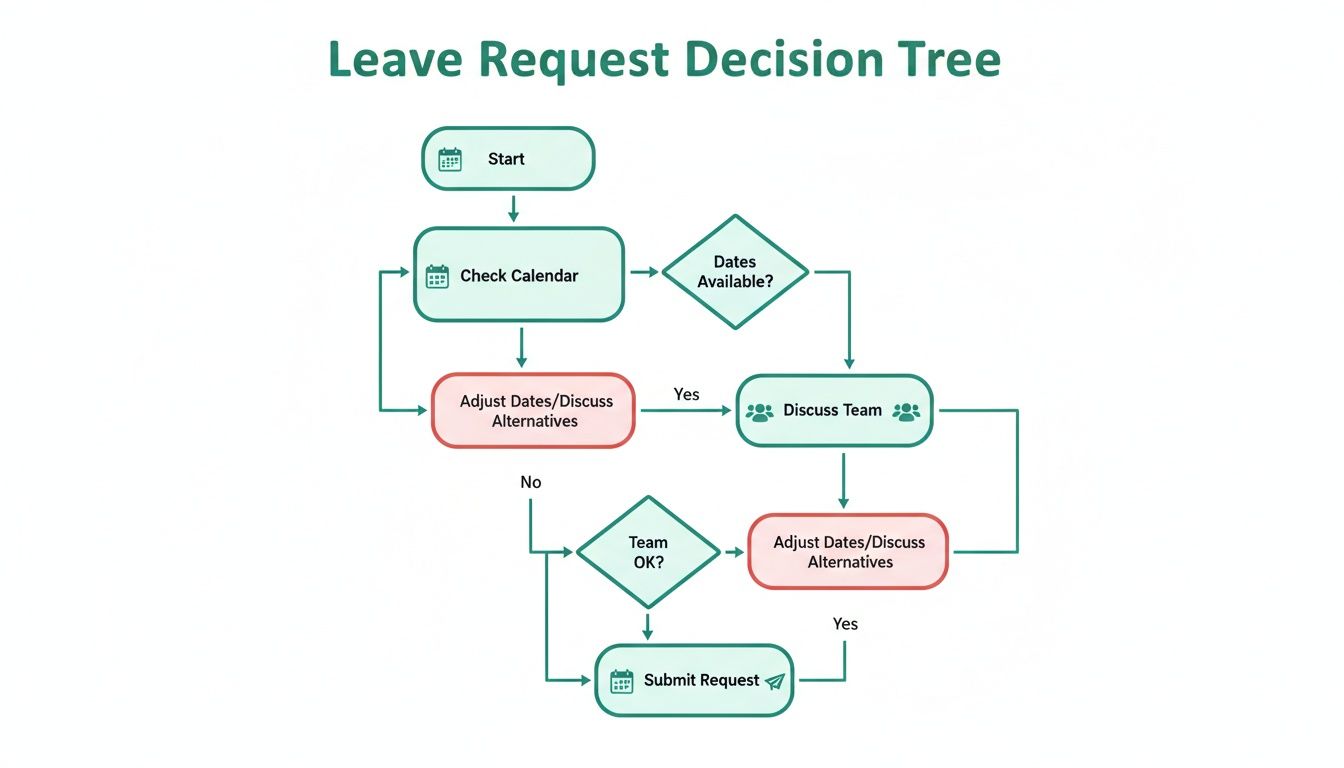
This workflow shows the simple, logical steps that help you land on a well-informed decision for any annual leave request that comes your way.
Tackling Tricky Scenarios
Let's be honest, some requests are trickier than others. The classic headache is getting multiple requests for the same popular dates. In my experience, a transparent "first-come, first-served" policy, tracked clearly in your leave system, is usually the fairest way to handle it. If that’s not practical, a straightforward chat with the employees involved can often lead to a compromise.
But what about when you have to say no? This needs a careful touch. Always give a clear, business-focused reason for your decision, like a critical deadline or a complete lack of cover. Never make it personal.
Crucial Tip: When you have to decline a request, be constructive. Frame it as a "not right now" instead of a flat "no." Your very next sentence should be an offer to help them find alternative dates that work for everyone.
Finally, don't become a single point of failure. Always have a designated backup who can approve requests when you're on holiday yourself. The last thing you want is for your team's requests to get stuck in limbo, causing frustration.
Using a platform like Leavetrack makes all of this a breeze. It gives you instant visibility over the whole team's schedule, turning what can be an admin headache into a smooth, transparent process for everyone involved.
Using Technology to Simplify Leave Management
Are you still wrestling with spreadsheets and tangled email chains to manage annual leave requests? If that sounds familiar, you know it’s a recipe for mistakes and headaches. It piles on the admin, creates the risk of double-bookings, and leaves everyone guessing about holiday balances and team availability.
Modern leave management tech is designed to cut through all that friction, automating the entire process from the initial request right through to the final approval.
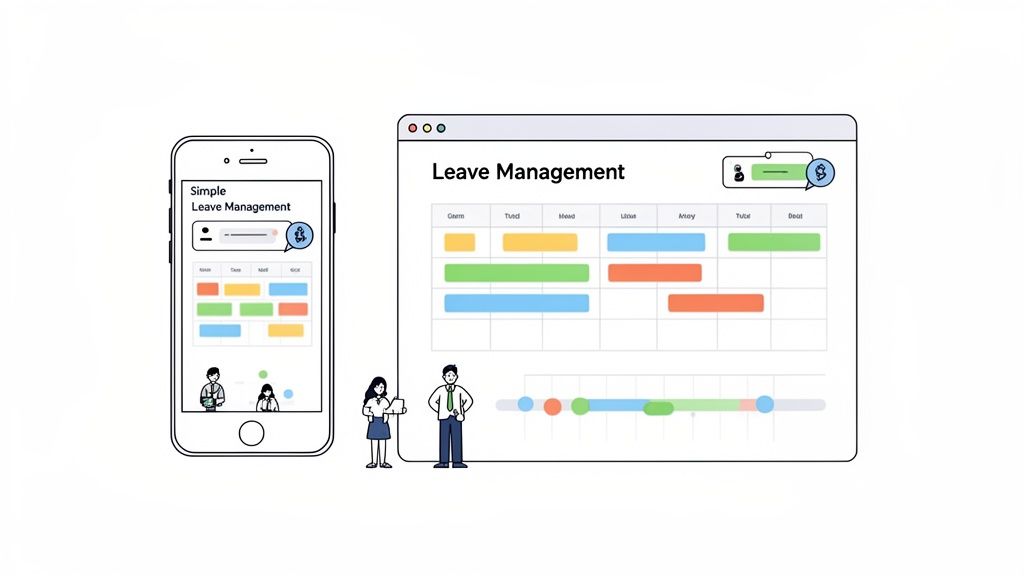
For an employee, the difference is night and day. Forget digging through old emails to guess how much holiday they have left; they can just log in and see their balance instantly. Before they even think about submitting a request, they can glance at a shared team calendar to spot any potential clashes. It's a small thing, but it shows consideration for colleagues and makes an approval far more likely.
The submission itself takes seconds—just pick the dates, pop in a quick note if needed, and send it off. That simplicity is key, as it genuinely encourages people to use their time off. This is more relevant than ever, as UK employees are getting much better at taking the leave they're entitled to.
Unused holiday days in the UK have plummeted by a remarkable 71% since 2019. Back then, employees left an average of 18.5 days unused, but by 2024, that figure had dropped to just 5.3 days. This shift shows just how vital transparent, easy-to-use systems are for empowering staff to take their breaks. You can explore the full statistics on the state of annual leave in the UK.
Streamlining the Approval Workflow
For managers, tools like Leavetrack bring immediate clarity. As soon as a request lands, you get a notification straight to your email or Slack. With one click, you’re looking at a visual planner showing team coverage, project deadlines, and any overlapping holidays. It gives you all the context you need to make a confident decision in moments.
This at-a-glance oversight turns what was once an admin chore into a quick, strategic task. You're no longer chasing paper forms or trying to make sense of different calendars; all the information you need is right there in one place.
Key benefits for managers include:
- Instant Notifications: Act on requests the moment they come in, directly from your inbox or messaging app.
- Visual Team Calendar: Quickly spot potential staffing gaps or project conflicts before they become a problem.
- Centralised Record: Every request and approval is logged automatically, creating a perfect audit trail without any extra work.
Beyond Requests and Approvals
A truly effective system does more than just shuttle requests back and forth. It offers deeper operational insights that are invaluable for HR and finance, ensuring the entire leave process is compliant, efficient, and fair. You can learn more about the features of a great system in our guide to online leave management systems.
Advanced features offer some serious advantages. Think automatic accrual calculations that get rid of complex spreadsheet formulas and ensure entitlement data is always spot on, which is a lifesaver for part-time staff or new starters.
On top of that, insightful reporting helps HR identify patterns—like teams who aren't taking enough leave or peak holiday periods that need better planning. This data-driven approach allows you to refine your leave policies and proactively support employee wellbeing, building a transparent and robust system for the whole company.
Creating an Annual Leave Policy That Works
A smooth annual leave process is simply impossible without a clear, fair, and legally compliant policy backing it all up. This document is the bedrock of your entire system. It sets expectations for everyone and prevents the kind of confusion that so often spirals into frustration and disputes. Without one, you're just improvising, and that rarely ends well.
Crafting a robust policy isn't about imposing a bunch of restrictive rules. It’s about creating a predictable framework that supports both your employees' wellbeing and your operational needs. Think of it as a practical guide that anyone in the company can understand at a glance, answering their key questions before they even have to ask.
The Essential Components
Every solid annual leave policy needs to cover a few non-negotiable areas to be truly effective. Getting these elements right provides the necessary structure, ensuring fairness and keeping you on the right side of UK employment law. When you're building or refining your policy, make sure these points are addressed with absolute clarity.
- Statutory Entitlement: Explicitly state the legal minimum leave for UK workers, which is 5.6 weeks per year. This includes bank holidays and is the absolute baseline you must provide.
- Accrual Rules: Detail how leave is earned. Is it accrued monthly throughout the year, or is the full entitlement available from day one of the leave year? This is a crucial detail, especially for new starters.
- Carry-Over Rules: Define if, and how much, unused leave can be carried over into the next year. Be specific about the deadline for using these carried-over days to avoid them accumulating indefinitely.
- Notice Periods: Set clear expectations for how much advance notice is required for a leave request. A common and fair rule of thumb is asking for notice that is double the length of the leave being requested.
- Approval Process: Outline who approves the request and what the typical timeframe for a response will be. No one likes being left in limbo.
When you're setting up any employee policies, it's vital to understand the bigger picture. Grasping the general compliance requirements for business will help you sidestep a world of potential legal trouble.
Avoiding Common Policy Pitfalls
Even with the best intentions, policies can fall flat if they contain ambiguities or are just too rigid. Vague language is a major culprit here, creating grey areas that lead to inconsistent decisions and a sense of unfairness. A phrase like "reasonable notice" is wide open to interpretation; specifying "at least two weeks' notice for holidays of five days or more" is not.
A common mistake is failing to clearly separate statutory minimum leave from any additional, contractual leave you offer. This can cause significant issues, especially regarding carry-over or pay in lieu during long-term sickness, as rules for each can differ.
Another pitfall is creating rules that are too inflexible. A blanket ban on leave during certain months might seem practical on the surface, but it can crush morale and may not even be necessary for every department. Building in a degree of flexibility shows you trust your team and can make your company a much more attractive place to work.
You can find some excellent guidance on building a fair and compliant framework in this template annual leave policy.
Common Questions About Annual Leave Requests
Even with a solid policy in place, navigating the specifics of an annual leave request can feel tricky. Unique situations always pop up, leaving both employees and managers with practical questions that go beyond the basic "submit and approve" process.
Let's tackle some of the most common real-world queries to give you clear, actionable answers. Getting these details right helps build a transparent and fair system for everyone involved. It means employees can plan their time off with confidence, and managers can handle requests consistently—even the complex ones.
What Is a Reasonable Notice Period?
This is a big one, and while it varies from company to company, a good rule of thumb is to give notice that's at least twice the length of the leave you're requesting.
Planning a one-week holiday? Aim to give two weeks' notice. Just need a day or two off? A week's notice is usually fine.
Of course, you should always check your official company policy first. It will have the final say, especially for peak times like the summer rush or over the Christmas holidays when everyone wants time off. A modern leave management system often has these rules built right in, guiding you as you make the request and flagging any potential policy clashes.
Can My Employer Deny My Annual Leave Request?
In short, yes. An employer can reject a request for annual leave if there's a legitimate business reason. This isn't about being difficult; it's about keeping the wheels turning.
Common reasons include needing all hands on deck for a critical project, hitting a tight deadline, or handling a prior request from a colleague for the same popular dates.
A good manager won't just say "no." They'll explain the reason clearly and work with you to find an alternative time that suits both you and the business. What they can't do is stop you from taking your statutory leave entitlement at some point during the leave year.
It's important to remember the whole point of leave is for rest and recuperation. While business needs are valid, consistently denying requests without offering alternatives is a fast track to burnout and low morale—which is bad for everyone.
What If My Request Clashes with a Colleague's?
This happens all the time. First, see if your company has a clear 'first-come, first-served' policy for handling overlapping requests. If it does, the answer is usually straightforward.
If not, the best first step is to just talk about it. Have a friendly chat with your colleague and your manager to see what's possible.
Sometimes a slight adjustment of dates by one or two days, or arranging for partial cover, can solve the problem amicably. If a compromise isn't on the cards, your manager will typically have to make a final decision based on operational needs, fairness, and who asked first.
This is exactly where a tool with a shared team calendar shines. It helps you see who is already off before you even submit your annual leave request, preventing these clashes from happening in the first place.
Simplify your entire leave process with Leavetrack. From instant requests and shared calendars to automated approvals, our system provides the clarity and efficiency your team needs. See how Leavetrack works and take the hassle out of managing time off.