

How to Reduce Absenteeism in the Workplace
Posted by Robin on 05 Nov, 2025 in
To get a handle on absenteeism, you need to stop reacting and start being proactive. This means building a supportive place to work, having clear attendance policies, and actually digging into the root causes of why people are off.
It's all about focusing on employee wellbeing, offering a bit of flexibility where you can, and using data to spot trends before they blow up into bigger problems.
Why Employee Absence Is More Than an Empty Desk
An empty desk might just look like a logistical headache, but it’s a sign of a much deeper challenge hitting your productivity, team morale, and your bottom line.
When someone is off unexpectedly, the ripple effect is immediate. Colleagues have to pick up the slack, deadlines can slip, and the quality of your service can take a hit. But if you only focus on those immediate pains, you're missing the bigger picture entirely.
High absence rates are often a symptom of bigger organisational health problems. They can be a red flag for issues like widespread burnout, rock-bottom employee engagement, or a serious disconnect between managers and their teams. Ignoring these signals is a huge missed opportunity to build a more resilient and supportive workplace.
This visual breaks down a simple, three-part framework for tackling absenteeism: understand the causes, support your people, and manage attendance effectively.
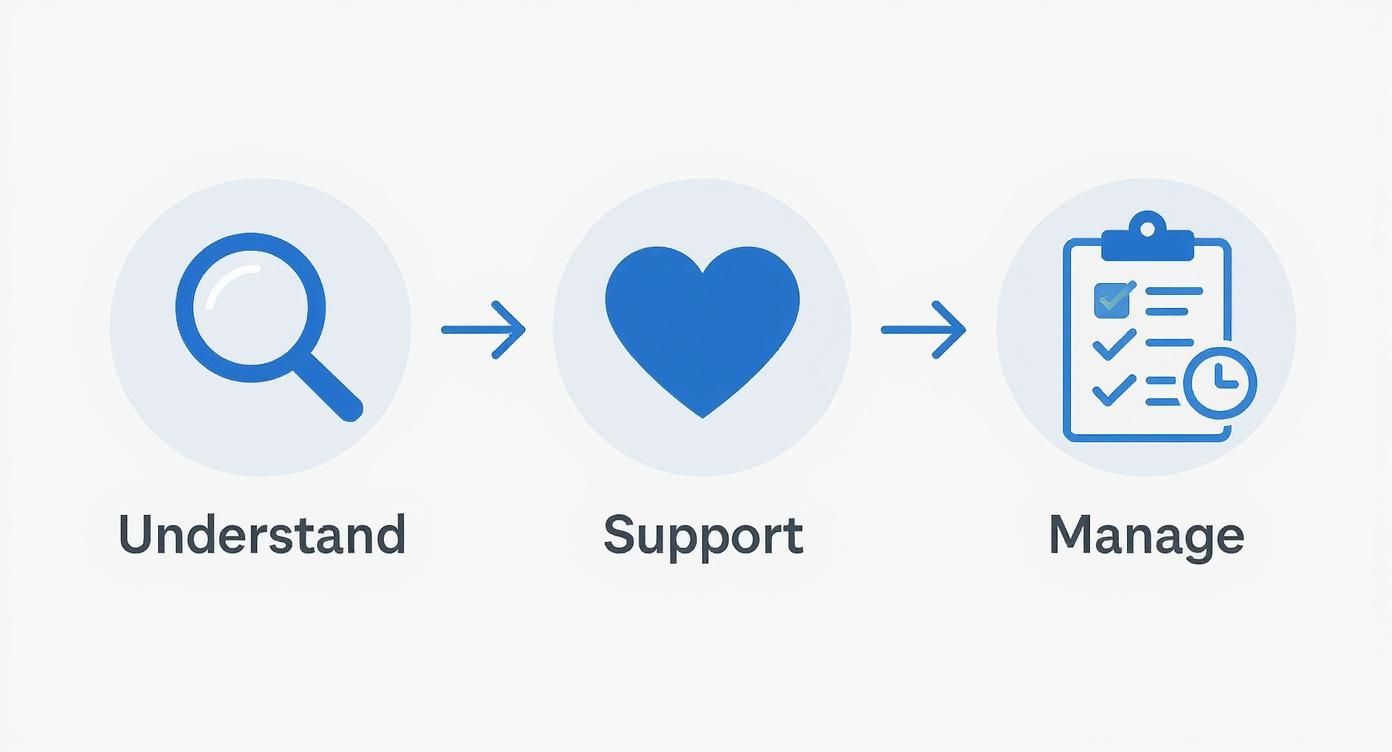
What this shows is that a successful strategy isn’t just about enforcing rules. It’s about creating a positive cycle of feedback and continuous improvement.
The Rising Tide of UK Workplace Absence
Recent data really brings home how urgent this is. In the last couple of years, UK workers took an average of 9.4 days off due to sickness—the highest it’s been since 2010.
That’s a massive jump from the pre-pandemic average of 5.8 days and even the 7.8 days we saw in the years that followed. The main reason? Mental ill health, driving both short- and long-term absences. You can learn more about these rising sickness rates and what’s behind them.
The real cost of absenteeism isn’t just measured in lost workdays. It’s seen in stretched-thin teams, a drop in innovation, and a culture where people feel disconnected. Tackling it is a direct investment in your people and your business's future.
Understanding these costs is the first step in building a case for change. For a full breakdown, check out our guide on how much absenteeism costs employers. The financial hit is big, but the damage to your culture can be even worse in the long run.
Quick Guide to Reducing Workplace Absenteeism
Getting started can feel overwhelming, so we've put together a quick summary of the core strategies we'll be covering. Think of this as your cheat sheet for building a healthier, more present workforce.
| Strategy Area | Key Action | Primary Goal |
|---|---|---|
| Wellbeing Initiatives | Implement flexible working & mental health support. | Boost morale and reduce stress-related absence. |
| Policy & Communication | Create a clear, fair, and consistent absence policy. | Ensure everyone understands expectations and procedures. |
| Data & Tracking | Use a system like Leavetrack to monitor trends. | Identify root causes and high-risk areas proactively. |
| Management Training | Equip managers to handle absence conversations well. | Foster a supportive environment for return-to-work. |
| Engagement & Culture | Gather regular feedback and act on it. | Build a culture where employees feel valued and heard. |
Each of these areas plays a vital role. By tackling them together, you create a comprehensive approach that not only reduces absence rates but also strengthens your entire organisation.
Finding the Real Reasons for Employee Absence
To really get a handle on absenteeism, you need to put on your detective hat. Just glancing at a spreadsheet telling you who was off sick isn't going to cut it. You have to dig deeper and find out why. It's all about uncovering the meaningful patterns hiding just beneath the surface of your data.
Start by really analysing your attendance records. Do you see absence rates spiking in one particular department? Maybe they cluster around Mondays or Fridays, telling you something about weekend motivation. Perhaps you see a seasonal trend, with more people calling in sick during stressful quarterly reporting periods. Spotting these patterns is your first real step from just reacting to problems to proactively solving them.
Distinguishing Between Absence Types
It’s absolutely critical to understand that not all absence is the same. They generally fall into two main buckets, and you need to handle each one completely differently.
- Non-culpable absence: This is when someone is off for reasons totally beyond their control—a genuine illness, an injury, or a family emergency. Your focus here should be on support, empathy, and making their return to work as smooth as possible.
- Culpable absence: This is for unauthorised or unexcused absences. The employee could have come to work, but chose not to. This requires a response that’s fair, consistent, and completely in line with your company’s attendance policy.
Getting these two mixed up can be a disaster for morale. Taking a disciplinary approach with someone struggling with a real health issue will smash their trust in the company. On the other hand, ignoring culpable absence makes your dedicated employees feel like their commitment is being taken for granted.
Gathering Honest Feedback
Data tells you what is happening, but only your people can tell you why. Getting that honest feedback, though, means creating a safe space where they feel comfortable sharing what’s going on without any fear of it coming back to bite them.
A supportive return-to-work interview is one of the most powerful tools in your arsenal. It’s not an interrogation; it's a conversation. It shows you genuinely care about your employee’s wellbeing and helps you understand if any workplace factors might have played a part in their absence.
Confidential surveys are another brilliant way to get to the truth. Ask specific, targeted questions about workload, management support, and team dynamics. For example, one company I know of saw a big jump in stress-related leave within their sales team. A confidential survey quickly revealed that a new commission structure had created a toxic, high-pressure environment. By tweaking the policy, they not only cut down on absences but actually improved how the team worked together.
Often, the real causes of absence are rooted in the workplace itself, especially when people are struggling with navigating workplace relationships and stress. These underlying issues can easily show up as frequent sick days if you don't address them head-on. By digging into the major reasons for absenteeism in the workplace, you’ll get a much clearer picture of what might be happening behind the scenes. When you combine solid data analysis with direct, empathetic communication, you can uncover the true root causes and start building solutions that actually work for the long term.
Building a Proactive Employee Wellbeing Programme

Simply reacting to absences after they happen is a constant uphill battle. I’ve seen it time and again. The most effective way to really cut down on absenteeism is to get ahead of the issues that cause it in the first place.
This means shifting your entire mindset from just managing absence to actively promoting employee wellbeing. A proactive programme isn't about expensive perks like ping-pong tables or free snacks. It’s about building a fundamentally supportive environment where people feel valued, balanced, and healthy enough to bring their best selves to work.
Prioritise Mental Health Support
Mental health is a huge piece of the absenteeism puzzle, and it's one companies can no longer afford to ignore. Work-related stress is a critical factor, with an estimated 79% of UK workers experiencing it regularly. That stress doesn't just disappear at 5 pm; it leads to an average of 21.6 working days lost per case.
In total, that contributes to a staggering 17.1 million lost working days annually in the UK alone. To start tackling this, you need to build a culture where it's okay to talk about mental health without fear of stigma.
Some simple, high-impact steps can make a real difference:
- Mental Health First Aid Training: Get managers and a few designated team members trained up. They’ll learn to recognise the early signs of mental distress and know how to guide colleagues toward the right support.
- Signposting Resources: Make it incredibly obvious where people can turn for help. This could be internal channels, the NHS, or mental health charities. Don't make people hunt for it.
- Manager Training: Coach your leaders on how to have sensitive, constructive conversations about workload and stress. This is key to fostering psychological safety.
A cornerstone of any solid wellbeing programme is understanding the full Employee Assistance Program benefits. An EAP offers a confidential lifeline for all sorts of life and work challenges, from financial worries to personal stress, directly addressing many of the root causes of absence.
Introduce Meaningful Flexibility
The traditional 9-to-5, five-day office week just doesn’t work for everyone anymore. A lack of flexibility can force an employee to take a full day off for a 30-minute doctor's appointment or to constantly struggle with caregiving duties, which inevitably leads to burnout and absence.
Offering genuine flexibility shows you trust your team and respect their lives outside of work. This doesn't mean you need a complete operational overhaul. Consider options like:
- Flexible Start and Finish Times: Letting staff adjust their hours to manage the school run or avoid rush hour can drastically cut down on daily stress.
- Hybrid Working Models: A structured blend of in-office and remote work is a proven way to improve work-life balance and focus.
- Compressed Hours: Working full-time hours over fewer days can give someone a precious extra day for errands, rest, and life admin.
This kind of flexibility empowers your team to manage their lives more effectively, which often prevents unplanned absences from ever needing to happen.
When you're ready to explore more practical initiatives, our guide on 10 effective employee wellness program ideas offers plenty of inspiration. Ultimately, building a proactive wellbeing programme is about embedding healthy, sustainable practices deep into your company culture. It's an investment that pays for itself through higher engagement, better morale, and a significant drop in absenteeism.
Creating a Fair and Consistent Attendance Policy
A clear, fair, and consistently applied attendance policy is the bedrock of managing absence effectively. Without one, you’re stuck dealing with issues as they pop up, which quickly leads to confusion, claims of favouritism, and a serious breakdown in trust.
A strong policy isn’t about being punitive. Far from it. It’s about setting clear, universal expectations so everyone—from the newest hire to the most senior manager—knows exactly where they stand. Think of it as the constitution for how you handle time off.
This isn’t just an admin task to tick off a list. Your policy is a direct reflection of your company’s values. It shows your team you're organised, fair-minded, and genuinely supportive, especially when people are dealing with real health issues.
Defining the Ground Rules Clearly
Your policy must be specific and dead simple to understand, leaving no room for anyone to interpret it differently. It needs to clearly define the various types of absence, from pre-approved holidays and medical appointments to unexpected sickness.
More importantly, it must spell out the exact procedure for reporting an absence. Who should an employee contact? By what time? What information do they need to provide? A vague instruction like "let your manager know" is a recipe for chaos. A much better approach is something crystal clear, like: "You must phone your direct line manager no later than one hour before your shift is due to start."
A policy’s true strength lies in its consistency. If rules are enforced for some but not others, the policy becomes meaningless and can damage morale far more than the absences themselves. Fairness is non-negotiable.
This level of clarity empowers both employees and managers. Staff know exactly what’s expected of them, and managers have a clear framework to follow. It takes all the awkward guesswork out of handling those early-morning absence calls.
Balancing Support with Accountability
A common mistake I see is policies that read like a list of punishments. While you absolutely need to outline the consequences for excessive or unsanctioned absences, the overall tone should be supportive. This is especially crucial when you're dealing with long-term sickness or employees with chronic health conditions.
Your policy should lay out how you manage long-term health issues with empathy. This means outlining steps for keeping in touch, discussing potential workplace adjustments, and planning for a phased return to work. Showing you have a structured, supportive process for these tough situations demonstrates your goal is to help people get back on their feet, not push them out the door.
To strike the right balance, make sure you cover these key areas:
- Reporting Procedures: Specify who to call, when to call, and how often to provide updates.
- Leave Types: Clearly differentiate between sick leave, personal days, holiday, and other forms of leave.
- Return-to-Work Interviews: Make these a standard, friendly catch-up for all absences to show you're engaged and ready to offer support.
- Support Resources: Point employees toward available help, like an Employee Assistance Programme (EAP) if you have one.
This comprehensive approach helps create a culture where accountability and employee wellbeing can actually coexist. It builds a solid foundation for all your efforts to reduce absenteeism in the workplace.
Essential Components of an Attendance Policy
To make sure your policy is robust, fair, and legally sound, you'll want to ensure it covers these critical areas. Each component helps build a transparent framework that protects both the employee and the business, leaving no grey areas.
Here's a breakdown of what to include:
| Policy Component | Why It's Important | Example Detail |
|---|---|---|
| Absence Reporting | Ensures timely communication and allows for proper cover to be arranged. | "Employees must call their line manager directly; texts or emails are not acceptable for initial notification." |
| Definition of Absences | Prevents confusion by clearly categorising different types of leave. | "Unauthorised absence is defined as failing to report sickness within two hours of your scheduled start time." |
| Managing Long-Term Sickness | Shows support and ensures you're meeting your legal obligations for health-related issues. | "Regular welfare check-ins will be scheduled after two weeks of continuous absence to discuss support." |
| Disciplinary Procedures | Sets clear, predictable consequences for policy breaches, ensuring fair and consistent application. | "Exceeding three unauthorised absences in a six-month period will trigger a formal review meeting." |
Getting these elements right from the start will save you a world of headaches down the line. It ensures everyone is treated the same way and understands both their responsibilities and the support available to them.
Using Technology to Track and Manage Absence
Still relying on old-school spreadsheets to track employee absence? It's a recipe for missed insights and a massive administrative headache. You end up with a jumble of disconnected data that’s a nightmare to analyse, making it almost impossible to spot the trends that really matter.
Modern absence management tools completely change the game. They shift you from a reactive, firefighting mode to a proactive, strategic one by centralising all your data and automating the tedious stuff. This frees up precious time for HR and managers to focus on what they do best: supporting their teams, not wrestling with paperwork.
For instance, a dedicated platform like Leavetrack gives you a clear, at-a-glance view of who is off and why, all in one place.

This kind of real-time visibility is invaluable. It helps managers plan cover more effectively and ensures leave requests are handled promptly and fairly. It's all about having reliable information right at your fingertips when you need it.
From Raw Data to Actionable Insights
The real power of these systems, though, is their ability to turn raw numbers into meaningful reports with just a few clicks. Instead of sinking hours into manually crunching data, you can instantly identify patterns that were previously hidden.
You can quickly see things like:
- Departmental Trends: Is one team's absence rate suddenly much higher than others? This could be a red flag for workload or management issues.
- Individual Patterns: Have you noticed a specific employee frequently has unplanned absences on Mondays? This might be the prompt for a supportive conversation.
- Absence Hotspots: Are there certain times of the year when sickness levels always seem to peak? Knowing this can help you schedule wellbeing initiatives when they'll have the most impact.
This data-driven approach means you can get ahead of potential problems before they escalate. It also gives you the foundation to apply your attendance policy consistently across the board, which is absolutely crucial for maintaining fairness and trust.
Using Analytical Tools Responsibly
Some more advanced systems come with built-in tools like the Bradford Factor, a formula that assigns more weight to frequent, short-term absences. While it can be a useful analytical tool to flag potential issues, you have to use it with a good dose of common sense and context.
The Bradford Factor should be a conversation starter, not a disciplinary trigger. A high score doesn't automatically mean an employee is unreliable; it’s a signal for a manager to have a supportive chat and find out what's really going on.
Using these insights responsibly is key. The goal is always to support your people, not to weaponise data against them. This is especially important given the wider economic picture. A recent Keep Britain Working review highlighted that over one in five working-age adults are out of work, with 800,000 more becoming inactive since 2019 due to health issues.
This really underlines the need for proactive health management in the workplace. Technology can play a huge part by helping you identify employees who might need support with long-term conditions. You can read more about this in the Keep Britain Working final report.
Frequently Asked Questions
When you start putting new absence management strategies into practice, you're bound to run into some tricky situations. It’s completely normal to face scenarios that feel a bit grey when you’re figuring out how to reduce absenteeism. Let's walk through some of the most common questions I get asked, with clear, straightforward answers to help you handle these challenges confidently.
What Is an Acceptable Level of Absenteeism?
This is a question I hear all the time, but the truth is, there’s no universal magic number.
What's considered "acceptable" can vary wildly depending on your industry, the types of roles in your organisation, and even the time of year. A manufacturing firm with shift work will have entirely different benchmarks compared to a software company with flexible hours.
Instead of chasing a specific percentage, it's far more productive to focus on your own internal trends. The real goal isn't to hit an arbitrary target. It's about understanding the reasons behind your absence figures and aiming for continuous, sustainable improvement by tackling the root causes you uncover.
How Do We Handle Frequent Short-Term Absences?
Frequent, short-term absences are often a red flag for a deeper issue. A pattern of odd days off can signal anything from a chronic health condition and caregiver stress to low morale or even burnout. The key is to approach the situation with support, not suspicion.
A brief, informal return-to-work interview after every single absence is your most effective tool here. It’s not an interrogation; it's a simple, supportive chat that shows you're paying attention and that you care.
This consistent process helps you spot patterns and gently discourages non-genuine absences. If an underlying health issue comes to light, you can discuss reasonable adjustments. If it's a morale problem, you’ve opened the door to a much bigger, more important conversation.
Can We Discipline an Employee for Being Genuinely Sick?
This is a very sensitive area and requires a careful, measured approach. While you have a business to run, taking disciplinary action against an employee for genuine illness can lead to serious legal problems, particularly if their condition could be classified as a disability under the Equality Act.
It's crucial to follow a fair and fully documented capability procedure. This process should focus on:
- Support and understanding to explore the reasons for the absence.
- Reasonable adjustments to help the employee return and sustain attendance.
- Exploring all options before any formal action is even considered.
Your attendance policy must clearly distinguish between misconduct (like pulling a sickie) and capability (genuine, non-culpable illness). Always consult your HR policy and seek legal advice if you are unsure how to proceed in these complex situations.
Are Return-to-Work Interviews Really Necessary?
Absolutely, yes. They are arguably one of the simplest yet most powerful tools in your entire absence management toolkit.
The consistency of holding a brief, informal chat after every single absence—no matter how short—sends a clear message. It shows you notice and care about your employees' wellbeing, which helps build trust. It also provides a regular, low-pressure opportunity to stay informed about any potential issues and reinforces that attendance is taken seriously. It's this simple, consistent action that makes the practice so effective.
Managing absence effectively requires the right tools to track trends and apply policies fairly. Leavetrack replaces messy spreadsheets with a clear, centralised system, giving you the insights needed to support your team and reduce absenteeism. Learn more about how Leavetrack works.