

A Clear Guide to Holidays for Zero Hour Contracts
Posted by Robin on 01 Feb, 2026 in
It's a common misconception, but let's be crystal clear: workers on zero-hour contracts are absolutely, legally entitled to paid annual leave, just like any other employee. The real challenge isn't whether they get holiday pay, but how on earth you're supposed to calculate it correctly given their fluctuating work patterns.
The Growing Challenge of Zero Hour Contract Holidays
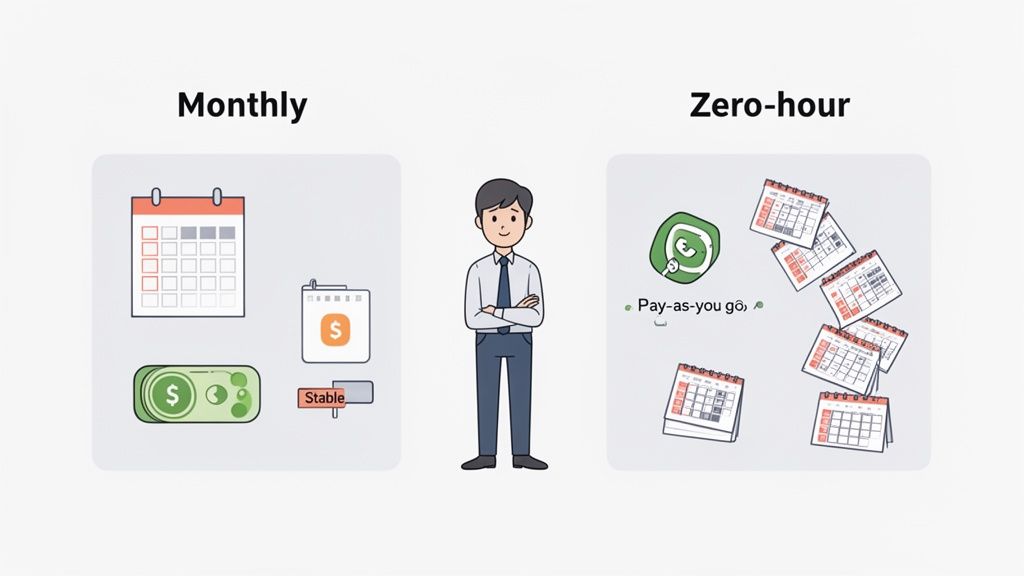
Managing holiday pay for a flexible workforce can often feel like trying to hit a moving target. If you’re finding it a headache, you are definitely not alone. The core problem is the sheer complexity of handling holidays for zero hour contracts—a task that has become a major administrative hurdle for businesses all over the UK.
Think of it like the difference between a fixed monthly phone plan and a pay-as-you-go tariff. With a standard employment contract, the holiday allowance is predictable and consistent. But with a flexible arrangement, entitlement accrues based on actual hours worked, not a set amount. This makes manual tracking a real nightmare.
This issue is only getting more urgent as the number of people on these contracts continues to climb. Back in November 2023, the number of people on zero-hour contracts in the UK hit 1.2 million, the second-highest figure ever recorded. The surge is especially noticeable among younger workers, with 508,000 individuals aged 16-24 now on these flexible terms. You can dig into more of these workforce trends over at the Work Foundation at Lancaster University.
To quickly grasp the main points, here's a simple breakdown of the legal rights and the common headaches employers face.
Zero Hour Contract Holiday Entitlement at a Glance
| Aspect | Legal Requirement (UK) | Common Challenge for Employers |
|---|---|---|
| Right to Paid Leave | All workers, including those on zero-hour contracts, are entitled to 5.6 weeks of paid holiday per year. | Calculating the equivalent of a "week's pay" for someone with no fixed hours. |
| Accrual Method | Holiday accrues as the worker works. The standard rate is 12.07% of hours worked. | Manually tracking every hour worked and applying the percentage can be time-consuming and prone to errors. |
| Holiday Pay Rate | Pay must be based on the worker's average pay over the previous 52 paid weeks. | Gathering and averaging pay data over a full year, especially if there were weeks with no work, is a complex task. |
| 'Rolled-up' Holiday Pay | This practice (adding holiday pay to the hourly rate) is unlawful. Pay must be given when leave is taken. | Shifting away from this old, non-compliant method requires changes to payroll processes and clear communication. |
As you can see, what seems straightforward on the surface gets complicated in practice.
Why This Is a Critical Issue for Modern Businesses
The challenges tied to holidays for zero hour contracts go well beyond simple maths. Getting it wrong can have serious knock-on effects, making it a critical area of focus for any employer using a flexible workforce. The main pain points usually fall into three categories:
- Compliance Risks: Miscalculating holiday pay or denying entitled leave can easily land you in an employment tribunal, leading to financial penalties and serious damage to your reputation. The legal landscape here is very specific, and "I didn't know" is never a valid defence.
- Ensuring Fairness: A fair and transparent holiday policy is absolutely vital for morale and staff retention. When workers feel their entitlements are handled correctly, it builds trust and fosters a positive working relationship. In contrast, murky or inconsistent processes breed disputes and dissatisfaction.
- Administrative Burden: Without the right systems in place, HR and payroll teams can spend a staggering amount of time manually tracking hours and calculating average pay. This isn't just inefficient; it dramatically increases the risk of human error, which can be costly and difficult to fix.
Navigating the legal requirements for zero-hour contract holidays is not just about compliance; it's about building a sustainable and equitable relationship with your entire workforce.
This guide is designed to give you a clear path forward. We'll break down the legal framework, explain the correct calculation methods step-by-step, and show you how modern tools can take the complexity out of the equation. Our goal is to help you manage this tricky area of employment law with confidence and precision.
Understanding the Legal Framework for Zero Hour Holidays
Before you can properly manage holidays for zero-hour contracts, you first need to get to grips with the legal foundations. This isn't about company policy or nice-to-have perks; it’s a non-negotiable legal duty. The bedrock here is the Working Time Regulations 1998, which lays down the rules for rest and paid leave for almost everyone in the UK workforce.
A common trip-up is who these regulations actually cover. The law makes a crucial distinction: it protects ‘workers,’ not just ‘employees.’ This means that people on zero-hour contracts, who are legally classed as workers, have the exact same fundamental rights to paid annual leave as their full-time, salaried colleagues.
This is a point that simply can't be overstated. All workers in the UK are entitled to 5.6 weeks of paid holiday each year.
Think of this statutory entitlement like a national speed limit on a motorway. It applies to every vehicle on the road, whether it's a small city car or a large lorry. The minimum standard is universal, and your type of contract doesn't get you an exemption.
Understanding this principle is the first step toward compliance and steering clear of potential legal trouble. Ignoring it can lead to costly employment tribunal claims and do some serious damage to your company's reputation.
The Core Entitlement Explained
The right to 5.6 weeks of paid annual leave is the absolute minimum. For a typical employee working five days a week, this works out to 28 days of paid time off (5 days × 5.6 weeks = 28 days). This figure often includes public holidays, but your employment contract needs to be crystal clear on that point.
For a zero-hour contract worker, the concept of a 'week' is obviously more fluid, which is where the complexity kicks in. However, the legal principle holds firm: they are still entitled to those 5.6 weeks. The catch is that the duration and pay for their leave must be calculated proportionally, based on the hours they have actually worked.
The scale of this issue isn't small. Zero-hour contracts now account for 3% of all UK employment, meaning around 1.13 million people are working under these flexible arrangements. While these contracts offer flexibility, statutory holiday pay—equivalent to 28 days for a full-time role—must still be provided. Pro-rating this for irregular hours is a frequent source of disputes, as you might imagine. You can dig into a deeper analysis of these trends in the official government report on zero-hours contracts.
Why 'Worker' Status Matters So Much
The legal definition of a 'worker' is much broader than 'employee'. It generally includes anyone who has a contract to personally perform work or services for a reward. This broad definition is intentional—it’s designed to stop businesses from trying to sidestep basic employment rights by using flexible contracts.
Here’s why this is so critical for managing holidays for zero hour contracts:
- It confirms their rights: Simply being on a zero-hour contract does not strip someone of their right to paid leave.
- It dictates your obligations: As an employer, you are legally bound to facilitate and pay for this leave.
- It forms the basis for calculations: All the methods we'll discuss later are built on this foundational right.
Grasping the nuances of UK holiday law is essential for any business. For a more detailed breakdown, check out our guide on UK Law Holiday Entitlement Made Clear for Businesses.
Ultimately, this legal framework isn't just a set of rules to follow; it's a system designed to ensure every worker gets adequate rest and pay, regardless of their working pattern. This foundation gets you ready for the next crucial step: correctly calculating what you owe.
How to Calculate Holiday Accrual and Pay Correctly
Turning legal theory into something that actually works in practice is where most businesses get tripped up with holidays for zero hour contracts. Let's cut through the jargon and walk through exactly how to calculate what your workers are owed. Getting this right is non-negotiable for staying compliant and making sure your team is paid fairly for their time off.
The challenge here is real, especially with the gig economy booming. Zero-hour contracts have exploded from just 0.4% of the UK workforce in the mid-2000s to a predicted 3.4% in 2024. That’s a staggering 750% jump. Yet, the rules around holiday rights often feel murky and create headaches for employers. You can dive deeper into these workforce trends over at Statista's research on zero-hours contracts.
At its core, the logic is simple: a person’s status as a worker automatically triggers legal protections, which grants them holiday entitlement.
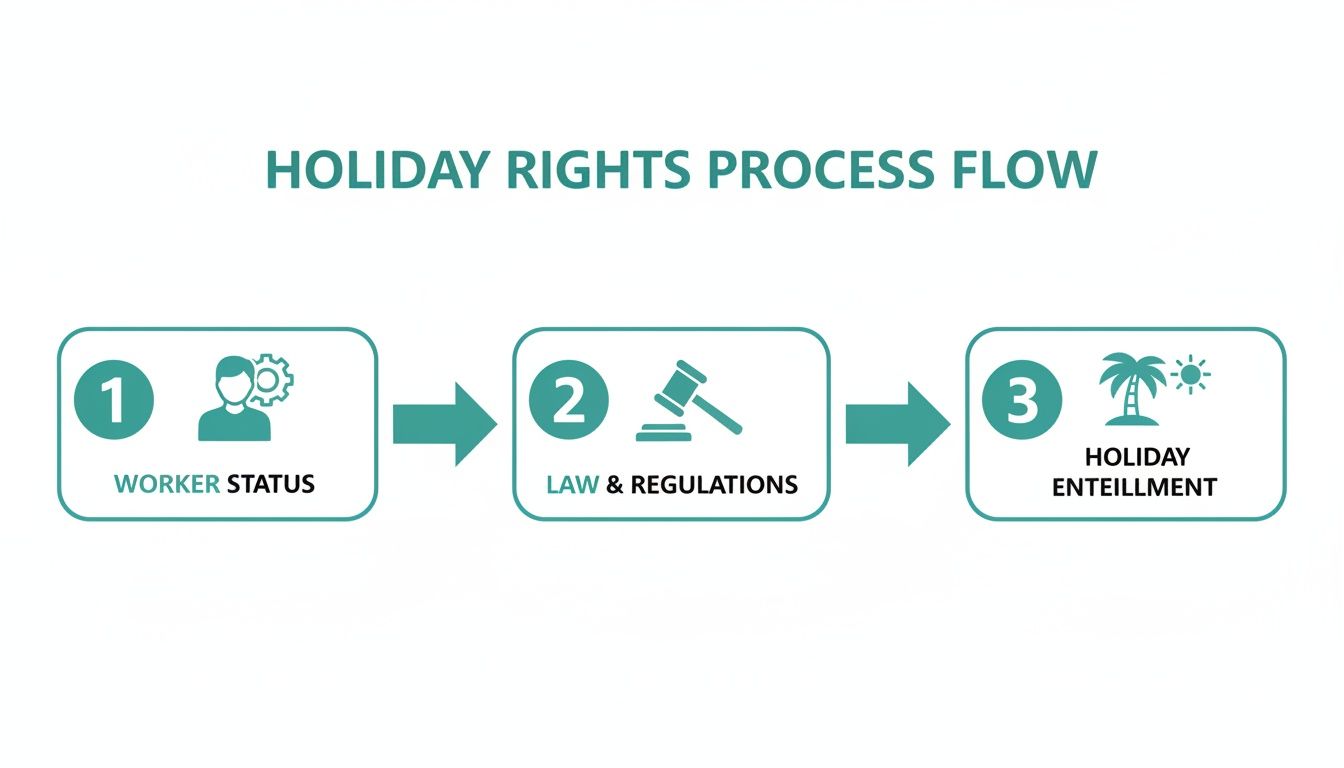
This just confirms that paid leave isn’t an optional perk—it’s a direct and unavoidable consequence of someone’s legal status as a worker in the UK.
The 12.07 Percent Method Explained
For years, the go-to method for calculating holiday for workers with irregular hours was the 12.07% method. That number isn't just pulled out of thin air; it’s based on the statutory 5.6 weeks of holiday, set against the remaining 46.4 working weeks of the year (5.6 ÷ 46.4 = 12.07%).
The logic felt straightforward: for every hour someone worked, they earned holiday at a rate of 12.07%. So, if they worked 100 hours, they'd get 12.07 hours of paid leave. But while it seems simple, recent court rulings have thrown a spanner in the works, and it's no longer the default method you should be reaching for.
The 12.07% method is now only allowed for 'part-year' and 'irregular-hour' workers, and only for leave years starting on or after 1st April 2024. Use it outside of these very specific situations, and you could be walking into a compliance minefield.
The 52-Week Reference Period: The Government Standard
The much safer, government-endorsed approach is the 52-week reference period. This method ensures a worker’s holiday pay genuinely reflects their average earnings, giving a much fairer picture of their "normal" weekly pay.
The key is to look back over the last 52 weeks in which the person actually earned money. This is a critical point: you have to ignore any weeks where no work was done and no pay was received.
Here’s how you do it:
- Find the 52 Paid Weeks: Start from the week right before the holiday and count backwards until you have 52 weeks of pay data. You might have to go back as far as 104 weeks to find them all.
- Add Up the Total Pay: Tally up the total gross pay from those 52 weeks.
- Find the Average Weekly Pay: Divide that total by 52. That final number is what they get for one week of holiday pay.
A Worked Example of the 52-Week Method
Let's say Alex, who is on a zero-hour contract, wants to take a week of paid holiday. You dive into his payroll records to figure out what he's owed.
Looking back over the last 60 weeks, you see he was paid in exactly 52 of them. You simply discard the 8 weeks where he didn't work.
- Total earnings over 52 paid weeks: £11,960
- Calculation: £11,960 ÷ 52 weeks = £230
Alex’s holiday pay for one week of leave is £230. If he only wanted a single day off, and he usually works five days a week when he is working, you’d just divide that by five (£230 ÷ 5 = £46 per day).
Comparing Holiday Calculation Methods
Choosing the right calculation isn't just about maths; it's about compliance. Here’s a quick rundown to help you decide which method fits your situation when managing holidays for zero hour contracts.
| Feature | 12.07% Percentage Method | 52-Week Reference Period Method |
|---|---|---|
| Legal Status | Permitted only for irregular-hour and part-year workers for leave years from April 2024. Risky otherwise. | The legally required and government-endorsed standard for all other workers with variable pay. |
| Calculation Basis | Accrues holiday hours based on a fixed percentage of hours worked. | Calculates average pay based on actual earnings over the last 52 paid weeks. |
| Best Use Case | Suitable for genuinely sporadic workers under the new regulations, such as seasonal staff. | The default, compliant method for most zero-hour contract workers who work with some regularity. |
| Potential Pitfall | Can lead to underpayment if not applied correctly and may be challenged legally if used for the wrong worker. | Requires meticulous record-keeping to identify the 52 paid weeks, which can be a headache without software. |
While the 52-week method demands better record-keeping, it’s hands down the most robust and legally sound approach for most businesses today. Doing these sums manually is a serious drain on time and energy, which is why so many employers are turning to specialised tools. To make your life easier, check out our UK Holiday Pay Calculator Made Simple. Using the right method and tools will ensure your calculations are accurate, compliant, and fair every single time.
Defining Your Employer Obligations for Leave
Nailing the holiday pay calculation is a fantastic start, but it's only half the battle. To really get a grip on holidays for zero hour contracts and keep everything above board, you need a clear, fair, and totally transparent process for the whole thing. It’s about more than just the maths; it’s about defining your responsibilities as an employer.
The absolute foundation of this process is a written holiday policy. A vague policy—or worse, no policy at all—is just asking for trouble. It's a fast track to disputes, misunderstandings, and maybe even a legal headache down the line. A good policy is the rulebook for both you and your workers, making sure everyone knows exactly where they stand from day one.
But a solid policy isn't just about covering your back legally. It's about building a good relationship with your flexible team. When people understand the rules of the game—how to book time off, how much notice to give, what happens to unused days—it creates trust and shows you’re committed to treating them fairly.
Creating a Comprehensive Holiday Policy
Your holiday policy can't just be a throwaway paragraph in a dusty handbook. It needs to be a practical, easy-to-understand document that deals specifically with the way zero-hour contracts work. Getting the accrual and pay right is crucial, and knowing how to create a Paid Time Off Policy that protects your business provides a strong starting point, even for tricky setups like these.
Think of your policy as the single source of truth for anything and everything leave-related.
Imagine your holiday policy is the instruction manual for taking time off. Without one, everyone is left guessing how the machine works, which only leads to frustration. A clear manual makes the whole process smooth and predictable for everyone.
Your policy has to spell out every single step of the leave process, leaving no room for guesswork.
Essential Components for Your Policy Checklist
To make sure your policy is up to scratch, it needs to cover a few key areas. Use this as a checklist to either review what you already have or build a new policy from the ground up. Each point is a vital piece of the puzzle for managing holidays for zero hour contracts.
1. How to Request Leave:
- Be specific about how someone should submit a holiday request. Is it through an online system, a dedicated email, or a paper form?
- Clarify who they need to send it to. Is it their line manager or a central HR department?
2. Required Notice Periods:
- State the minimum notice a worker needs to give before taking leave. The legal minimum is twice the length of the holiday they want to take (for example, two weeks' notice for a one-week holiday).
- Also, outline how much notice the company will give if it has to turn down or cancel a request.
3. Rules on Carrying Over Unused Days:
- Clearly state your company's rules on carrying holiday over from one year to the next.
- The first four weeks of statutory leave generally can't be carried over unless someone was off sick and couldn't take it. For any holiday you offer above this minimum, you can set your own rules.
4. Payment for Leave on Termination:
- Explain that any statutory holiday they've built up but not taken will be paid out in their final payslip when their contract ends.
- It’s a good idea to mention this will be calculated using the 52-week average pay method, just to be transparent.
By setting out these rules clearly and proactively, you create a system that’s not only compliant but also fair and simple for your team to use. This straightforward approach is the best way to head off disagreements and keep a healthy, respectful relationship with your valued flexible workers.
Putting Holiday Management on Autopilot
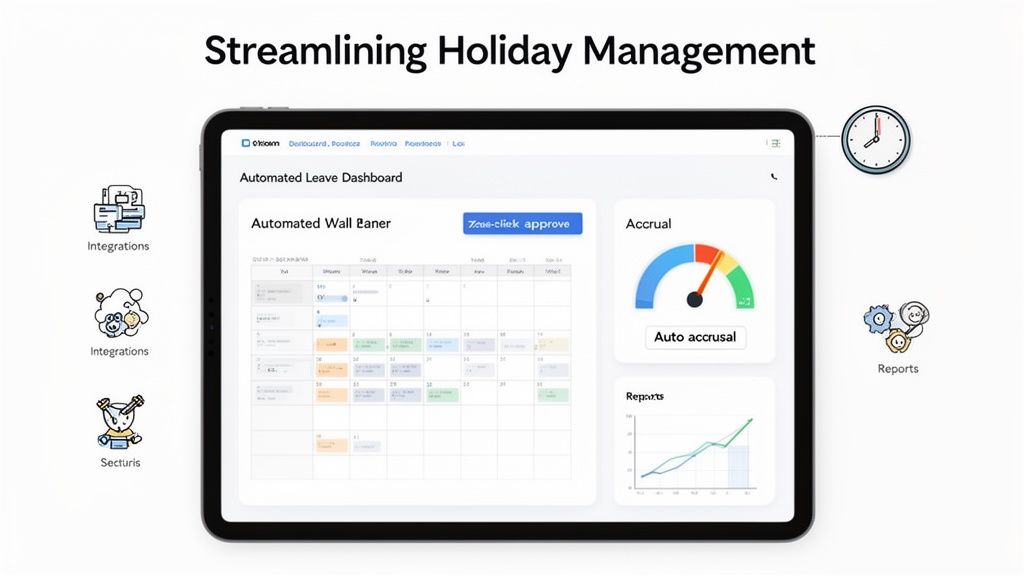
Let’s be honest: manually calculating holiday pay using the 52-week reference period is a headache. It's a time-consuming and fiddly process, prone to errors. Wrestling with spreadsheets to track irregular hours, filter out unpaid weeks, and then work out average earnings is a huge administrative drain, especially if you have a small HR team.
This is where modern absence management tools completely change the game. Instead of just reacting to problems as they crop up, dedicated software lets you be proactive, efficient, and compliant. These systems automate the complex processes we've talked about, freeing up valuable time and dramatically cutting the risk of costly mistakes that could lead to disputes or even tribunal claims.
Moving Beyond Manual Spreadsheets
The real magic of a system like Leavetrack is automation. It becomes your single source of truth, pulling all leave-related data and calculations into one place. This gets you away from the mess of fragmented spreadsheets and paper forms, which are often the root cause of headaches when managing holidays for zero hour contracts.
Making this shift brings some immediate wins:
- Fewer Errors: Automated calculations get rid of the manual data entry slips that can lead to incorrect holiday pay. Simple.
- More Time: Your HR and payroll staff can get back hours previously spent on admin, letting them focus on more important work.
- Consistency is Key: The system applies the same rules and calculations to every single worker, which guarantees fairness and transparency for everyone.
Using a dedicated tool isn't just about being more efficient; it's about building a solid, auditable system. It protects your business and shows you're committed to treating your entire workforce fairly.
An online system also gives your team a clear, easy-to-use interface. You can find more tips on what to look for in our guide to online leave management systems.
Key Features That Make Zero-Hour Holiday Management Easy
A modern absence management tool has powerful features built specifically to handle the challenges of a flexible workforce. These go way beyond simple tracking, giving you a real-time view and control over your staffing and leave liabilities.
Automatic Accrual Monitoring
This is probably the most critical feature. The system automatically tracks the hours worked by each person on a zero-hour contract and calculates their holiday entitlement as they go, using the correct legal method. It puts an end to painful manual calculations and gives you an accurate, up-to-the-minute balance whenever you need it.
Digital Wall Planner
Good software gives you a visual, real-time overview of who is off and when. This digital planner is a lifesaver for managers who need to ensure they have enough people on shift, especially in sectors that lean heavily on flexible workers. You can spot potential clashes or staff shortages with just a glance, making resource planning so much easier.
This kind of visual tool gives managers instant information, so they no longer have to cross-reference multiple spreadsheets just to approve a simple request.
One-Click Approvals and Integrations
Managers can approve or turn down leave requests with a single click, either straight from their email or through tools like Slack. This speeds up decisions and makes sure requests don't get lost in a busy inbox. Once approved, the system automatically updates the worker's leave balance and the central calendar.
Powerful Reporting and Analytics
These tools offer fantastic reports on leave trends, accrual liabilities, and staff absence patterns. This data is gold for financial planning, helping you accurately forecast payroll costs for any untaken holiday. Reports can usually be exported to Excel for deeper analysis or to feed into your payroll system, ensuring a smooth flow of accurate information. By bringing in these tools, you turn leave management from a complicated chore into a slick, compliant, and strategic part of your business.
Answering Your Top Zero Hour Contract Holiday Questions
Even when you've got a handle on the legal rules and calculation methods, real-world situations can still trip you up. Managing holidays for zero hour contracts often throws up unique challenges that a standard, one-size-fits-all policy just doesn't cover.
This section is all about tackling those tricky, "what if" questions head-on. We’ll give you clear, straightforward answers to the queries that land on the desks of HR managers and business owners every day, making sure you're ready for whatever comes your way.
What Happens if a Worker Has Long Gaps Between Shifts?
It's completely normal for zero-hours workers to have quiet periods where they don't work at all. So, how on earth does that affect their holiday pay when you're using the 52-week reference period?
The rule is simple but absolutely critical: you must ignore any weeks where the worker received no pay. Your job is to find 52 weeks of actual pay data. To do this, the law allows you to look back as far as 104 weeks (that's two years) to piece them together.
Remember, a worker’s holiday entitlement keeps building up as long as their contract is live, even during these quiet spells. This is why having precise, long-term records isn't just good practice—it's essential.
Are Zero Hour Workers Entitled to Bank Holidays?
This is a classic point of confusion. The short answer is no. No worker in the UK, regardless of their contract type, has an automatic statutory right to take bank holidays off as paid leave.
Instead, bank holidays can simply be counted as part of their total 5.6-week entitlement. The crucial thing is that your company policy must spell out exactly how you handle them.
You’ll generally find yourself in one of two scenarios:
- They work on a bank holiday: In this case, they get paid their normal rate for the hours worked. They aren't automatically entitled to another day off in lieu unless your contract says they are.
- They take the bank holiday off: This day is simply taken from their total accrued holiday balance. The pay for that day should be calculated using their average earnings, just like any other day of annual leave.
Transparency is your best friend here. Make sure your holiday policy is crystal clear about the procedure for bank holidays to stop any misunderstandings before they start.
"A clear policy on bank holidays removes ambiguity. It ensures that all workers, whether on fixed or zero-hour contracts, understand their entitlements, fostering a fair and consistent workplace environment."
How Do I Pay Holiday Pay When a Zero Hour Worker Leaves?
When a worker on a zero-hour contract leaves your company, you are legally required to pay them for any statutory holiday they've accrued but haven't taken. This payment has to be included in their final payslip.
To work this out, you’ll use the same 52-week reference period to figure out their average pay rate. This ensures the final payout is a fair reflection of what they typically earned.
For example, let's say a worker leaves with four days of accrued holiday. You would calculate their average daily pay rate by looking at their last 52 paid weeks, then multiply that daily rate by four. Getting this final calculation spot on really hinges on having accurate records of hours worked and leave taken.
Can I Use a Rolled-Up Holiday Pay System?
Rolled-up holiday pay is where you add an extra amount to a worker's hourly rate (usually 12.07%) instead of paying them when they actually take time off. This practice has a pretty complicated legal past and, for a long time, has been strongly discouraged.
While recent government guidance has opened the door to using it for irregular-hour and part-year workers under very strict new conditions (for leave years starting on or after 1 April 2024), it’s still a risky path to take.
The main problems with rolled-up pay are:
- It discourages proper rest: Workers might be less inclined to take time off if they feel their holiday pay is already baked into their wages. This defeats the whole health and safety purpose of annual leave.
- Compliance is a headache: The holiday pay amount must be clearly itemised on every single payslip, and the system can only be used for very specific types of workers under the new rules.
Honestly, the safest and most transparent method is always to pay for holiday when it is actually taken. This approach is true to the spirit of the Working Time Regulations and helps you sidestep potential legal grief. If you're seriously considering a rolled-up system, getting professional legal advice first is a must.
Trying to manage these complex scenarios with spreadsheets is a huge drain on time and a recipe for errors. Leavetrack automates holiday accrual and pay calculations for your entire team, including everyone on zero-hour contracts. Our system gives you a clear, compliant, and error-free way to handle leave, which means more peace of mind and more time to focus on your business. Find out how Leavetrack can simplify your absence management.