

A Guide to Managing Absences From Work
Posted by Robin on 09 Nov, 2025 in
An empty desk isn't just an empty desk. It's a gap in your workflow, a missing piece of a team project, and often, a sign of something bigger happening within your business. When an employee is away, whether it's planned or not, the ripple effects can be felt across the entire company, touching everything from productivity to team morale.
The True Impact of Employee Absence on Your Business
It's easy to see an absence as a one-off event, a single person being away for a day. But that's a costly mistake. Think of your team as a high-performance engine; when one component is out of place, the whole machine has to work harder and less efficiently to keep moving forward. It’s not just a nice metaphor—it’s the daily reality for teams trying to cover for absent colleagues.
The most obvious hit is to productivity. Tasks get delayed, projects stall, and deadlines start to look shaky. But the hidden costs often do the most damage. The rest of the team has to pick up the slack, which means heavier workloads and more stress. If that pressure keeps up, it’s a fast track to burnout and low morale, which, ironically, just creates a cycle of more absences.
Ripple Effects Beyond the Team
The impact doesn't stop with the immediate team, either. Consistent staff shortages can mean slower customer response times, a dip in service quality, and ultimately, unhappy clients. In any customer-facing role, a key person's absence can directly harm relationships and hit your revenue. It's a chain reaction where one empty chair can eventually damage your bottom line and reputation in the market.
Recent data really brings this home. In the UK, the rate of employee absence has climbed to its highest point in a decade. Short-term leave is often driven by minor illnesses, while mental health issues have become a major cause of long-term absences. You can dive deeper into these absence trends in the United Kingdom to get a clearer picture of what's happening.
An unmanaged absence isn't just one person's problem. It's a stress test for your whole team's resilience, a challenge to your operational flow, and a real risk to customer loyalty.
Shifting from Reactive to Proactive
Recognising these wide-ranging impacts is the first step. It shifts absence management from a simple HR admin task to a strategic part of running the business. A proactive approach is about more than just logging days off. It's about getting to the root causes of absence and putting supportive strategies in place that help build a healthier, more resilient workforce. That isn't just good for your people; it's essential for keeping your business on a steady path to growth.
Planned vs Unplanned: A Look at Different Absence Types
Not all absences are created equal. Let’s be honest, an employee booking a two-week holiday months in advance is a completely different ball game to someone calling in sick ten minutes before their shift starts.
Both situations mean there’s an empty desk, but the ripple effect on your business couldn't be more different. Getting to grips with these distinctions is the very first step towards building an absence management strategy that actually works.
The simplest way to slice it is to split absences into two main camps: planned and unplanned.
Planned absences are the ones you see coming. Think annual leave, pre-booked appointments, or maternity leave. Because you have that all-important heads-up, you can arrange cover, shuffle deadlines, and generally keep the disruption to a minimum.
Unplanned absences, on the other hand, are the curveballs. They’re the sudden illnesses, the family emergencies, the unexpected personal issues that pop up without any warning. These force you into reactive mode and can put a serious strain on operations if they start happening too often.
To give you a clearer picture, here’s a quick comparison of the two.
Planned vs Unplanned Absences at a Glance
| Characteristic | Planned Absence | Unplanned Absence |
|---|---|---|
| Notice Period | Given well in advance | Little to no notice |
| Impact | Minimal disruption, can be managed proactively | Can cause significant operational strain |
| Examples | Annual leave, maternity/paternity leave, training days, pre-booked appointments | Sickness, family emergency, bereavement, unauthorised absence |
| Management | Focus on scheduling, resource planning, and ensuring adequate cover | Focus on immediate response, communication, and return-to-work support |
As you can see, the management approach required for each is worlds apart. One is about foresight and planning; the other is about agility and support.
The Critical Difference Between Short and Long-Term Sickness
Diving a bit deeper into unplanned sickness, we find another crucial split: short-term versus long-term absence. Each one brings its own unique set of headaches for managers and the wider team.
Short-Term Sickness: This is your typical absence lasting a few days up to a week. While often down to minor bugs like colds or the flu, a pattern of frequent short-term absences can be a huge red flag. It’s often a sign of deeper issues, like poor engagement or flagging wellbeing.
Long-Term Sickness: We generally class this as an absence stretching four weeks or more. This requires a much more supportive and structured approach, often bringing in occupational health, talking about reasonable adjustments, and knowing your legal duties under the Equality Act 2010.
It might sound strange, but a single long-term absence can sometimes be easier to plan around than a constant stream of unpredictable short-term ones. The catch is that it comes with far more complex legal and pastoral care responsibilities.
Beyond Sickness: The Full Absence Picture
While sickness is a huge piece of the puzzle, a proper view of absence needs to include a few other, often overlooked, categories. These can tell you a lot about your company culture.
One of the trickiest to handle is unauthorised absence. This is when an employee is a "no-call, no-show"—they don't turn up for work and don't follow the proper reporting procedure. This sort of thing needs an immediate, consistent, and fair response as laid out in your attendance policy.
Another growing concern is presenteeism. This is when people drag themselves into work when they’re ill, either physically or mentally. It might look like dedication on the surface, but it’s completely counterproductive.
Presenteeism leads to reduced productivity, poorer quality work, and the risk of spreading illness to colleagues. More importantly, it can be a clear indicator of a culture where employees feel they can't take time off when they genuinely need it, which often leads to burnout and longer-term absences down the line.
This infographic really brings to life how these different types of absence can create bottlenecks and damage team morale.
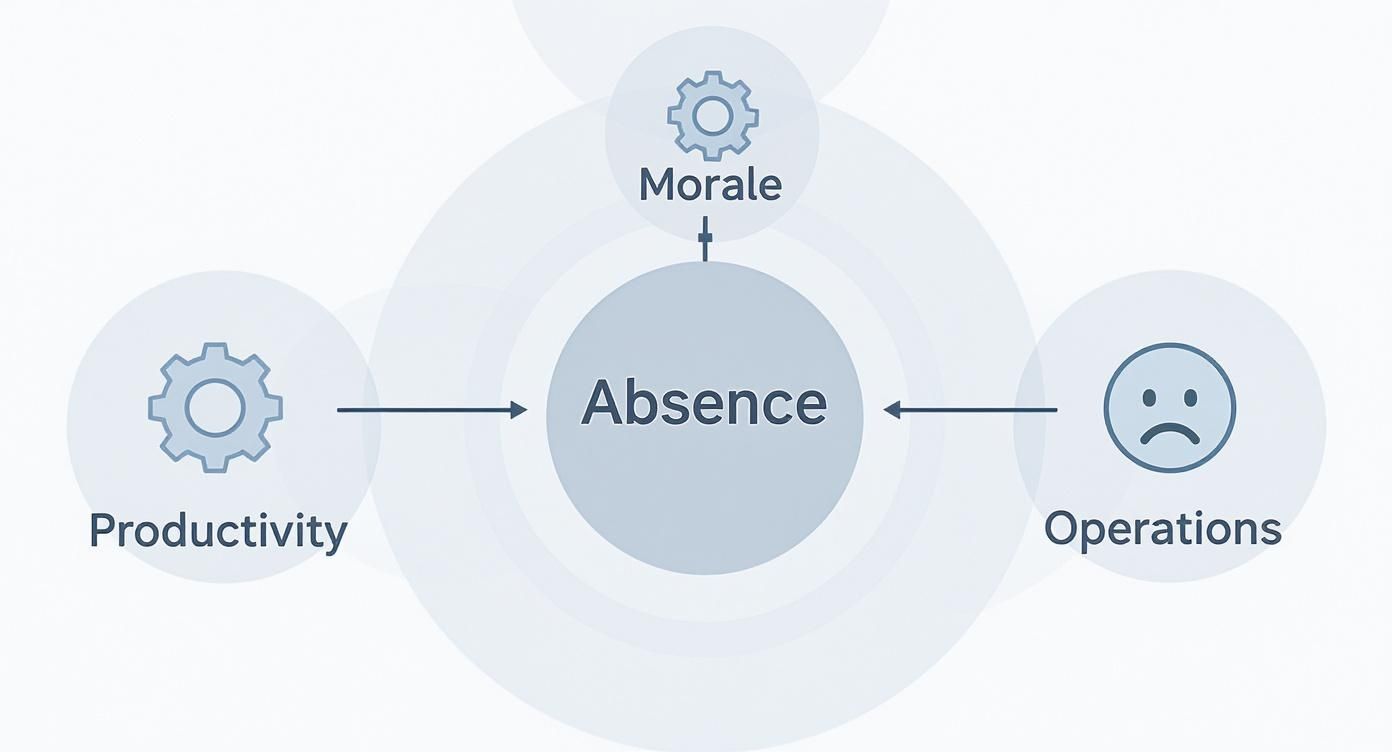
What it shows is that whether an absence is planned, unplanned, or simply someone being unwell at their desk, the negative effects are all connected. They can easily create a damaging cycle. Recognising these different forms of absence is the key to creating smart, supportive policies that tackle the root cause, not just the symptom of an empty chair.
The Hidden Price Tag of Unmanaged Absence
When a team member is unexpectedly off, it’s all too easy to fixate on the obvious costs. You see the sick pay on the payroll report or the invoice for a temp, and you think that’s the extent of it. But those numbers are just the tip of the iceberg – the visible, easy-to-measure part of a much bigger, more damaging problem lurking just below the surface.

Unmanaged absences from work don’t just happen in a vacuum. They create a powerful ripple effect that can quietly drain your company’s resources, strain relationships, and chip away at your culture. To really grasp why a proactive absence management strategy is a must-have, not a nice-to-have, you have to look beyond the balance sheet.
The Direct Financial Hit
Let's start with the costs you can actually see and count. These are the straightforward expenses that show up in your accounts when an employee is away.
- Sick Pay: Whether it's statutory sick pay or a more generous company policy, this is a direct cost for someone who isn't currently contributing to the business.
- Temporary Staff Costs: If the role is critical, you might need to bring in agency cover. That means recruitment fees and often a higher hourly rate than you’d pay your own employee.
- Overtime Pay: The other option is asking the rest of the team to pick up the slack. This leads to bigger wage bills and can quickly burn out your most dependable people.
These costs are real and they add up, but they're only a small piece of the puzzle.
The real financial drain of unmanaged absence isn't what you pay out; it's the value you lose. Productivity, morale, and service quality all take a hit, and those costs are far harder to quantify but much more damaging in the long run.
The Sneaky Indirect Costs
This is where the real damage happens. Think of it like driving a car with a slow puncture; it won't stop you right away, but over time, it wears down every other part and sets you up for a much bigger breakdown down the road.
These indirect costs don't appear on a spreadsheet, but you feel them across the entire organisation. They silently erode efficiency, strain your culture, and hit your bottom line in ways that aren't immediately obvious. For a deeper dive, check out our guide on how much absenteeism costs employers.
Here’s what to watch out for:
- Lost Productivity: The most immediate hit. The absent employee’s output drops to zero. Projects stall, deadlines get pushed back, and the whole team’s momentum suffers.
- Reduced Team Efficiency: The rest of the team has to pick up the extra work. This pulls them away from their own priorities, forcing them to juggle tasks and rush to keep up. This kind of constant context-switching can slash their efficiency by 20-40%.
- Tanking Team Morale: When your reliable staff are constantly covering for frequently absent colleagues, resentment starts to build. It creates a toxic "us vs. them" vibe that kills team spirit and leads to disengagement.
- A Dip in Service Quality: In customer-facing roles, a key person's absence is felt immediately. Customers face longer wait times or deal with less experienced staff, and service standards drop. This can quickly damage your reputation.
- The Managerial Time-Sink: Managers get bogged down rearranging schedules, reassigning tasks, and holding return-to-work chats. That’s precious time they’re not spending on coaching, strategy, or driving the business forward.
These hidden factors don't just add up; they have a multiplier effect. A drop in morale leads to lower productivity, which puts more pressure on managers, who then have less time to support their struggling team. It's a vicious cycle.
Tackling unmanaged absence isn't just about cutting your sick pay bill. It’s about protecting the operational health and the very culture of your business.
Why Are Your Employees Really Absent?
To get a real handle on absences from work, you have to look past the empty chair and understand the story behind it. It’s all too easy to file everything under "sickness," but the reality is usually far more complicated. The reasons people are away are often tangled up in their health, wellbeing, and even the very environment you've created at work.
Sure, the usual suspects like colds, flu, and back pain are still common. But there's been a massive shift in the conversation. We're now seeing the undeniable impact of mental health on attendance, with issues that were once pushed into the shadows now taking centre stage as drivers of both short and long-term leave.
The Growing Influence of Mental Health
Stress, anxiety, and burnout aren't just buzzwords anymore; they are at the heart of the absenteeism problem. The constant pressure of modern work, piled on top of challenges at home, creates a perfect storm that can seriously impact an employee's ability to show up and perform.
And unlike a sprained ankle, the signs of a mental health struggle are often invisible. This makes it incredibly difficult for managers to spot the problem and offer support before it spirals into a prolonged absence.
The UK labour market is currently seeing a sickness absence rate of 2%, with mental health now accounting for a staggering one in five sick days. This isn't just a statistic; it's a clear signal that employers need to make psychological wellbeing a priority.
Recent figures paint an even more detailed picture. Public sector employees are 60% more likely to take a sick day than their private sector colleagues, while managers are 40% less likely to be absent. This tells us that job roles, responsibilities, and workplace pressures are playing a huge part in who calls in sick and why.
Connecting the Dots to Your Workplace
It’s vital to recognise that your workplace itself might be a major source of stress-related absences. Certain factors can fly under the radar but have a massive impact on your team's resilience.
Here are a few common workplace triggers to watch out for:
- Excessive Workloads: When people feel constantly swamped with no end in sight, it’s a fast track to burnout. That pressure to always be "on" simply erodes their ability to rest and recover.
- Lack of Control or Autonomy: Being micromanaged or having little say in your own work can lead to feelings of helplessness and sky-high stress.
- Poor Management Support: An unapproachable manager who lacks empathy or isn't trained to handle sensitive conversations can easily make a tough situation much worse.
- Toxic Team Dynamics: Conflict, bullying, or a general feeling of not being safe to speak up creates a tense environment that people will naturally want to escape.
Understanding the emotional and psychological state of your team is no longer a "nice-to-have." Providing proper mental health support is now essential. It's about building a culture where people feel safe enough to ask for help before they hit a breaking point.
For a deeper dive, check out our guide on the major reasons for absenteeism in the workplace. Once you grasp these root causes, you can stop just reacting to absences and start proactively building a healthier, more supportive place to work.
Building Your Absence Management Strategy Step by Step
Alright, so you understand why managing absence matters. Now for the important part: doing something about it. Moving from theory to action is where you'll see real change happen in your business.
A solid absence management strategy isn't about writing a rigid, unforgiving rulebook. Think of it more as building a supportive framework – one that's clear for everyone, applied consistently, and has employee wellbeing at its very core. This is your practical blueprint for creating a strategy that doesn't just manage absence but actively works to prevent it.
The absolute foundation of any successful plan is a clear and accessible absence management policy. This document needs to be crystal clear, leaving no room for guesswork. It must spell out exactly how an employee reports an absence, who they need to tell, and by what time.
This isn't just about ticking boxes; it's about setting expectations from day one. When the procedure is simple and obvious, it lowers the stress for everyone involved – both the employee who is unwell and the manager scrambling to arrange cover.
Laying the Groundwork with Clear Procedures
A strong policy sets the stage for fair and consistent management across the board. It's the cornerstone that ensures everyone gets treated the same way and knows what's expected of them.
Your policy should nail down a few key elements:
- Reporting Procedures: Be specific. Should they phone their direct manager? Is an email okay? Discourage texts that can easily get buried in a busy inbox. Set a clear deadline for reporting.
- Documentation Needs: Clarify when a self-certification form will do and when you need a doctor's fit note. In the UK, this is typically for any absence lasting longer than seven calendar days.
- Return-to-Work Interviews: This is a big one. Make these a standard, non-negotiable part of the process for every single absence, no matter how short.
A return-to-work interview is one of the most powerful tools you have. It isn't an interrogation. It's a supportive chat that shows you care, helps you spot any underlying issues, and gets the employee settled back into the team smoothly.
Applying these procedures without fail is what makes the difference. When your team sees the policy is enforced fairly for everyone, it builds trust and reinforces that good attendance is a shared responsibility.
Moving from Reactive to Proactive Support
While clear procedures help you manage absences when they pop up, a truly effective strategy aims to stop them from happening in the first place. This means shifting your focus from reacting to problems to proactively preventing them, all rooted in a supportive company culture.
This is where you can make the biggest difference to your team's wellbeing. The numbers don't lie. An estimated 29.6 million working days were lost to work-related ill health in Great Britain in a recent year. A staggering 16.4 million of those were down to stress, depression, or anxiety. You can explore the full HSE report on working days lost to ill health for a deeper dive.
This data screams one thing: we need to address the root causes, not just the symptoms.
Here are a few proactive steps to build into your strategy:
- Train Your Managers: Give your line managers the tools and confidence to have sensitive conversations about mental health. Teach them to spot the early signs of stress and show them how to make reasonable adjustments.
- Offer Flexible Working: Where you can, things like flexible hours or remote work options can be a lifeline for employees juggling health issues or caring duties. This simple step can prevent a small problem from spiralling into a long-term absence.
- Implement Meaningful Wellbeing Programmes: Go beyond the generic perks. Offer practical support that actually helps, like access to mental health first aiders, employee assistance programmes (EAPs), or even financial wellbeing workshops.
Putting this kind of strategy together takes careful planning and consistent effort. For a detailed walkthrough on getting it right, you might find our guide on how to implement an absence management system helpful, as it can simplify the whole process.
Ultimately, a supportive culture backed by a clear policy is your best defence against the damaging effects of unmanaged absence.
Navigating Your Legal Duties as an Employer
Managing time off isn’t just about keeping the wheels turning; it’s a serious legal responsibility. As a UK employer, you have a set of duties designed to protect both your business and your people. Get this wrong, and you could find yourself in hot water, so it's vital to know where you stand.
Think of your legal obligations as the guardrails on a motorway. They keep you heading in the right direction, ensuring everyone is treated fairly and stopping you from drifting into dangerous territory like discrimination claims or unfair dismissal tribunals. Staying between these lines is the key to handling absence with confidence.
The Cornerstones of Legal Compliance
At the heart of it all, a few key pieces of legislation and best practices form the foundation of fair and legally sound absence management. You simply can't afford to ignore them.
Statutory Sick Pay (SSP): This is the absolute legal minimum you must pay an eligible employee who is off sick for four or more consecutive days. It's a baseline requirement, and not paying it correctly is a clear breach of the law.
A Fair and Consistent Absence Policy: Your absence policy is more than just a guideline; it's a legally important document. It must be applied consistently to every single employee to steer clear of claims of unfair treatment or discrimination.
Data Protection (GDPR): Details about an employee's health are considered 'special category data' under GDPR. This means you have a legal duty to handle this information securely, keep it confidential, and only use it for legitimate reasons directly related to managing their employment and absence.
The Equality Act 2010: A Critical Consideration
One of the most significant legal frameworks you'll deal with concerning absences from work is the Equality Act 2010. This act is crucial as it protects employees with disabilities from being treated less favourably.
Under the Act, a disability is defined as a physical or mental impairment that has a ‘substantial’ and ‘long-term’ negative effect on a person's ability to carry out normal daily activities. This can cover a wide range of conditions, including many chronic illnesses and mental health issues.
If an employee's absence is linked to a disability, you have a legal duty to consider and make reasonable adjustments. This isn’t just a nice-to-have; it's a legal mandate.
What does a reasonable adjustment look like in practice? It could be:
- Allowing for more flexible working hours.
- Modifying their duties or providing specialist equipment.
- Adjusting the absence trigger points in your policy to account for their condition.
Failing to make reasonable adjustments can easily lead to a costly disability discrimination claim. It's essential to explore every viable option before you even think about starting formal procedures. Gaining a solid grasp of the overarching legal framework is crucial for employers navigating their duties related to employee absences, as also highlighted in the context of Canadian employment law.
Return to Work Interviews: Your Legal Safeguard
Holding a return-to-work interview after every single absence isn't just good practice—it's a vital part of your legal defence. These simple conversations are your chance to understand the reason for the absence and, crucially, to spot any underlying issues, like a potential disability that you need to be aware of.
Documenting these chats proves you've acted in a supportive and reasonable way, which is invaluable if a dispute ever comes up. It shows you’re fulfilling your duty of care and taking employee wellbeing seriously, which not only minimises legal risk but also helps build a culture of trust.
Common Questions About Managing Employee Absence
When you're dealing with the day-to-day realities of employee absence, some tricky questions are bound to pop up. Having clear, straightforward answers is key to handling these situations with confidence, making sure you're being fair to your team while staying on the right side of the law.
Let's dive into some of the most common queries managers have about dealing with time off, with some practical guidance for those everyday scenarios.
What Is the Bradford Factor and Should We Use It?
You've probably heard of the Bradford Factor. It's a simple formula used to flag frequent, short-term absences, working on the principle that these are often more disruptive than a single, longer period of sickness.
The formula is: S x S x D. (S is the number of separate absences, and D is the total number of days an employee was off in a set period).
While it can be a handy tool to spot patterns that might warrant a supportive chat, it should never be used as an automatic trigger for disciplinary action. That’s a recipe for trouble.
Relying too heavily on the Bradford Factor can be discriminatory. It might unfairly penalise employees with chronic health issues or disabilities, potentially leading to claims under the Equality Act 2010. Think of it as a conversation starter, not a disciplinary hammer.
Can I Dismiss an Employee for Being Off Sick?
In short, yes, it's possible to dismiss someone due to sickness. But – and this is a big but – you must follow a fair and legally sound capability process. Dismissal should always be the absolute last resort after you've tried every other reasonable option.
A fair process generally involves:
- Getting recent medical evidence to properly understand the employee’s condition and their chances of returning.
- Consulting thoroughly with the employee about their health and what a potential return to work might look like.
- Exploring every possible reasonable adjustment if their condition could be classified as a disability.
Cutting corners here can easily lead to a successful unfair dismissal or discrimination claim. It's always a good idea to seek proper legal advice before heading down this path.
What Is the Difference Between SSP and Company Sick Pay?
Getting your head around the two types of sick pay is crucial for getting payroll right and managing your team's expectations.
Statutory Sick Pay (SSP) is the legal minimum you have to pay eligible employees who are off sick for four or more consecutive days. The rate is set by the government and changes each year.
Company Sick Pay (sometimes called contractual or occupational sick pay) is a more generous benefit offered by an employer as part of their contract. It might mean an employee gets full pay for a certain number of weeks before they move onto SSP. The details of your company scheme must be clearly laid out in your employment contracts or staff handbook.
Trying to manage all these details across your whole team can get complicated, fast. Leavetrack simplifies the entire process by putting all your absence records in one place, tracking sick leave, and giving you clear reports. It helps you manage employee time off with fairness and consistency every time. Find out more at Leavetrack.