

Compassionate Leave UK Your Complete Guide
Posted by Robin on 13 Nov, 2025 in
When you hear the term ‘compassionate leave’, what comes to mind? For most of us, it’s about having time off to deal with a family crisis or a bereavement. But while everyone understands the concept, you might be surprised to learn that ‘compassionate leave’ isn’t a specific legal right in the UK.
Instead, what UK law gives you is a statutory right to a reasonable amount of unpaid time off for dependants. This is designed to help you handle an unexpected emergency or crisis.
What Compassionate Leave Really Means
When you’re hit with a sudden family illness or the loss of someone close, the last thing you want to be worrying about is your job. ‘Compassionate leave’ is really just the umbrella term we use for taking urgent time away from work for these very reasons.
It’s crucial to understand the difference between your absolute minimum legal rights and what a supportive employer might offer you.
Think of the legal entitlement—time off for dependants—as a basic safety net. It’s there to help you manage the immediate aftermath of an emergency. That could be anything from your child having an accident at school to needing to arrange sudden care for an elderly parent who’s had a fall. The law is there to make sure you can be present when it matters most, without fear of disciplinary action.
The Legal Minimum vs Company Policy
It's a really important point to remember that this statutory right is for a reasonable amount of time, and it’s almost always unpaid. This is the key distinction.
The one exception where paid leave is legally required is Statutory Parental Bereavement Leave, often called 'Jack's Law'. This provides support for parents who have tragically lost a child under 18.
Thankfully, many UK companies go much further than this legal baseline. A good employer will have a formal compassionate leave policy, and it will often include paid time off. These policies aren't just perks; they show a company’s genuine commitment to its team's wellbeing and can make a huge difference to job satisfaction.
Your actual entitlement is almost always spelled out in your employment contract or the company handbook. These documents should tell you:
- How much paid leave you can take.
- Which family members or dependants are covered by the policy.
- The steps you need to follow to request the leave.
In short, while the law gives you a basic, unpaid safety net for emergencies, it’s your employer’s own policy that truly defines the support you’ll get. It’s a real reflection of the company's culture.
So, while ‘compassionate leave’ might not have a strict legal definition in the UK, it represents a vital support system for employees. This support is a mix of your statutory rights and, more often than not, the more generous policies put in place by thoughtful employers. The first place you should always check is your own company’s guidelines.
Your Legal Right to Time Off for Dependants
When a family emergency hits, it’s easy to feel caught between your responsibilities at home and at work. Thankfully, UK law provides a crucial safety net for these moments. The Employment Rights Act 1996 gives every employee the right to take a 'reasonable' amount of unpaid time off to handle unexpected situations involving a dependant.
This isn't just a kind gesture from your employer; it’s a statutory entitlement. Think of it as a legal pause button. It allows you to step away from your desk to manage an immediate crisis without worrying about disciplinary action. But the law hinges on three key words: 'reasonable', 'unexpected', and 'dependant'. Let's break down what they actually mean.
The whole point of this law is to help you manage the initial shock and logistical headache of an emergency. It's there for you when your partner ends up in the hospital after an accident, or when you get a call that a parent has had a bad fall and you need to sort out urgent care.
Who Qualifies as a Dependant
You might think 'dependant' just means your spouse or kids, but the legal definition is much broader to reflect how modern families and support networks actually work.
It's not a short list. The law is designed to cover the people who genuinely rely on you when things go wrong. To make it crystal clear, we've put together a table outlining who counts.
| Relationship to Employee | Included in Legal Definition | Common Example Scenario |
|---|---|---|
| Spouse, civil partner, or child | Yes | Your child suddenly develops a high fever at school and needs to be picked up. |
| Parent | Yes | Your mother has a fall at home and you need to take her to A&E. |
| Someone in your household | Yes (but not a tenant or employee) | An elderly aunt who lives with you becomes unwell and requires immediate help. |
| Someone who relies on you | Yes (for emergencies/care) | An elderly neighbour, who has no one else nearby, has a medical emergency. |
This broad scope ensures that your right to time off extends to those who genuinely need your support in a crisis.
Crucially, this legal right is about giving you the breathing room to make necessary arrangements. It is not intended for long-term care, which would typically be managed through other types of leave or flexible working arrangements.
This decision tree gives you a quick visual guide to see when this statutory right applies.
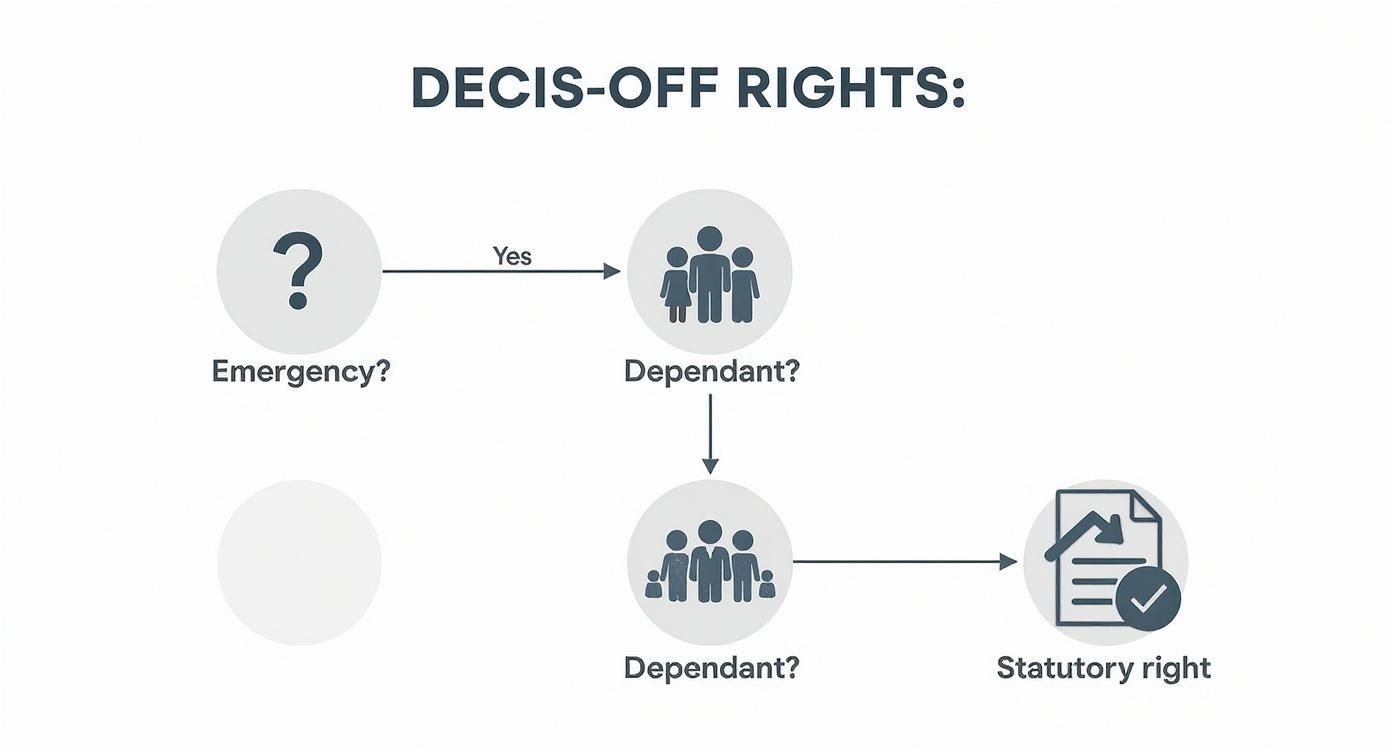
As the infographic shows, your right kicks in when something unforeseen happens to someone who depends on you. Simple as that.
Understanding What Counts as an Emergency
The law is pretty clear on what qualifies as a genuine, out-of-the-blue emergency. It's not for anything you could have planned for. Knowing these scenarios helps you understand when you can confidently ask for time off.
An emergency could be:
- Providing help when a dependant is ill, gives birth, is injured, or has been assaulted.
- Making care arrangements for a dependant who is ill or injured.
- Dealing with the death of a dependant. This covers the initial arrangements, but longer periods for grieving usually fall under a separate bereavement or compassionate leave policy.
- Handling a sudden breakdown of care arrangements. For example, your childminder calls in sick with no notice.
- Dealing with an unexpected incident at your child’s school, like them being injured or suspended.
Here’s the big thing to remember: this statutory leave is unpaid. While it protects your job, it won't protect your wages. This is where your employer's own compassionate leave UK policy becomes so important. Many companies offer paid leave that goes well beyond the legal minimum, so your staff handbook is the first place you should check to see what you’re really entitled to.
Understanding Statutory Bereavement Leave

While the general right to time off for dependants is unpaid, UK law carves out one crucial, paid exception. This is Statutory Parental Bereavement Leave, a specific legal right created by the Parental Bereavement (Leave and Pay) Act 2018, which you might know as ‘Jack’s Law’.
This law isn't just a guideline; it’s a guaranteed period of paid time off for parents navigating the unimaginable tragedy of losing a child. Unlike the broader, more flexible rules for dependant emergencies, this right is precise, protected, and comes with statutory pay.
Getting to grips with this entitlement is vital. It provides a clear, legal foundation of support when it’s needed most, removing any grey areas about what you are owed during an incredibly difficult time.
Who Is Entitled to This Leave
The criteria for Statutory Parental Bereavement Leave are very specific, designed to support parents and primary carers who have suffered a profound loss.
You’re eligible for this leave if you are an employee and experience:
- The death of a child under the age of 18.
- A stillbirth after 24 weeks of pregnancy.
The definition of a ‘parent’ is quite broad here. It covers adoptive parents, intended parents in a surrogacy arrangement, and anyone with day-to-day responsibility for the child’s care. This inclusive approach reflects the diverse nature of modern families. When you’re also trying to navigate complex end-of-life services for families, knowing these rights can make a world of difference.
How Much Leave and Pay Can You Expect
For those who qualify, the law offers a clearly defined period of support, which helps remove the uncertainty that often comes with discretionary company policies.
Eligible employees are entitled to two weeks of leave. The pay is set by the government each year—much like statutory maternity or paternity pay. You’ll receive either the weekly statutory rate or 90% of your average weekly earnings, whichever amount is lower.
This financial cushion is there to provide a bit of stability, allowing you to focus on your family without the immediate worry of a total loss of income. To get a complete picture, you can learn more about the details of parental bereavement leave and how it works in practice.
How You Can Take the Leave
Flexibility is built right into Jack's Law, a thoughtful acknowledgement that grief doesn't work to a fixed schedule. The two weeks of leave don't have to be taken all at once.
You have a choice in how you take the time off:
- As a single block of two weeks.
- As two separate blocks of one week each.
This leave must be taken within 56 weeks of the child's death. This extended timeframe allows parents to take time for difficult milestones that come later, like the child's birthday or the anniversary of their passing, ensuring support is available when it might be needed most.
How Company Policies Define Your Actual Entitlement
While the law gives you a basic safety net, what compassionate leave in the UK looks like for you really boils down to one thing: your employer's own policy. The government provides a baseline—unpaid time off for emergencies—but most good companies know that this just isn't enough when an employee is going through a genuinely tough time.
Many employers offer policies that are much more generous than the legal minimum. This isn't just about being nice; it’s a smart move. Investing in paid compassionate leave directly impacts employee wellbeing, loyalty, and whether your best people decide to stick around.
Think about it: when an employee feels truly supported during a personal crisis, they're far more likely to come back to work focused, engaged, and loyal. A clear, compassionate policy is where a company’s values stop being words on a wall and become real, tangible support.
Common Structures for Company Policies
Most companies structure their compassionate leave to offer different levels of support depending on the relationship. This tiered approach lets them give the most help for the most devastating losses while keeping things fair and consistent for everyone.
A typical policy might look something like this:
- Tier 1 (Immediate Family): This usually offers the most leave. For instance, 5-10 days of paid leave for the death of a spouse, partner, child, or parent.
- Tier 2 (Close Relatives): You might see a shorter period here, like 3-5 paid days, for the loss of a grandparent, sibling, or grandchild.
- Tier 3 (Other Relatives or Close Friends): Some thoughtful policies even offer 1-2 days of paid leave to attend the funeral of another relative (like an aunt or uncle) or even a very close friend.
It’s also crucial to understand your company's specific bereavement policy limitations, which should be detailed in your employee handbook. After all, maximising employee satisfaction with a clear leave policy is a huge goal for modern HR. To learn more, check out our guide on crafting an effective leave policy.
Evolving Policies for Modern Families
Compassionate leave policies are finally starting to catch up with what families and support networks actually look like today. Forward-thinking companies get that ‘family’ isn’t just about blood relations anymore, and this understanding is key to attracting and keeping great people.
An inclusive policy acknowledges that the loss of a close friend, an unmarried partner, or another key figure in someone's life can be just as devastating as losing a direct relative. By offering flexibility, employers demonstrate a genuine understanding of their employees' lives.
This shift is exactly what people in the UK expect. Public opinion is overwhelmingly in favour of extending paid bereavement leave to cover more relationships. A major Ipsos survey of 2,213 UK adults found that a massive 87% believe paid bereavement leave should apply not just to the loss of a child, but also for other close family members or friends. You can see more details from the Ipsos survey on bereavement leave policies.
This data sends a clear message: employees want and need support that reflects the reality of their lives. Companies that listen and adapt their policies are the ones that build the strongest, most dedicated teams. At the end of the day, your company handbook is the final word on the support you can expect.
What to Do When Policy Is Not Enough
Even the best, most carefully written compassionate leave policy can have its limits. A policy might offer five days of paid leave, but grief doesn't work to a schedule. The stress and practical demands of a family emergency certainly don't stick to a five-day plan. This often creates a tough gap between what your contract says and what you actually need to get through it.
This situation is more common than you might think. A lot of us feel pressured to head back to the office before we’re really ready, which can be a massive drain on our wellbeing and, frankly, our ability to do our jobs properly. Closing that gap means being a bit proactive and figuring out how to ask for the time you need.
The first thing to remember is that your company's policy is usually just a starting point, not the final word. Most managers and HR teams have some wiggle room to offer more support, but you often have to be the one to kick off that conversation.
Opening a Dialogue with Your Manager
Talking about needing more time off can feel pretty intimidating, especially when you're already in the middle of a crisis. But clear, honest communication is your best friend here. The goal isn't to make demands, but to work together to find a solution that helps you and doesn't leave the business in the lurch.
When you sit down with your manager, try to go in ready for an open chat. It’s useful to be clear about your situation without feeling like you have to share every last personal detail. The key is to focus on your ability to do your job well and explain why a little more time now will benefit everyone later.
A poll by MetLife found that a fifth (21%) of employees who had lost someone wished they'd been given more time off. The same research showed that for over half (55%) of them, it took up to eight weeks to feel 'back to normal' at work. You can read more on how bereavement impacts the workplace.
Exploring Your Options for More Time
If your official compassionate leave runs out but you're not ready to return, there are a few other paths you can explore. Knowing what they are before you speak to your manager helps you come to the table with a clear plan.
Here are a few common strategies:
- Using Annual Leave: You could ask to use some of your paid holiday. This is often the most straightforward way to get a bit more time off, giving you financial stability while you deal with things.
- Requesting Unpaid Leave: If you've run out of annual leave or want to save it, asking for a period of unpaid leave is another solid option. It obviously has financial implications, but it secures your job and gives you that crucial time to recover.
- A Phased Return to Work: This can be a brilliant compromise. Suggesting a temporary cut in your hours or working part-time for a couple of weeks lets you ease back into your routine without being hit by a full workload straight away.
Remember, a manager's primary concern is ensuring work gets done. By proposing solutions like a phased return or helping to arrange cover for your duties, you show that you are being responsible and considerate of the team’s needs.
For managers, knowing how to handle bereavement leave requests with empathy and fairness is a critical skill. By approaching the conversation constructively, you can help them help you. Ultimately, advocating for your wellbeing isn’t just about getting more time off; it’s about making sure you can come back to work as a focused, healthy, and productive member of the team.
How to Request Compassionate Leave at Work
When you’re going through a tough, emotional time, the last thing on your mind is workplace procedure. The thought of figuring out what to say or who to talk to can feel completely overwhelming—an added stress you just don't need. This guide breaks it down into clear, practical steps to help you request compassionate leave in the UK without the extra worry.
The good news is, the process doesn't need to be complicated. In most cases, a quick phone call followed by a simple, clear email is the best way to handle it. This two-step approach makes sure your manager knows what’s happening straight away, while also creating a written record for HR and payroll.
Making the Initial Contact
The first thing you should do is call your direct line manager as soon as you realistically can. A phone call is much more personal and immediate than an email, which helps get across the seriousness of the situation. You don't need to go into lots of detail; just stick to the essential facts.
Keep it brief and to the point. Let them know you have a family emergency or a bereavement and need to take compassionate leave, starting immediately if that's the case. This verbal heads-up is vital for letting your team know you'll be absent right away.
After the call, sending an email is the crucial next step. It formalises your request and gives everyone involved a clear paper trail to follow.
Crafting a Clear and Professional Email
Your follow-up email should be concise and contain only the necessary information. Now is not the time for a long, detailed explanation. Clarity is your top priority, ensuring HR has what they need and there are no wires crossed about your absence.
Here’s a simple structure you can adapt:
- A Clear Subject Line: Make it obvious at a glance. Something like, "Compassionate Leave Request – [Your Name]" works perfectly.
- State the Reason Briefly: Simply mention you're requesting compassionate leave due to a bereavement or family emergency.
- Specify Dates (If You Know Them): Let them know when your leave will start. If you have an idea of how long you'll be off, include it, but it’s completely fine to say you're not sure yet.
- Mention Urgent Work: Briefly flag any critical tasks and who might be able to cover them, or where to find key documents.
Example Email Template:
Subject: Compassionate Leave Request – Jane Doe
Dear [Manager's Name],
Following our phone call, I'm writing to formally request compassionate leave, effective from today, [Date], due to a family bereavement.
At the moment, I think I will need [Number] days off, but I will keep you updated if this changes.
I have finished the report for the Project X deadline, and it's saved in the shared drive. [Colleague's Name] knows what the next steps are. Please let me know if there is anything else urgent I need to hand over.
Thank you for your understanding.
Best regards,
Jane Doe
This kind of template is professional, provides all the key information, and shows you're still being responsible with your work commitments. By getting this communication sorted, you can focus your energy where it’s needed most—on your family.
Common Questions About Compassionate Leave
When you’re dealing with a family emergency, the last thing you want is confusion over your rights at work. The world of compassionate leave can feel like a maze of legal entitlements and company-specific rules.
Let’s clear things up with some straightforward answers to the most common questions people ask.
Is Compassionate Leave Paid in the UK?
The short answer is: not always. Your basic legal right, known as 'time off for dependants', is actually unpaid. It’s a crucial safety net that protects your job when you need to drop everything for an emergency, but it doesn't guarantee your paycheque.
However, many UK companies go beyond the legal minimum and offer their own paid compassionate leave policies. The only time paid leave is a legal requirement is for Statutory Parental Bereavement Leave, which applies to parents who lose a child under 18. Your first port of call should always be your employment contract or staff handbook to see what your company offers.
Can My Employer Refuse Compassionate Leave?
For a genuine dependant emergency, your employer can't legally refuse your right to take a 'reasonable' amount of unpaid time off. You just need to let them know as soon as you can.
What they can do is question the situation. They might ask if it truly counts as an emergency, or if the person involved is legally classed as a dependant. They can also say no to requests for paid leave if it’s not covered by your contract. Any refusal has to be fair and can't be discriminatory, so clear, open communication is your best bet to avoid any issues.
Do I Need to Provide Proof for My Absence?
When it comes to the statutory right to 'time off for dependants', UK law does not require you to hand over proof like a doctor's note. Your employer can ask for enough detail to understand what's happening, but you're not obligated to produce a formal document.
Be aware that if you're taking paid leave under a company-specific policy, the rules might be different. Your staff handbook might mention that evidence is needed, especially if the absence is for more than a day or two. Being honest and upfront is always the best approach.
What Is the Difference Between Compassionate and Bereavement Leave?
People often use these terms to mean the same thing, but there's a subtle difference. It helps to think of it like this:
- Compassionate Leave: This is the broad, catch-all term for taking time off to handle a serious emergency involving a dependant. It could be anything from caring for a seriously ill partner to dealing with a last-minute childcare crisis.
- Bereavement Leave: This is much more specific and refers only to the time taken off after someone has passed away. In the UK, the legal right to 'time off for dependants' covers the immediate practicalities after a death, but any extra time for grieving is typically determined by your employer’s policy.
In short, all bereavement leave is a form of compassionate leave, but not all compassionate leave is related to bereavement.
Managing any kind of leave is simpler with the right system. Leavetrack replaces messy spreadsheets with a clear, centralised platform, giving you instant visibility into who's off and why. To create a fair and transparent process for your team, learn more at https://leavetrackapp.com.