
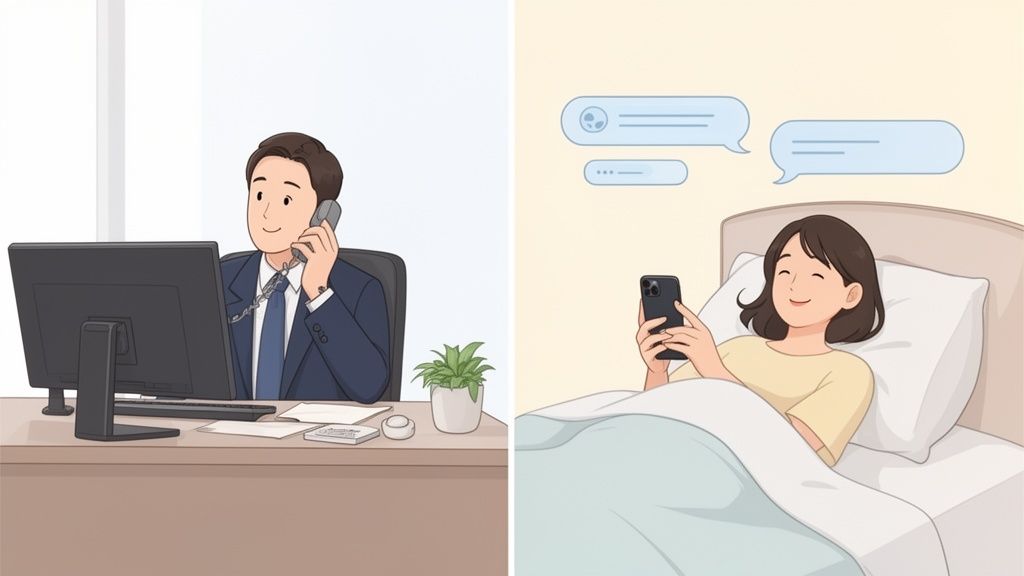
Contacting Staff on Sick Leave A Manager's Practical Guide
Posted by Robin on 18 Jan, 2026 in
Contacting an employee on sick leave is a delicate balancing act. It’s about showing you care and planning for their absence, without being intrusive or adding to their stress. The question isn't really *'should I make contact?'*but rather 'how can I connect in a supportive and legally sound way?'
The Manager's Tightrope Walk of Sick Leave Communication

It's a common scenario: a team member is off sick, and as their manager, you're not sure what to do. You worry about overstepping legal boundaries or just saying the wrong thing. That apprehension is completely understandable.
But silence can backfire. It might leave your employee feeling isolated or undervalued, which could even slow down their recovery and delay their return.
This challenge is becoming more common as sickness absence rises across the UK. A recent survey found that UK employees now take an average of 9.4 days off sick per year. That's a big jump from pre-pandemic levels and the highest figure since 2010. For businesses, especially smaller ones where every person counts, this trend creates real financial and operational headaches.
Bridging the Communication Gap
The heart of the matter isn’t about checking up on people; it’s about maintaining a human connection. A bit of proactive, empathetic communication builds a bridge, supporting both the employee's recovery and the team’s stability. It turns a potentially awkward situation into a positive touchpoint.
Effective communication during sick leave is a critical component of successfully navigating workplace relationships amidst stress. It demonstrates that the organisation values its people beyond their output, fostering a culture of mutual respect and support.
A thoughtful approach really comes down to a few key things:
- Show Genuine Concern: Your first priority should always be the employee's wellbeing, not their to-do list.
- Clarify Expectations: A solid sickness absence policy sets the stage, letting everyone know how and when contact will be made.
- Offer Support: Simply ask what they need. It could be information about company resources, or it might just be the space to recover peacefully.
- Plan for Return: Gentle, well-timed chats about a potential return to work can make the whole process much smoother for everyone involved.
By mastering this balance, managers can lessen the disruption of sick leave while building a more positive and caring workplace. It's about creating a supportive framework that helps employees feel connected, not controlled.
Navigating Legal and Privacy Boundaries With Confidence
Before you even think about sending that text or making that call, you absolutely have to understand the legal landscape. It’s non-negotiable. When you contact a team member who's on sick leave, you're operating within UK law, which means you need to be mindful of privacy, data protection, and anti-discrimination rules.
First and foremost, your employees have a right to privacy. This means they are not obligated to share every last detail of their medical condition beyond what’s necessary on a fit note. Your job is to manage their absence and support their return to work—not to play doctor. Too much contact, or asking intrusive questions, can quickly cross the line into harassment or feel like pressure to come back before they're ready.
Understanding What "Reasonable Contact" Actually Means
"Reasonable contact" is the principle that should guide every interaction, but it's not a one-size-fits-all rule. It's all about context.
What’s considered appropriate really depends on the situation. For example, a quick check-in with someone off for a few days with a bad cold is worlds away from managing the absence of an employee signed off with work-related stress. That second scenario demands a much more delicate touch, with less frequent contact focused purely on their wellbeing. Getting your head around specific situations, like the nuances of mental health leave policies, is vital for managers who want to provide genuine support.
A manager's contact should always be supportive, reasonable, and pre-agreed where possible. The goal is to maintain a connection and facilitate a smooth return, not to monitor or pressure the employee.
Your strongest asset here is a rock-solid sickness absence policy. It takes the guesswork out of the equation by setting clear expectations for everyone involved. If you're building one from scratch, our comprehensive guide to creating an absence and sickness policy for the UK workplace is a great place to start.
Your policy should clearly outline:
- Reporting Procedures: How and when an employee needs to report their absence.
- Contact Protocols: Who will get in touch, how they'll do it, and how often for different types of leave.
- Fit Notes: The process for submitting medical evidence.
Don't Forget GDPR and the Equality Act
Your legal duties don't stop there. You also have to think about data protection and discrimination.
Under GDPR, any health information you collect is classified as special category data. This means it needs to be handled with the highest level of security and confidentiality. You must have a lawful reason for processing it, which is typically to fulfil your obligations as an employer.
On top of that, the Equality Act 2010 protects employees from being discriminated against because of a disability. Many long-term health conditions can be legally classified as a disability under the Act. Pressuring an employee with such a condition could lead to serious legal trouble. Your communication must always be focused on providing support and making reasonable adjustments, showing that you respect their rights and are committed to their wellbeing. Always, always document your conversations carefully to create a clear record of your reasonable and supportive approach.
Finding the Right Rhythm for Staying in Touch
Knowing the rules for contacting staff on sick leave is one thing, but putting it into practice is where things can get tricky. How often should you call? Is a text message okay? These are the real-world questions that managers grapple with most.
The key is to find a clear, consistent rhythm that adapts based on how long the person is away. A one-size-fits-all approach just doesn’t cut it. Your strategy for someone off with the flu for a few days needs to be completely different from your plan for someone on long-term sick leave.
This simple decision tree is a great starting point for figuring out whether and how to make contact.
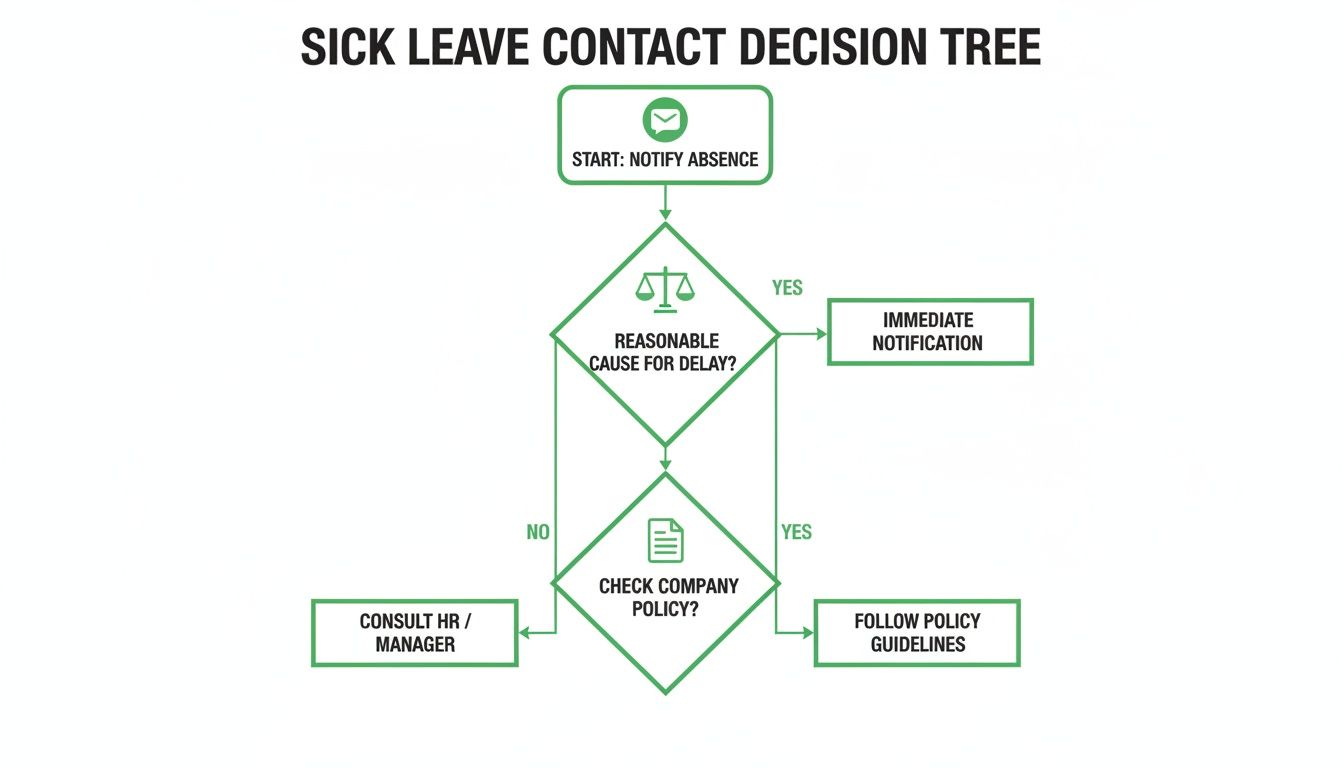
The flowchart reinforces a core principle: every decision you make should be reasonable and guided by your company's own policy.
Structuring Contact for Short-Term Sickness
For short-term absences, typically lasting less than a week, less is definitely more. Your goal is simply to acknowledge their absence and wish them well, without being intrusive.
A single, brief check-in is usually all that’s needed. This shows you care and allows you to confirm they have everything they need to focus on getting better. Overdoing it can feel like pressure to come back before they’re ready, which helps no one.
For short-term sickness, a simple, supportive message is often all that's needed. It confirms you've received their notification and reinforces that their priority is to rest and recover. This small gesture helps maintain a positive connection without adding stress.
Managing Communication for Long-Term Absence
When an absence stretches beyond a week or two, the dynamic shifts. Maintaining a connection becomes crucial to prevent the employee from feeling isolated or cut off from the team.
For long-term sick leave, it’s a good idea to agree on a contact schedule with the employee early on. A gentle check-in every one to two weeks is often seen as reasonable. This creates a predictable, low-pressure way to stay in touch, discuss any updates from their fit note, and start thinking about what support they might need for their eventual return.
Choosing the Right Communication Channel
How you get in touch is just as important as how often. The method you choose can make a world of difference, so you should always consider the employee's preferences and the nature of their illness. A phone call can feel personal and supportive, but for someone dealing with anxiety, an email or text might be far less daunting.
Here’s a quick breakdown to help you pick the right channel.
| Channel | Best For | Pros | Cons to Consider |
|---|---|---|---|
| Text Message | Quick, informal check-ins and confirmations. | Low-pressure and easy for the employee to respond to when they can. | Can feel too informal for serious updates; lacks a clear paper trail. |
| Formal updates, sharing information (e.g., occupational health details), and providing a written record. | Gives the employee space to reply in their own time; creates a record of communication. | Can feel impersonal; might get lost in a busy inbox if not checked regularly. | |
| Phone Call | More significant conversations, like discussing a phased return to work or agreeing on a contact schedule. | More personal and allows for immediate back-and-forth conversation and tone clarification. | Can be intrusive if unscheduled; may put an unwell employee on the spot. |
Always try to pre-arrange a phone call via a quick text or email first to make sure it’s a good time for them.
Ultimately, your entire approach should be guided by empathy. By creating a repeatable, supportive process, you can maintain a vital connection with your team members and make sure they feel valued, even when they’re away.
How to Craft a Supportive and Effective Message
The words you choose can make all the difference. Get it right, and your check-in becomes a moment of genuine support. Get it wrong, and you can pile on the anxiety. Crafting the right message isn't about following a rigid script; it's about communicating with empathy, clarity, and respect. It's about showing the employee you see them as a person, not just a cog in the machine.
This matters more than you might think. Sickness absence rates in the UK can vary wildly; public sector employees average 10.6 days off a year, whereas those in small private businesses take just 5.0 days. When you dig deeper, you find that mental ill-health is a huge factor, accounting for 47.1% of long-term absences in the Civil Service, according to the latest Civil Service sickness absence report. This tells us that a sensitive, human touch isn't just nice—it's essential.
Focus on Wellbeing, Not Work Tasks
Especially in your first message, your only goal should be to check on the employee's wellbeing. Forget about the outstanding projects on their desk for a moment. That simple shift in focus is the bedrock of a supportive message.
Instead of jumping in with "When will you be back?" or "Can you just tell me where the file is?", try open-ended questions that show you actually care. This approach is fundamental to making sure all your employees feel valued, which pays dividends in morale and loyalty down the line.
"A message that says 'We're thinking of you and hope you're recovering well' lands very differently from one that says 'We need to know when you're back'. The former builds trust; the latter just creates pressure."
Sample Scripts for Different Scenarios
Having a few starting points can help you feel more confident and keep your communication consistent. Feel free to adapt these to your own style and the specific situation.
Scenario 1: Initial Welfare Check (Email or Text)
This is perfect for the first few days of an absence. Keep it light, supportive, and make it clear they don't need to reply straight away.
- Try this: "Hi [Employee Name], just sending a quick message to say we're all thinking of you and hope you're starting to feel a bit better. Please don't worry about work at all—your only job right now is to rest up. Let me know if you need anything from us. Best, [Your Name]"
Scenario 2: Follow-Up After Receiving a Fit Note
Once you have a fit note for a longer-term absence, a slightly more structured check-in is perfectly fine.
- Try this: "Hi [Employee Name], thanks for sending over your fit note. I’m sorry to hear you'll be off for a little longer, but the most important thing is that you take all the time you need. We've got things covered here, so please just focus on your recovery. We can arrange a gentle check-in call next week if you feel up to it, just to see how you are."
Scenario 3: Discussing a Phased Return
When the employee's fit note suggests they "may be fit for work," your communication can gently shift towards planning their return.
- Try this: "Hi [Employee Name], hope you're doing well. I saw your latest fit note suggests a phased return might be helpful, which is great news. When you feel ready, I'd love to have a relaxed chat about what that could look like and what adjustments we could make to support you. No rush at all—just let me know when might be a good time."
Words and Phrases to Avoid
What you don't say is just as important as what you do. Steer clear of any language that could come across as intrusive, demanding, or dismissive.
- Never ask for a specific diagnosis: "What exactly is wrong with you?" is completely out of bounds.
- Don't pressure them for a return date: Avoid saying things like, "We really need you back by Monday."
- Don't compare illnesses: Phrases like "When I had the flu, I was back in three days" are incredibly unhelpful and just make people feel worse.
- Avoid piling on work-related stress: Saying "The team is really struggling without you" adds guilt to their plate when they should be focusing on recovery.
By using empathetic language and focusing on support, you can make contacting staff on sick leave a constructive and positive part of your management toolkit.
Using Systems to Manage Absence Consistently
Trying to manage communication with absent staff using a patchwork of memory, stray emails, and spreadsheets is just asking for trouble. It's a recipe for mistakes.
You’ll inevitably end up with inconsistencies. One manager might be overly cautious and never make contact, while another might check in far too often. This doesn't just create an unfair experience for your employees; it opens the business up to very real legal risks.
Thankfully, there’s a much better way. Modern absence management systems can transform this complex, manual headache into a structured, transparent process where everyone is treated fairly. These tools are built to embed your sickness policy directly into your day-to-day operations.
Creating a Single Source of Truth
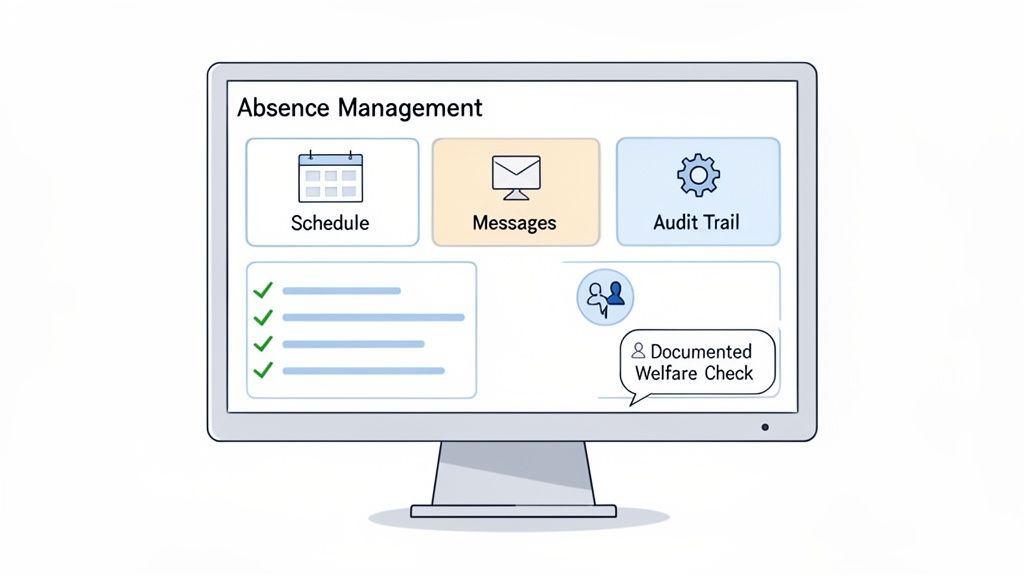
The biggest win from using a dedicated system is centralisation. Instead of critical information being scattered across different inboxes, notebooks, and managers' heads, everything is logged in one secure place. This creates a clear, chronological record of every absence and all the communication that goes with it.
For managers, this means no more guesswork. For HR, it means having a complete audit trail ready to go for any compliance checks or disputes. A centralised platform ensures that contacting staff on sick leave is done consistently and by the book, no matter which manager is handling the situation.
This dashboard from Leavetrack shows how you can get an at-a-glance view of team availability.
That kind of visibility makes it easy to spot patterns and organise cover without any last-minute panic.
Automating Policy and Reducing Presenteeism
A good system lets you build your communication rules directly into the platform. You can set up automated reminders for managers to conduct welfare checks at specific intervals during long-term absences or use integrated messaging to send quick, documented updates. This automation frees up your managers to focus on the human side of the conversation, not the admin.
It also helps you tackle the hidden problem of 'presenteeism'—where employees are working while ill and not performing at their best. Research shows UK employees lose a staggering 44 days of productivity a year this way, which is a major factor in the UK's overall absenteeism costs.
When contact is proactive and guided by your policy, it encourages people to take the rest they actually need. A system makes sure this happens every time. You can explore more about the key benefits of absence management software for SMEs to see how it drives better workplace health.
By systematising absence management, you're not just buying software; you're implementing a fairer, more consistent approach to employee care. This ensures every team member receives the same level of support, which is the foundation of a healthy workplace culture.
Ultimately, using a dedicated tool like Leavetrack moves you away from reactive fire-fighting to a proactive, supportive strategy. It provides the structure you need for compliant, empathetic communication, ensuring your approach to sick leave is always fair, supportive, and consistent.
Your Questions Answered on Contacting Sick Staff
Knowing what to do when an employee is off sick can feel like you're walking on eggshells. It's a delicate balance between showing you care and respecting their privacy. Here are some quick, practical answers to the questions managers and HR teams grapple with most often.
Can I Ask an Employee What Is Wrong With Them?
In short, no. You should never ask for a specific medical diagnosis.
That kind of information is private, and pushing for details is a fast track to a potential discrimination claim. Your focus should always be on the practical side of things. It's perfectly fine—and sensible—to ask about their expected recovery time, whether they'll need any adjustments at work when they return, and what support you can offer. Their fit note will give you everything you legally need to know about their fitness for work.
What if an Employee Does Not Respond to My Contact?
First off, don't panic or jump to conclusions. Bombarding them with messages won't help. The first step is always to check your company's sickness absence policy for the agreed-upon procedure.
If you've tried calling and heard nothing back, perhaps try a more formal email. If there’s still silence after a reasonable time, you need to document every single attempt you've made to get in touch. Then, it's time to escalate the issue to HR. The goal is to be persistent but never harassing, with a clear paper trail of every action taken.
How Often Should I Contact Someone on Long-Term Sick Leave?
There isn't a hard-and-fast legal rule here, but best practice gives us a pretty solid guideline. The best approach is to agree on a contact schedule with the employee right at the start of their absence.
For long-term sickness, which is usually four weeks or more, a brief, supportive check-in every one to two weeks is often seen as reasonable. The aim is to maintain a supportive connection, not to pile on the pressure.
This schedule can, and should, be flexible. It might change depending on how the employee is doing and what they're comfortable with. Whatever you agree on, make sure you document it to keep things clear for everyone.
Can I Discuss Work Matters During a Check-In Call?
This really depends on the purpose of the call, and it’s crucial to get it right. If it's a general welfare check, you should absolutely avoid talking about work unless the employee brings it up first. The conversation should be about them and their wellbeing.
If you're faced with a critical, time-sensitive business issue that only they can solve, keep it incredibly brief and to the point. For anything more detailed, like a proper handover, schedule a separate call specifically for that—and only after you've checked the employee feels well enough to take part. Never mix a welfare check with work demands; it sends all the wrong signals.
Tired of navigating these complexities with spreadsheets and memory? Leavetrack simplifies your entire absence management process, ensuring every communication is consistent, compliant, and supportive. Find out more about how Leavetrack gives you the clarity you need.