

Define Bereavement Leave A UK Employer's Guide
Posted by Robin on 28 Jan, 2026 in
Bereavement leave, often called compassionate leave, is time away from work for an employee after a loved one has died. It’s designed to give people the space they need to grieve, make funeral arrangements, and deal with practical matters without the added pressure of work.
What Bereavement Leave Really Means
Let’s be honest, this is more than just an HR term. It’s best to think of bereavement leave as a critical, supportive tool—not just another box to tick on a compliance form. I like to call it the ‘humanity clause’ in an employment contract. It’s a formal acknowledgement that your team members are people first and employees second, giving them a framework to navigate one of life’s toughest moments with dignity.
While UK law only mandates leave for specific situations like Parental Bereavement Leave, a thoughtful and comprehensive policy is the mark of a business that genuinely cares for its people. This isn't just about giving someone a few days off. It's about providing a safety net of support, empathy, and understanding right when they need it most.
A strong bereavement policy sends a clear message to your entire organisation: you prioritise mental wellbeing and basic human decency. That kind of trust fosters loyalty that lasts long after the employee has returned to work.
It's also worth noting that both employees and employers can benefit from understanding the common bereavement policy limitations to ensure policies are built to be both fair and genuinely effective.
To give you a clearer picture, let's break down the key aspects of a typical UK policy.
UK Bereavement Leave At A Glance
Here’s a quick overview to help you understand the common components of bereavement leave for UK businesses.
| Aspect | Typical UK Practice | Key Consideration |
|---|---|---|
| Duration | 3-5 paid days | Is this enough time for practicalities and initial grief? |
| Eligibility | Covers immediate family (spouse, child, parent) | Should this extend to partners, close friends, or chosen family? |
| Pay | Often paid, but not always legally required | Unpaid leave can add significant financial stress during an awful time. |
| Flexibility | Days usually taken consecutively | Grief isn't linear; allowing non-consecutive days can be much more helpful. |
This table provides a starting point, but remember that the most effective policies are built with compassion and flexibility at their core.
Understanding Your Legal Obligations
When it comes to bereavement leave in the UK, it’s crucial to separate what the law requires from what’s considered good practice. For the most part, there isn't a sweeping legal right to paid time off after a loss. The main statutory requirement is quite narrow and focuses on one specific, tragic situation.
The key piece of legislation here is the Parental Bereavement Leave and Pay Act, which came into effect in 2020. This law gives eligible working parents the right to take time off if they suffer the devastating loss of a child under 18, or a stillbirth after 24 weeks of pregnancy. It's a very specific protection for an unimaginable circumstance. You can dive deeper into the details in our complete guide to understanding Parental Bereavement Leave.
Outside of that, the legal ground for other losses is less solid. It typically falls under an employee's right to "time off for dependants." This allows for a reasonable amount of unpaid time to handle an emergency involving a dependant, which could include things like arranging or attending their funeral.
The Gap Between Law And Practice
This lack of a broader legal mandate creates a significant gap between what’s legally required and what actually happens in most workplaces. While a company isn't legally forced to offer paid leave for the death of a parent, partner, or sibling, the vast majority choose to do so. It’s just the right thing to do.
Common practice usually lands somewhere between three to five paid days.
But is that enough? The data suggests it often isn't. A recent study found that 21% of UK working adults who lost someone in the last two years felt they needed more time off to grieve properly. That's a noticeable jump from 15% in 2023, pointing to a growing disconnect between standard policies and what people actually need during a crisis.
This simple flowchart shows the steps an employee usually takes when they need to request leave.
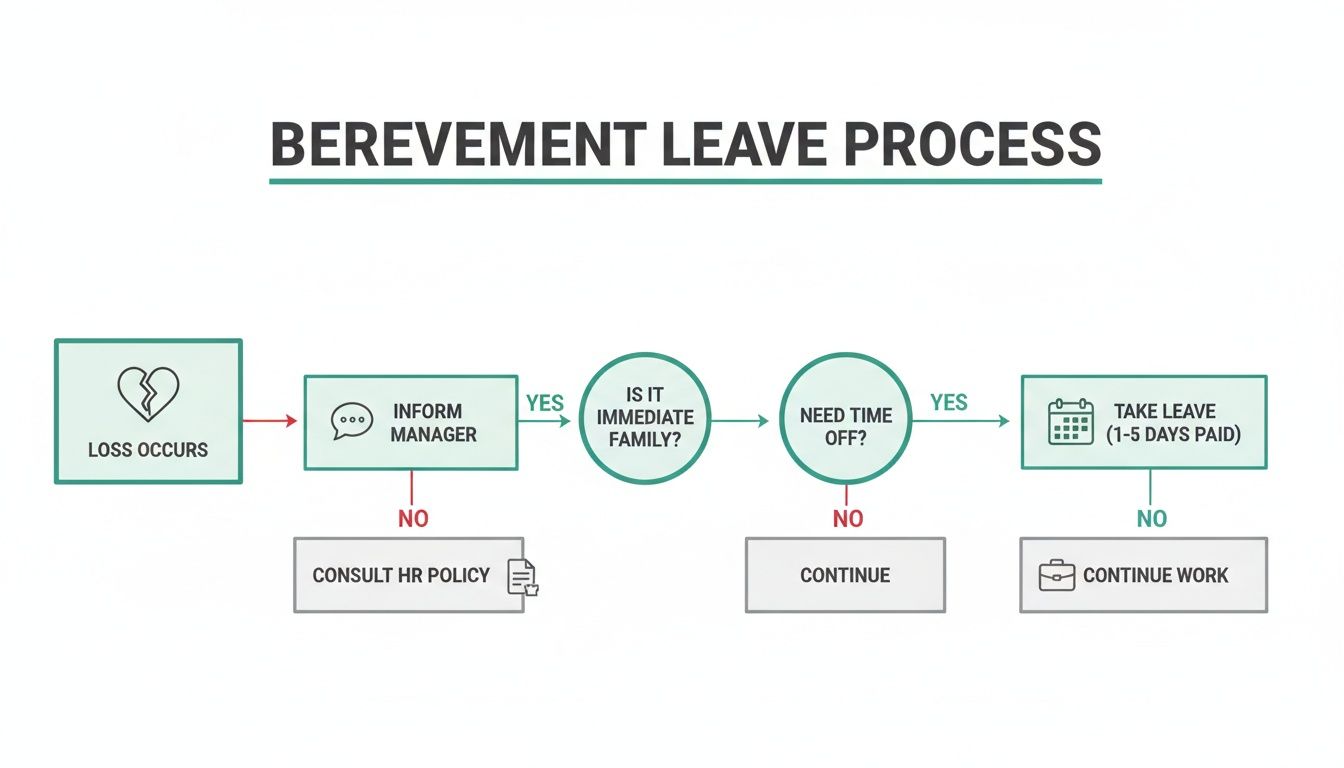
As you can see, the process itself should be straightforward. This really underscores the need for clear communication and, most importantly, a supportive and human response from managers when an employee reaches out for help.
Crafting A Clear And Compassionate Policy
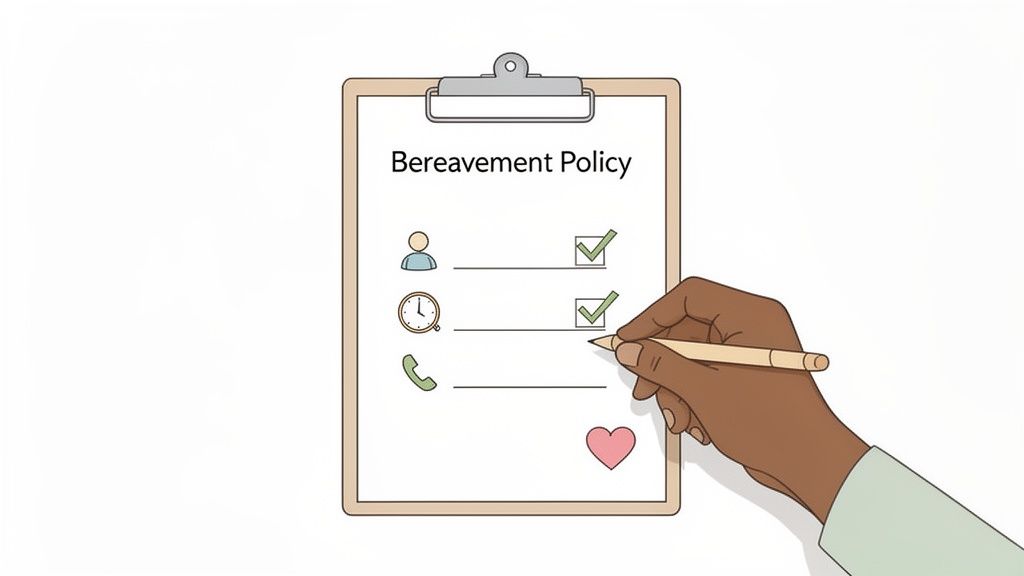
When a member of your team is grieving, the last thing they need is confusion about what support is available. A well-crafted bereavement policy acts as a clear, compassionate guide for everyone. It removes any guesswork for both employees and managers, setting clear expectations so people know exactly what to do and what support they can count on.
Without a formal policy, you're just winging it. That often leads to inconsistent decisions and piles on even more stress during an incredibly tough time.
This isn't just a hypothetical problem. A revealing 2023 Ipsos survey found that a staggering 55% of UK employees know little to nothing about their company's bereavement leave policy. That's a huge gap, and it points to an urgent need for policies that are clear, easy to find, and genuinely supportive. If you're curious about what else employees expect, you can read the full Ipsos research on bereavement leave.
Key Components Of An Effective Policy
Putting a policy together from scratch can feel like a big task, but it really just comes down to answering a few core questions with clarity. Think of these as the fundamental building blocks of your policy.
A strong policy provides a framework for managers to act with consistency and compassion. It turns good intentions into real, tangible support when your people need it most.
Here’s a breakdown of the essential elements to include when you're drafting or reviewing your policy.
| Policy Component | Key Consideration | Example Wording Snippet |
|---|---|---|
| Eligibility | Who qualifies? Immediate family only, or do you include partners, close friends, or chosen family? Modern families and relationships are diverse. | "This policy applies following the death of an immediate family member (spouse, partner, child, parent, sibling) or other close relation, such as a grandparent or someone who lived in the employee’s household." |
| Leave Entitlement | How much time off do you offer? Is it paid or unpaid? Most UK companies offer 3-5 paid days, but it’s worth considering if more time is needed for travel or complex situations. | "Eligible employees are entitled to up to 5 days of paid bereavement leave. Additional unpaid leave may be granted at the manager's discretion." |
| Notification Process | What’s the procedure for requesting leave? Who should the employee contact, and how? Keep this process as simple and stress-free as you possibly can. | "Please notify your line manager as soon as is reasonably possible. A phone call is preferred, but an email or message is also acceptable." |
| Flexibility | Grief doesn’t fit into a tidy 9-to-5 schedule. Can leave be taken non-consecutively? This shows real understanding and care. | "Bereavement leave does not need to be taken on consecutive days and can be used flexibly to attend services or manage personal affairs related to the loss." |
| Documentation | Do you require proof of loss? If so, be sensitive about this. Asking for documentation can feel intrusive during a period of intense grief. | "We trust our employees and do not typically require documentation. However, the company reserves the right to request reasonable verification if necessary." |
By covering these key areas, you create a policy that is not only clear and fair but also deeply human.
Perhaps the most important element of all is flexibility. Grief is unpredictable. An employee might need a couple of days right after a loss, then another day a week later for the funeral or memorial service. Building this kind of adaptability right into your policy demonstrates that you understand and trust your team.
The Hidden Costs Of Poor Bereavement Support
When bereavement support falls short, the impact ripples far beyond an individual employee’s morale. It's all too easy for a business to mentally file compassionate leave under 'operational cost', but that misses the bigger picture entirely. Inadequate support is more like a hidden tax on your business's health, creating very real consequences that hit productivity, team stability, and your bottom line.
Failing to properly support a grieving employee creates a domino effect. Their productivity naturally suffers as they struggle with presenteeism—being physically at work but mentally and emotionally somewhere else entirely. This can easily lead to missed deadlines, a drop in quality, and a strain on the rest of the team who have to pick up the slack.
The Wider Economic Impact
This financial fallout isn't just a theory; the numbers are huge. On a national level, bereavement knocks a massive £23 billion off the UK economy every single year in lost productivity, with an extra £8 billion in costs to the Treasury.
These figures show just how unsupported grief translates into real economic strain. It's a reality that plays out in miniature within every company that lacks a solid, human-first policy. You can see the full government findings on the economic impact of bereavement for yourself.
This brings us to a crucial point:
Investing in a compassionate and flexible bereavement leave policy isn't an expense. It's a strategic investment in your people and your company's long-term resilience. It protects against costly staff turnover and fosters a loyal, engaged workforce.
Ultimately, supporting employees during their most difficult times builds a foundation of trust and psychological safety. This kind of goodwill pays dividends for years to come, creating a resilient culture that can weather any storm. It sends a clear message: you value your team as human beings, not just cogs in a machine.
How Managers Can Provide Real Support
A brilliant policy document is a great start, but it's the managers on the front line who provide the real, human support. When an employee is grieving, their day-to-day interactions with their manager can make all the difference. It can turn an awful time into a supported experience, rather than an isolating one. It’s about moving beyond just ticking a box to approve leave and learning how to offer genuine, empathetic support.
That first conversation is often the most difficult, but it doesn't have to be. The best way to handle it is with compassion and simplicity.
Just start with a heartfelt, "I am so sorry for your loss." Then, immediately follow up with practical reassurance: "Please take all the time you need. Don’t worry about work right now; we'll handle things here."
This simple two-step approach does two critical things: it validates their pain and it lifts the burden of work-related stress from their shoulders. It sends a clear message that their wellbeing is the absolute priority. For a deeper dive into handling these conversations, our guide on how to deal with bereavement leave requests offers more practical steps for managers.
Actions That Make A Difference
Once the initial leave is sorted, your support shouldn't stop. Grief isn't a single event with a clear end date; it's a long and winding road.
- Handle Workload Discreetly: Quietly reassign any urgent tasks and let the team know their colleague is on leave. The last thing they need is to return to a mountain of work you've let pile up.
- Check In Thoughtfully: A simple text saying, "Thinking of you, no need to reply," can mean the world. It shows you care without putting pressure on them to perform emotionally.
- Plan a Gentle Return: Before they come back, reach out and ask what would be most helpful for them. Maybe a phased return would be best, or perhaps just a quick, informal catch-up to ease back into the swing of things.

True support is about creating a space where an employee feels safe to grieve without fearing for their job. It's about flexibility, empathy, and consistent communication.
Managers who offer real support understand that grieving employees need time and resources to figure out how to let go of someone and heal, and they adapt their approach accordingly. By equipping your leaders with these skills, you build a culture of genuine care that policies alone can't create.
Using The Right Tools to Manage Leave
Trying to manage any kind of leave with spreadsheets can feel chaotic, but that admin headache gets a whole lot worse when you’re dealing with the sensitivity of bereavement. Manual processes are just asking for errors and delays, which is the absolute last thing an employee needs when they're going through a tough time. A dedicated system makes sure every request is handled consistently, confidentially, and with the compassion it deserves.
A modern absence management system lets you define bereavement leave as its own custom leave type, keeping it totally separate from annual leave or sick days. This gives HR, managers, and payroll a clear, central place to look, getting rid of any confusion. You can read more about the benefits in our complete guide to employee leave management systems.
For instance, you can see just how straightforward it is to set up a custom leave type for bereavement in Leavetrack.
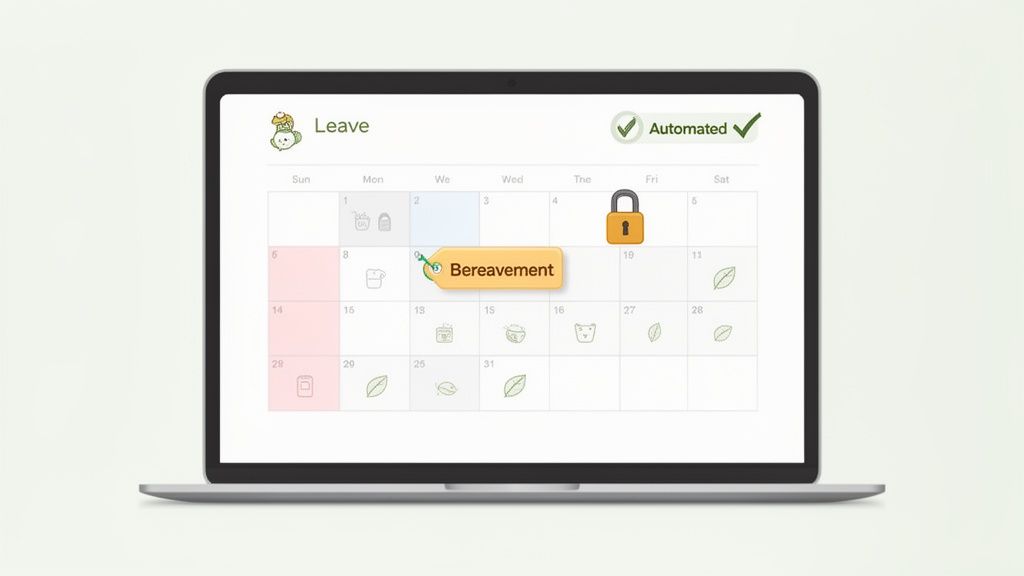
This simple setup means approvals can be automated, reports can be pulled in an instant, and managers always know who is off. It replaces clunky paperwork with a smooth, supportive process, freeing you up to focus on what really matters: your people.
Frequently Asked Questions
It's natural for employers and HR managers to have questions when navigating something as delicate as bereavement leave. Let's walk through some of the most common ones we hear.
Is Bereavement Leave Legally Paid In The UK?
For the most part, no. The only legal requirement for paid time off is for Parental Bereavement Pay, which is a very specific circumstance.
Outside of that, there's no law obliging employers to pay for compassionate leave. However, it's worth noting that offering a few days of paid leave has become a standard, decent practice and is a powerful way to show your team you support them.
Can We Ask For Proof Of A Death?
You can, but this is a path you need to walk with extreme care and sensitivity. Your starting point should always be trust.
If you feel your policy must include a clause for verification, think about the least intrusive way to do it. Requesting a link to a funeral notice is much more humane than asking for a death certificate. A well-written policy can set out the rare circumstances where some form of evidence might be needed.
Does The Leave Have To Be Taken All At Once?
Grief and its related duties rarely fit into a neat, single block of time. A rigid approach just doesn't work in the real world, so a flexible one is always going to be more effective.
Allowing an employee to split their leave is a compassionate and genuinely practical way to offer support. For example, they might need a few days right away and another day for a memorial service a few weeks later.
Managing leave requests consistently, especially during sensitive times, is crucial. With Leavetrack, you can create custom leave types, set up clear policies, and keep everything in one central record. This ensures every employee gets the fair and timely support they deserve.