
What is dependants leave: Essential Guide for UK Managers and Employees
Posted by Robin on 09 Jan, 2026 in
Life is unpredictable. One minute everything's fine, the next you get a call from your child's school saying they're sick, or you learn your elderly parent has had a fall. These are the moments when work has to take a backseat, and that's precisely what dependants leave is for.
It’s a statutory right for UK employees to take a reasonable amount of unpaid time off to handle an unexpected crisis involving someone who relies on them. Think of it less like planned time off and more like an emergency stop-gap. It’s there to help your team member deal with the immediate chaos and make short-term arrangements.
Understanding Dependants Leave in Practice
Imagine dependants leave as an emergency toolkit that every employee gets from day one on the job. It’s not for routine stuff like a scheduled dentist appointment, but for those sudden, curveball situations that need immediate attention.
So, for example, it would cover the time needed to rush to school to pick up a sick child and sort out care for the rest of the day. It wouldn't, however, cover the next three days of staying at home to look after them. That distinction is really important for everyone—managers and employees alike—to grasp.
What the Law Says
This isn't just about being a good employer; it's the law. Dependants' leave has been a statutory right in the UK since the Employment Relations Act 1999. It applies to every single employee from their very first day, no matter how long they've been with the company.
The law defines a "dependant" fairly clearly—usually a spouse, partner, child, parent, or anyone living in the same household who reasonably relies on the employee. The whole point is to provide a safety net for short-notice, unplanned emergencies, not to cover long-term care needs.
Of course, managing any kind of sudden absence is a challenge for keeping things running smoothly. For a closer look at that, check out our practical guide to managing staff absence effectively.
Dependants Leave at a Glance
To cut through the noise, here’s a quick summary of the essential bits of statutory dependants' leave in the UK. This table breaks it all down into a simple, at-a-glance reference.
| Aspect | Key Details |
|---|---|
| Purpose | To deal with an unexpected event or emergency involving a dependant. |
| Eligibility | Applies to all employees from day one of employment. |
| Pay Status | Statutory leave is unpaid, though some employers may offer paid leave as a benefit. |
| Duration | A "reasonable" amount of time to handle the immediate crisis and make arrangements. |
| Notice | The employee must tell their employer as soon as they possibly can. |
Ultimately, this leave is a crucial part of an employer’s toolkit for supporting staff when they need it most, ensuring they can handle personal emergencies without worrying about their job security.
Who Qualifies for Dependants Leave?
When an employee asks for dependants leave, it really boils down to two simple questions: what counts as a genuine emergency, and who actually counts as a dependant? The law is deliberately flexible here, focusing on what’s ‘reasonable’ in any given situation, which means the answers aren't always black and white. Let's break down these two critical parts.
First off, it's vital to understand that this leave is for making necessary arrangements during a crisis, not for providing the ongoing care itself. For example, an employee could take a day to sort out a professional carer for their parent who's had a fall. They couldn't, however, take a week of dependants leave to become that carer themselves.
Defining a Dependant
The legal definition of a ‘dependant’ is much wider than most people think. It’s not just about your immediate family living under the same roof. The crucial factor is that the person relies on the employee for help in a pinch.
This obviously includes:
- A spouse, civil partner, or partner they live with.
- A child (including adopted or stepchildren).
- A parent or grandparent.
Where things get a bit more nuanced is with people who don't fit into these neat boxes. The law also covers anyone living in the same household (who isn’t a tenant or boarder) and who reasonably relies on the employee. This could be a housemate who's also a close friend and needs the employee's help during a sudden medical issue.
The legal definition extends to "a person who reasonably relies on the employee for assistance... or to make arrangements for the provision of care." This flexibility is key, acknowledging that modern family and caregiving setups often go beyond the traditional nuclear family.
This also means an elderly parent living 200 miles away still qualifies as a dependant if the employee is their main point of contact for emergencies. It’s all about the nature of the reliance, not their postcode.
What Constitutes a Genuine Emergency?
Just like the definition of a dependant, the idea of an ‘emergency’ is also flexible. The key is that the event must be unexpected and require the employee's immediate action to get things sorted. It’s for dealing with the unforeseen, not for managing things that were planned in advance.
Here are a few clear, real-world examples that would qualify:
- Breakdown of care arrangements: The childminder calls in sick at the last minute, or the nursing home has to close for the day due to a burst pipe.
- Accident or illness: A dependant is in an accident, suddenly falls ill, or goes into labour, and the employee needs to be there to help.
- Dealing with an incident at school: A child is injured, becomes very distressed, or is involved in a serious issue that needs a parent’s immediate presence.
- Making funeral arrangements: When a dependant passes away, the employee needs time to handle the urgent plans for the funeral.
- Incidents of assault or injury: If a dependant is the victim of a crime, the employee may need to provide support or help them deal with the police.
The Principle of Reasonableness in Practice
You’ll see the word "reasonable" pop up all over the legislation for dependants leave, and for good reason. Managers should look at each request on its own merit, rather than trying to apply a rigid, one-size-fits-all policy. What’s reasonable in one scenario might be completely different in another.
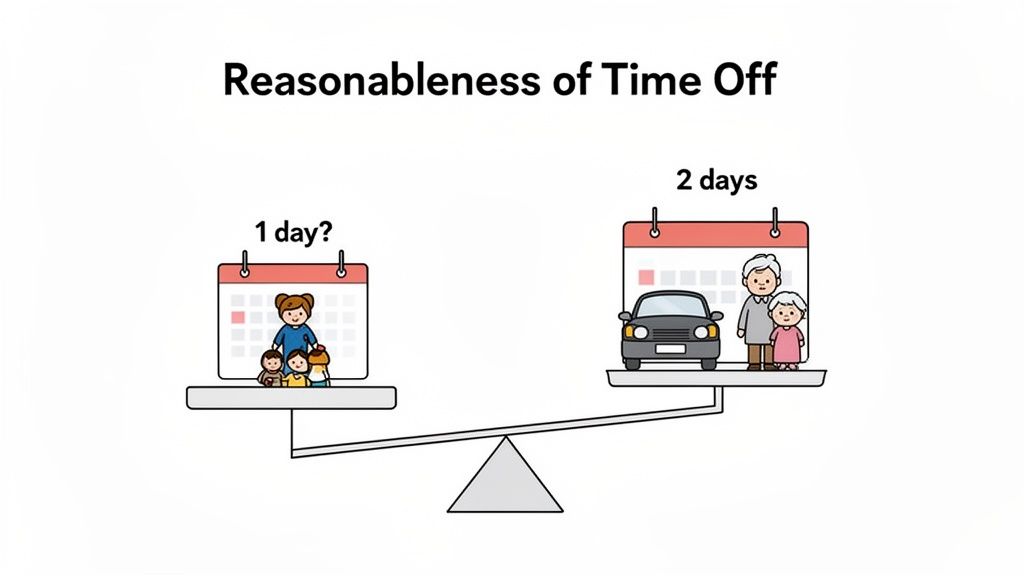
For instance, an employee whose child's school calls might just need a couple of hours to pick them up and arrange for a family member to take over. On the other hand, an employee whose elderly parent has just been hospitalised 200 miles away might reasonably need a day or two to travel there and coordinate with the doctors. The context of the emergency is everything.
Comparing Dependants Leave With Other Leave Types
Getting your leave types straight isn't just about tidy paperwork—it's about applying your policies fairly and staying on the right side of the law. If you mix up dependants leave with compassionate or carer's leave, you can create real headaches, from inconsistent management to potential compliance issues.
The key thing to remember about dependants leave is that it’s all about the unforeseen. Think of it as your employee's emergency toolkit—a short-term, reactive measure for a sudden crisis. This is what separates it from other, more planned, types of leave. Let's draw some clear lines in the sand.
Unplanned Emergencies vs Planned Care
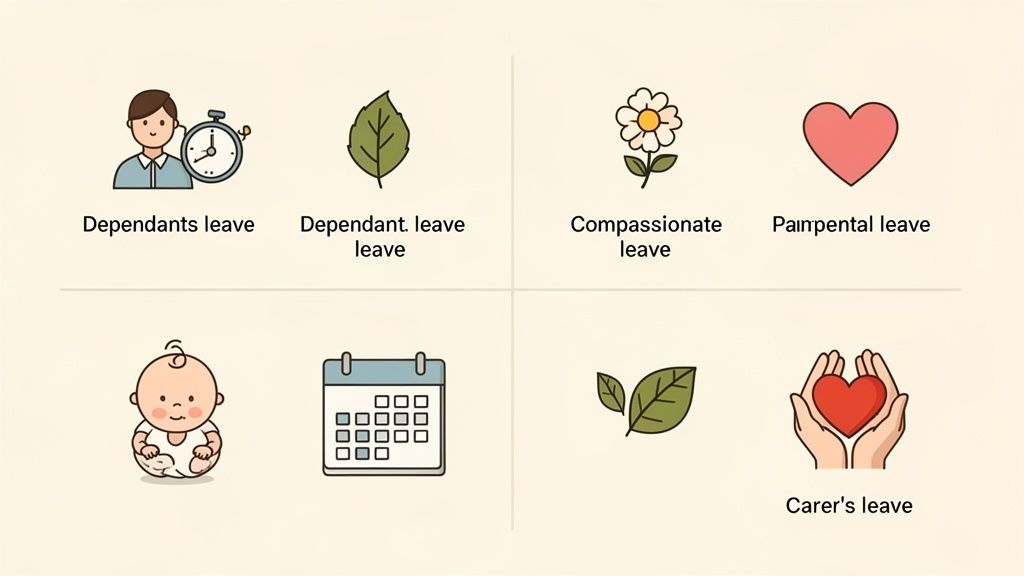
The biggest point of confusion I see is between dependants leave and the new Carer's Leave, which landed in the UK in April 2024. They sound similar, but their purpose is completely different. Dependants leave is for an unexpected drama, like getting a call that your child is sick at school and needs to be picked up immediately.
On the other hand, carer's leave is for planned support. An employee would use this to take their parent, who has a long-term illness, to a hospital appointment that was booked weeks ago. It's all about surprise versus pre-arrangement.
Other leave types cover different ground entirely:
- Parental Leave is for planned, long-term childcare. It’s designed to help parents spend quality time with their kids during their formative years.
- Compassionate Leave is what you grant when an employee is grieving the death of a dependant. Company policies can define this differently, but bereavement is its core purpose. You can get a much fuller picture from this in-depth guide to compassionate leave in the UK.
To see just how distinct these leave types are, this comprehensive guide to UK Maternity Leave offers a look at another statutory, long-term form of family-related absence.
A Clear Comparison Table
To help you categorise absences correctly every single time, I've put together a table that lays out the key differences between the main family-related leave types in the UK.
Comparison of Family-Related Leave Types
| Leave Type | Purpose | Pay Status (Statutory) | Typical Duration | Notice Required |
|---|---|---|---|---|
| Dependants Leave | To handle an unforeseen emergency involving a dependant and make necessary arrangements. | Unpaid | A 'reasonable' time, usually 1-2 days to resolve the immediate crisis. | As soon as reasonably practicable. |
| Carer's Leave | To provide planned care for a dependant with a long-term care need. | Unpaid | Up to one week per year, can be taken in half-days or full days. | Twice the length of the leave requested, or a minimum of 3 days. |
| Compassionate Leave | To cope with the death or serious illness of a dependant or close family member. | Policy Dependant (often paid) | Varies by policy, typically 3-5 days for bereavement. | As soon as reasonably practicable. |
| Parental Leave | To look after a child's welfare, often to spend more time with them. | Unpaid | Up to 18 weeks per child until their 18th birthday (max 4 weeks per year). | 21 days' notice before the intended start date. |
Seeing it all side-by-side makes the unique role of dependants leave pop. It’s the only statutory right built specifically for life’s sudden curveballs.
The key takeaway is simple: dependants leave is about arranging care, not providing it long-term. Its purpose is to give an employee breathing room to solve an immediate problem, like finding backup childcare or getting an injured parent settled after a hospital visit.
Getting this right isn't just about ticking legal boxes; it’s about giving your people the right support when they need it most. When an employee calls in a panic, knowing exactly how to classify their absence means you can act quickly and compassionately, all while keeping your records clean and defensible. That kind of clarity builds a fair, transparent culture that everyone benefits from.
How Much Time Off Is Reasonable?
This is the million-dollar question, isn't it? When an employee calls in with a family emergency, what’s a ‘reasonable’ amount of time off? It's one of the trickiest parts of managing dependants leave because UK law doesn't give you a neat little number like one or two days per incident.
This isn't an accident. The law is flexible for a reason: every family crisis is different. The goal of dependants leave isn't to cover the entire period a dependant is sick. It's about giving your employee just enough breathing room to handle the immediate emergency and sort out what happens next.
Assessing What Is Necessary
So, if there's no magic number, how do you decide what’s fair? You need to look at the specifics of the situation. Your job is to assess the emergency itself, not just count the hours on a timesheet. A consistent, fair approach means looking at every request on its own merit.
Let's look at a couple of real-world scenarios:
- Scenario 1: Childminder Cancels Last Minute. An employee’s childminder calls in sick an hour before their shift starts. In this case, giving them the rest of the day off is probably reasonable. It’s enough time for them to find a relative or book some backup care for the next day.
- Scenario 2: Parent Is Hospitalised. An employee gets a call that their elderly parent, who lives 150 miles away, has had a bad fall and is in the hospital. Here, one or two days would be a much more reasonable timeframe. They need to travel, talk to doctors, and figure out immediate support for when their parent is discharged.
The crucial difference here is the complexity of the problem. Finding one day of emergency childcare is a world away from managing a medical crisis in another city.
From Emergency Fix to Long-Term Support
Tracking these requests isn't about playing detective; it's about spotting patterns. If someone needs dependants leave frequently, it might be a sign that they're dealing with a bigger, ongoing issue that needs a more structured solution. An employee who often has to dash out because of unreliable elder care isn't abusing the system—they're probably just struggling to keep all the plates spinning.
And they're not alone. The Office for National Statistics estimates that around 5.7 million people in England and Wales are unpaid carers, and nearly 3 million of them are juggling that role with a job. It's no wonder that reports show over a third of working carers have needed some kind of emergency time off in the last year. You can find out more about the broader context of UK employment statistics and trends.
When you see recurring absences, it’s a chance to open up a conversation. Instead of asking, "Why are you off again?" you can say, "It looks like you're dealing with a lot. How can we help?"
This simple shift changes everything. It allows you to explore other options that might be a better fit for their ongoing needs. Things like a formal flexible working arrangement, different start and finish times, or even a temporary reduction in hours could provide the stability they need. It helps them manage their home life, and it helps the business by making their attendance more predictable. Acknowledging the reality of what is dependants leave and when it's needed helps build a workplace culture that’s supportive and resilient.
Handling and Recording Dependants Leave Requests
When an employee calls in a panic about a family emergency, having a clear and consistent process is your best friend. It’s not about grilling someone during a stressful moment; it's about having a simple, repeatable playbook that supports your employee while protecting the business.
A calm, empathetic response ensures you handle the request professionally while still getting the essential details for your records.
The Initial Conversation: What to Ask
That first phone call is the most critical step. Your immediate focus should be on understanding the basics without being intrusive. The goal is to gently confirm that the request falls under the dependants leave umbrella—meaning it’s for an unforeseen emergency involving someone who relies on them.
Here are the essential questions to cover:
- What is the nature of the emergency? You don’t need private medical details, just a brief reason like, "My child is sick and I need to pick them up from school," or "My parent has had an accident."
- Who is the dependant involved? This just helps confirm the relationship qualifies.
- How much time do you expect to need? This gives you a quick idea of the impact on the team so you can manage workloads.
- How will you keep in touch? A quick agreement to check in later in the day or the next morning is perfect.
This brief chat gives you enough information to make a fair assessment and kick off the recording process. Properly managing these requests is vital for both employee wellbeing and legal compliance, and should be a core part of your wider HR risk assessment processes.
Moving from Conversation to Record-Keeping
Once the call is over, the next job is to log the absence correctly. This is where so many businesses trip up. In a rush, it’s tempting to just mark it as "sick leave" or even "unauthorised absence," but that creates messy data and can lead to payroll errors or unfair disciplinary action down the line.
The single most important part of recording dependants leave is to categorise it accurately. Lumping it in with sickness absence distorts both records. You lose sight of how often these emergencies happen, and the employee’s sickness record is unfairly inflated.
Accurate records are non-negotiable. For a deeper dive into this, check out our article on why accurate absence tracking is crucial for compliance. Clean data gives you a true picture of operational disruption and helps you spot employees who might need more structured support.
Using Modern Tools for Accurate Tracking
Let's be honest, manual tracking on spreadsheets is just asking for trouble. A dedicated absence management system simplifies this whole thing. For UK employers, with more and more employees juggling work with caring responsibilities, these short-notice absences are on the rise. In sectors with tight staffing—like healthcare, social care, and tech—they can create critical rota gaps. You can learn more about the broader trends from the Office for National Statistics.
A system like Leavetrack allows you to create specific leave categories, set up approval workflows, and report on frequency. Instead of a vague "Other" category, you can create a dedicated "Dependants Leave" type. This helps you quantify how often these absences occur and forecast pressure points.
This screenshot shows just how simple it is to configure a custom leave type in Leavetrack.
By creating a specific category, you ensure every instance is logged consistently, giving you crystal-clear data for reporting and analysis.
A Simple 3-Step Process for Approval and Logging
To bring it all together, here is a simple, three-step process for handling and recording a request for dependants leave, whether you're using a manual system or a tool like Leavetrack.
- Receive and Assess: Listen to the employee's request with empathy. Ask those few key questions about the emergency to confirm it aligns with your dependants leave policy.
- Provide Initial Approval: Verbally approve the necessary time off. Reassure the employee and confirm when you expect an update. This shows support and keeps communication clear.
- Record Accurately: Log the absence immediately under the correct category—"Dependants Leave"—in your HR system. Add a brief, confidential note like "Childcare emergency" and the agreed duration.
This structured approach turns a potentially chaotic event into a manageable process. It’s fair for the employee, provides clarity for the manager, and builds a reliable dataset for the business. That level of organisation is key to managing any kind of absence effectively and compassionately.
Frequently Asked Questions About Dependants Leave
Even with a crystal-clear policy, dependants leave can throw up tricky questions that leave managers feeling unsure. Let's be honest, it's a nuanced bit of employment law, and the focus on "reasonableness" means there aren’t always simple yes-or-no answers.
This section tackles the most common and challenging questions head-on. Think of it as your practical, easy-to-reference guide for handling real-world situations with confidence and consistency.
Here's a simple flow for how to handle these requests, from the initial phone call to the final record.
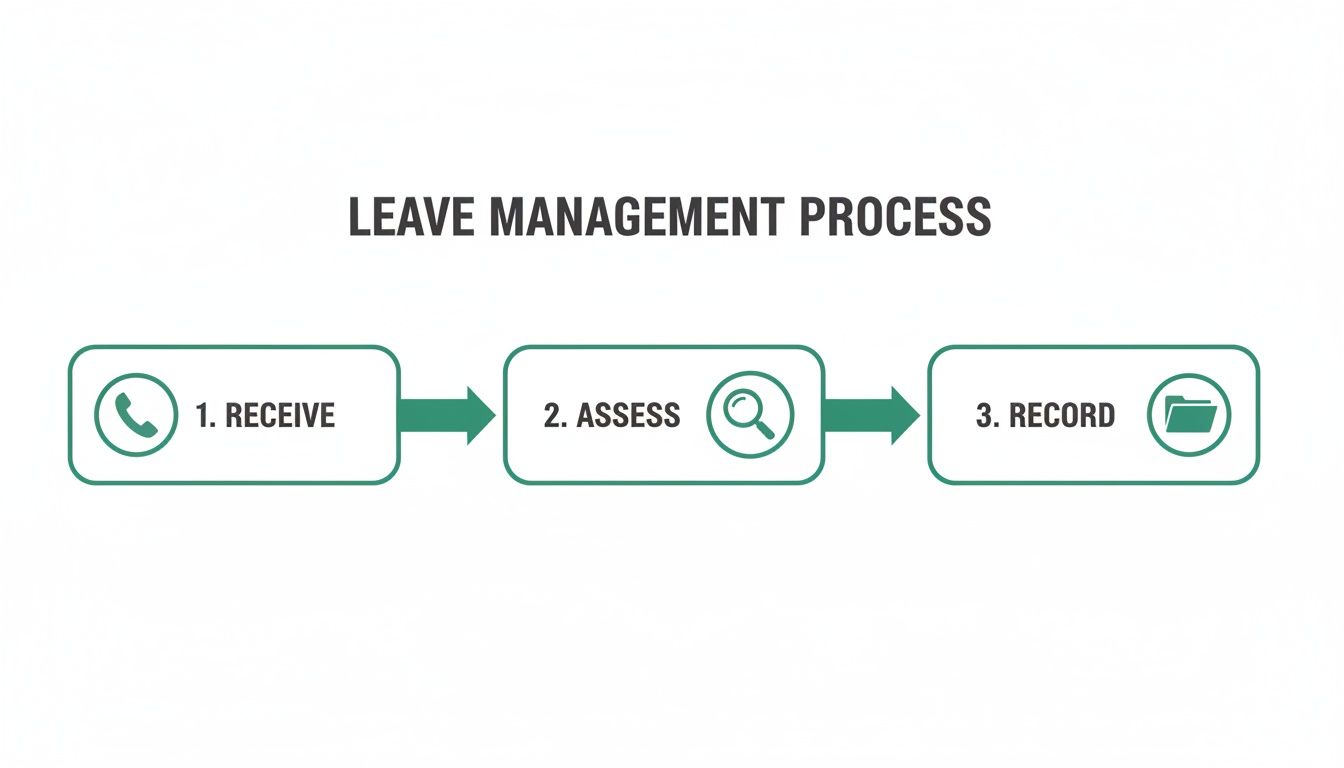
This visual breaks it down into three essential steps for managing any leave request: receive the request, assess its validity against your policy, and record it accurately. Following a structured approach like this is especially vital for dependants leave to ensure everyone is treated fairly and you have clear records to back it up.
Can I Ever Refuse a Request for Dependants Leave?
Yes, but you need to tread very carefully. An employee has a statutory right to this time off, so an outright refusal should be rare and extremely well-justified. You can only really refuse a request if you have a genuine and reasonable belief that the situation doesn't meet the legal criteria.
For instance, you might question a request if:
- The situation isn't a genuine emergency (e.g., taking a dependant to a routine, pre-booked appointment).
- The person involved doesn't technically count as a dependant.
- The employee had enough notice to make other arrangements.
However, challenging an employee in the middle of a crisis is a risky move that can seriously damage trust. If you have doubts, it’s often better to grant the leave and schedule a follow-up conversation once the dust has settled. This gives you a chance to address your concerns constructively without coming across as unsupportive.
Refusing a legitimate request could land you in front of an employment tribunal, where you'd have to prove your decision was reasonable. The burden of proof is high, making a supportive-but-questioning approach much safer.
Do We Have to Pay Employees for This Time Off?
Under UK law, statutory dependants leave is unpaid. There's no legal obligation for an employer to pay an employee for the time they take off to handle a dependant’s emergency. This is a key difference from other leave types like statutory sick pay.
That said, many companies choose to offer a certain amount of paid dependants leave as an employee benefit. This is a contractual perk and needs to be clearly laid out in your company's absence policy or employee handbook.
If you do offer paid leave, your policy must spell out:
- How many days or hours are paid per year.
- Whether this pay is at the employee's full or a partial rate.
- What happens if an employee goes over their paid allowance.
A common approach is to offer 2-3 days of paid leave for these kinds of emergencies each year, with any extra time taken as unpaid. This gives your staff a supportive buffer while keeping business costs in check.
What Kind of Proof Can We Ask For?
This is a delicate balancing act. You have a right to be satisfied that the leave is genuine, but you absolutely must not be overly intrusive or demand sensitive personal information. The law doesn't require employees to provide hard evidence like a doctor's note for dependants leave.
Your focus should be on getting just enough information to understand the nature of the emergency, not on conducting an interrogation. For example, it’s perfectly reasonable to ask for:
- The reason for the absence.
- The name of the dependant involved.
- Roughly how long they expect to be off.
Asking for a doctor’s certificate for the dependant would be unreasonable and a potential breach of privacy. Trust should be your default position. If you suspect an employee is misusing the policy, it's better to address it through your standard disciplinary procedures, based on patterns of absence rather than a single incident.
How Should We Handle an Employee Who Uses This Leave Frequently?
When you notice someone is taking dependants leave more often than their colleagues, it's important to approach the situation with empathy, not suspicion. Frequent use is often a symptom of an ongoing issue, not a sign of someone trying to game the system.
Instead of adopting a disciplinary tone, open up a supportive conversation. The goal is simply to understand the root cause of the frequent absences.
Here's a simple framework for that chat:
- Acknowledge the situation: "I've noticed you've needed to take a few days of dependants leave recently. I just wanted to check in and see if everything is okay."
- Listen actively: Let the employee explain what's going on. They might be the main carer for a relative with a long-term illness or be struggling with unreliable childcare.
- Explore alternative support: This is your chance to pivot from short-term emergency leave to a more sustainable solution. Discuss other options that might help, such as:
- A formal flexible working request.
- Applying for statutory Carer's Leave for planned appointments.
- Temporarily adjusting their start and finish times.
- Putting them in touch with an Employee Assistance Programme (EAP), if you have one.
By shifting the focus from absence management to employee support, you can often find a solution that gives the employee the flexibility they need while giving the business more predictability. It's a proactive approach that reinforces a positive culture and shows you value your team as people with lives outside of work.
Managing leave doesn't have to be a headache. With Leavetrack, you can create custom leave types, track absences accurately, and get a clear view of your team's availability, all in one place. Replace messy spreadsheets and get back to focusing on what matters—your people. Learn more and start your free trial at leavetrackapp.com.