
What Is Dependency Leave a UK Guide to Employee Rights
Posted by Robin on 29 Dec, 2025 in
Think of dependency leave as the workplace equivalent of a first-aid kit for family emergencies. It's a statutory right for UK employees to take a reasonable amount of unpaid time off to handle an unexpected crisis involving someone who relies on them. This leave is specifically designed for unforeseen events, not for planned appointments.
Understanding What Dependency Leave Actually Means
When a key employee suddenly needs to leave work because their child is ill or an elderly parent has had an accident, it’s not just a personal issue—it’s a business one. This is precisely the scenario dependency leave was created for. It provides a legal framework for handling these sudden, often stressful, situations with clarity and compassion.
The right to this leave is enshrined in the Employment Rights Act 1996. This legislation gives all employees, regardless of their length of service, the ability to take time off to provide necessary assistance when a dependant falls ill, gives birth, is injured, or dies. It also covers situations where care arrangements unexpectedly break down.
Distinguishing It From Other Leave Types
It's crucial to understand how this leave differs from other common absence types. Unlike annual leave, it cannot be pre-booked and is purely for reactive situations. It also isn't the same as sick leave, which is for when the employee themselves is unwell.
Dependency leave serves a unique purpose:
- For Emergencies Only: It covers unforeseen crises, such as a child’s accident at school or a sudden breakdown in childcare.
- Time to Arrange Care: The leave is intended to give the employee time to manage the immediate crisis and make longer-term care arrangements, not to provide ongoing care themselves.
- Typically Unpaid: While the statutory right is for unpaid time, many organisations choose to offer paid dependency leave as part of a supportive benefits package.
To make things crystal clear, here’s a quick summary of the statutory position.
Dependency Leave at a Glance
| Aspect | UK Statutory Entitlement |
|---|---|
| Payment Status | Unpaid |
| Who is Eligible? | All employees, from day one of employment |
| When Can It Be Used? | For unexpected emergencies involving a dependant (e.g., illness, injury, death) |
| How Much Time Off? | A "reasonable" amount of time to deal with the immediate crisis and make arrangements |
| Notice Requirement | Employee must notify the employer as soon as is reasonably practicable |
This table highlights the baseline legal requirements, but remember, many employers build on this foundation to offer more supportive policies.
By understanding its specific function, managers can apply their policy fairly and consistently. It’s not just about compliance; it’s about building a supportive culture where employees feel they can handle family emergencies without fearing for their job security. This trust is fundamental to a healthy and productive work environment.
Who Is Covered and What Counts as an Emergency
Figuring out who actually qualifies for dependency leave is a lot simpler than you might think. The important thing is to look beyond the traditional idea of just a spouse or child. Legally speaking, a dependant is anyone who reasonably relies on your employee for help in a crisis.
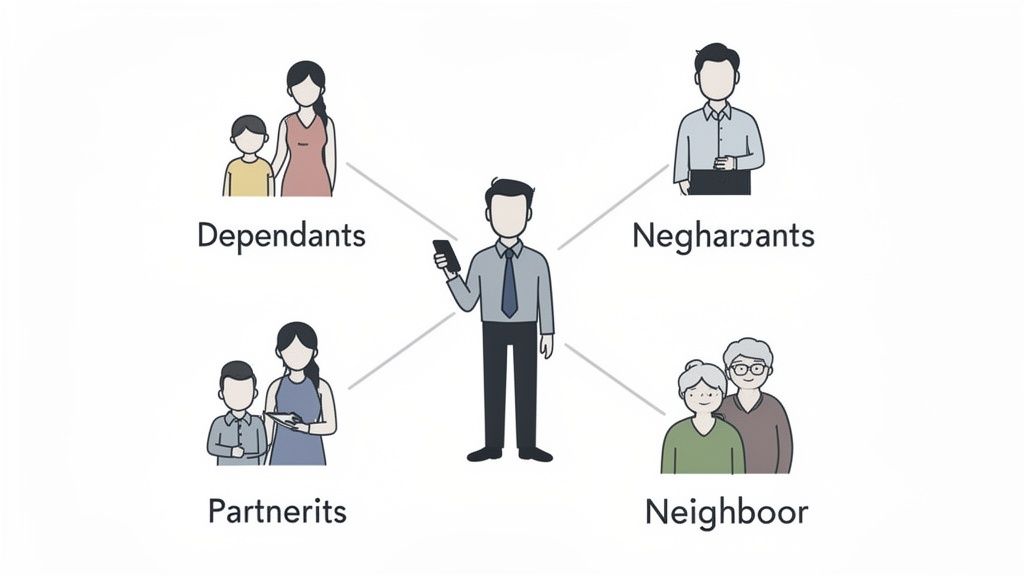
This broader definition is there for a reason – it’s designed to reflect the reality of modern families and caregiving setups. In the UK, this is a statutory right under the Employment Rights Act 1996, giving employees the right to unpaid time off for sudden emergencies involving anyone who counts on them.
This means the circle of people an employee might need to care for can be surprisingly wide.
Who Qualifies as a Dependant
An employee can ask for time off for an emergency involving several different groups of people. Getting this clear in your own mind helps you as a manager handle these requests fairly every single time.
- Spouse, civil partner, or child: This is the most common and clear-cut category. No surprises here.
- Parent: This includes an employee's mother or father, no matter where they live.
- Someone living in the same household: This can cover people who aren't family but are part of the employee's home life, like a lodger.
- Someone who reasonably relies on them for care: This is the crucial one that covers a lot of ground. It could be an elderly neighbour who depends on your employee in a crisis, especially if they don't have anyone else to turn to.
It’s also helpful to see how this fits with other types of family leave. For instance, in the US, resources on FMLA regulations for postpartum anxiety can offer a different perspective on who is covered and what qualifies in other specific scenarios.
What Constitutes a Genuine Emergency
The other side of the coin is understanding what really counts as a genuine, unforeseen emergency. The key is that the event must be unexpected and need the employee's immediate attention.
The whole point of dependency leave is to give someone a short-term fix for an immediate crisis. It’s the time they need to make urgent arrangements, not to provide the ongoing care itself.
So, what are some common situations where dependency leave would apply?
- A dependant suddenly falls ill, gives birth, gets injured, or is assaulted.
- A dependant passes away, and the employee needs to make funeral arrangements or attend the service.
- Normal care arrangements for a dependant fall through without warning (for example, the childminder calls in sick).
- An incident happens with a child during school hours, like an accident or being sent home unwell.
It's really important to keep these situations separate from other types of leave. Dependency leave isn't the same as compassionate leave, which is usually a specific, separate policy for bereavement. We cover this in more detail in our complete guide to compassionate leave in the UK.
Navigating Pay and How Much Time Is Reasonable
When an employee calls in needing time off for a family emergency, two questions pop up almost immediately: "Will I be paid for this?" and "How much time can I take?" Let's break down the answers.
First, the money. The law is crystal clear on this point: the statutory right to dependency leave is for unpaid time off. That’s the baseline, the legal minimum. But that’s far from the whole story in today's world.
The Employment Rights Act 1996 might only guarantee unpaid time, but the reality on the ground is changing. More and more companies are choosing to offer paid dependency leave, turning a basic legal requirement into a real employee benefit. In fact, current data shows that 35% of UK employers now provide some form of paid leave for these situations. It’s a significant shift. You can read more about how parental leave benchmarks are evolving here.
This creates a real split in how businesses handle things. Smaller companies might stick to the unpaid statutory minimum, while many larger organisations formalise the benefit, often offering between three to five paid days a year. It's a smart move—it shows a genuine commitment to their team's well-being and is a powerful way to attract and keep great people.
Defining a 'Reasonable' Amount of Time
The second big question is about duration. The law uses the wonderfully vague word ‘reasonable’. It's vague on purpose, because every family crisis is different. A sick child is not the same as a parent having a serious accident.
The real clue is in the purpose of the leave itself.
Dependency leave is there to help an employee deal with the immediate crisis and arrange longer-term care. It is not meant for the employee to provide that ongoing care themselves.
So, for most situations, a ‘reasonable’ amount of time is actually quite short—typically one or two days. This is usually just enough time to get over the initial shock, make the important phone calls, and figure out a plan for what happens next.
Think about it. If the childminder cancels out of the blue, one day is usually enough to sort out a backup. If an elderly parent has a fall and is taken to hospital, one or two days is reasonable to be by their side, talk to the doctors, and start coordinating with family or social services for their ongoing care.
Communicating Time Limits and Expectations
To stop any confusion before it starts, your company policy needs to be really clear about what you consider 'reasonable'. This isn't about being rigid; it's about managing expectations and making sure every manager handles these situations fairly and consistently.
Your policy could include simple, clear statements like:
- Initial Period: "In most cases, up to two days of leave will be granted to handle the immediate emergency."
- Further Support: "If you need more time, please speak with your line manager about using annual leave, parental leave, or exploring other flexible working options."
Setting these boundaries makes sure everyone understands what dependency leave is for. It’s a vital, short-term safety net for your team during a tough time, not a long-term solution. That clarity protects your people when they need it most and keeps the business running smoothly.
Building a Fair and Compliant Leave Policy
Wing it with dependency leave, making decisions on the fly? That's a surefire way to create confusion, inconsistency, and maybe even find yourself in a legal tangle. A formal, written policy is your best friend here. It gives everyone—managers and employees alike—a clear roadmap to follow when life throws a curveball.
Putting a solid policy in place doesn't need to be a huge headache. The idea is simply to set clear expectations and map out a straightforward process. This shifts your approach from being reactive to being structured, making sure every request is handled with the same fairness and care. It’s about protecting your people and the business.
A well-thought-out policy is a sign of a supportive workplace. To make sure you're covering all your bases, it’s worth checking out our guide on creating a fair absence and sickness policy, as a lot of the same principles apply.
Core Components of Your Policy
For your policy to actually work, it needs to cover a few key areas. Think of these as the essential building blocks for a system that everyone can understand and trust. Ambiguity is the enemy, so be as specific as you can.
At a minimum, your policy should clearly lay out:
- Who Counts as a Dependant: Don't leave it to guesswork. List examples like a spouse, partner, child, parent, or even someone who lives with the employee and relies on them for care.
- What Constitutes an Emergency: Be clear about what sort of situations are covered. Think sudden illness, an accident involving a dependant, or an unexpected breakdown of childcare arrangements.
- How to Notify the Company: Spell out the process. For example, the employee should phone their manager as soon as they reasonably can.
- Pay and Duration: State clearly whether the leave is paid or unpaid. It's also vital to clarify what a "reasonable" amount of time off is—typically, this is just one or two days to deal with the immediate crisis.
Communicating the Policy Effectively
Once you've drafted the policy, its real value comes from how well you communicate it. A policy gathering dust in a digital folder helps no one. It needs to be out in the open, accessible, and understood by your entire team.
To help you draft or review your own policy, here’s a quick checklist of the essential elements it should contain.
| Policy Component | Why It's Important |
|---|---|
| Clear Definition of 'Dependant' | Avoids ambiguity and ensures consistent application. |
| Examples of 'Emergencies' | Helps employees and managers understand when the policy applies. |
| Notification Procedure | Sets clear expectations for communication during an unexpected event. |
| Statement on Pay | Manages financial expectations by clarifying if the leave is paid or unpaid. |
| Guidance on Duration | Clarifies that the leave is for the immediate crisis, not long-term care. |
| Link to Other Policies | Shows how it connects with parental, compassionate, or sick leave policies. |
| Manager Responsibilities | Equips managers to handle requests fairly and consistently. |
Having these components in place turns a simple document into a powerful tool for fairness and transparency.
A policy is more than just a legal document; it’s a statement about your company's culture. Communicating it clearly shows you’re committed to supporting your team during tough times, and that’s how you build real trust and loyalty.
Consider running short training sessions for your managers so they know exactly how to apply the policy fairly every single time. Make the document dead easy to find on your company intranet and mention it during new starter inductions. This kind of proactive approach sets clear expectations from day one and builds a transparent framework that supports everyone.
How to Track Unplanned Absences Without the Headaches
A well-written policy is a fantastic start, but it’s only half the battle. Its real value is tested when that emergency phone call comes in, and without the right tools, handling unplanned absences like dependency leave can quickly descend into chaos. If you're juggling spreadsheets, paper forms, and endless email chains, you know the headache I'm talking about.
This manual approach isn't just inefficient; it's a recipe for inconsistency and frustration. Managers are left scrambling to find cover, HR struggles to keep accurate records, and employees face delays and uncertainty during what is already a stressful time. It’s almost impossible to get a clear, real-time picture of who is actually available to work.
Shifting from Manual Chaos to Automated Clarity
This is where a dedicated absence management system completely changes the game. It takes the entire messy workflow for short-notice requests and makes it simple, transparent, and fair for everyone. Instead of reacting to emergencies, you get a structured system that supports both your managers and their teams properly.
The right technology provides a single source of truth. Features like a team visibility planner, instant mobile notifications, and customisable leave types give managers the power to approve requests quickly. They can see team availability at a glance and make informed decisions on the spot, ensuring fairness and keeping operations running smoothly.
The process for building and maintaining a clear policy is actually quite simple, as this diagram shows.
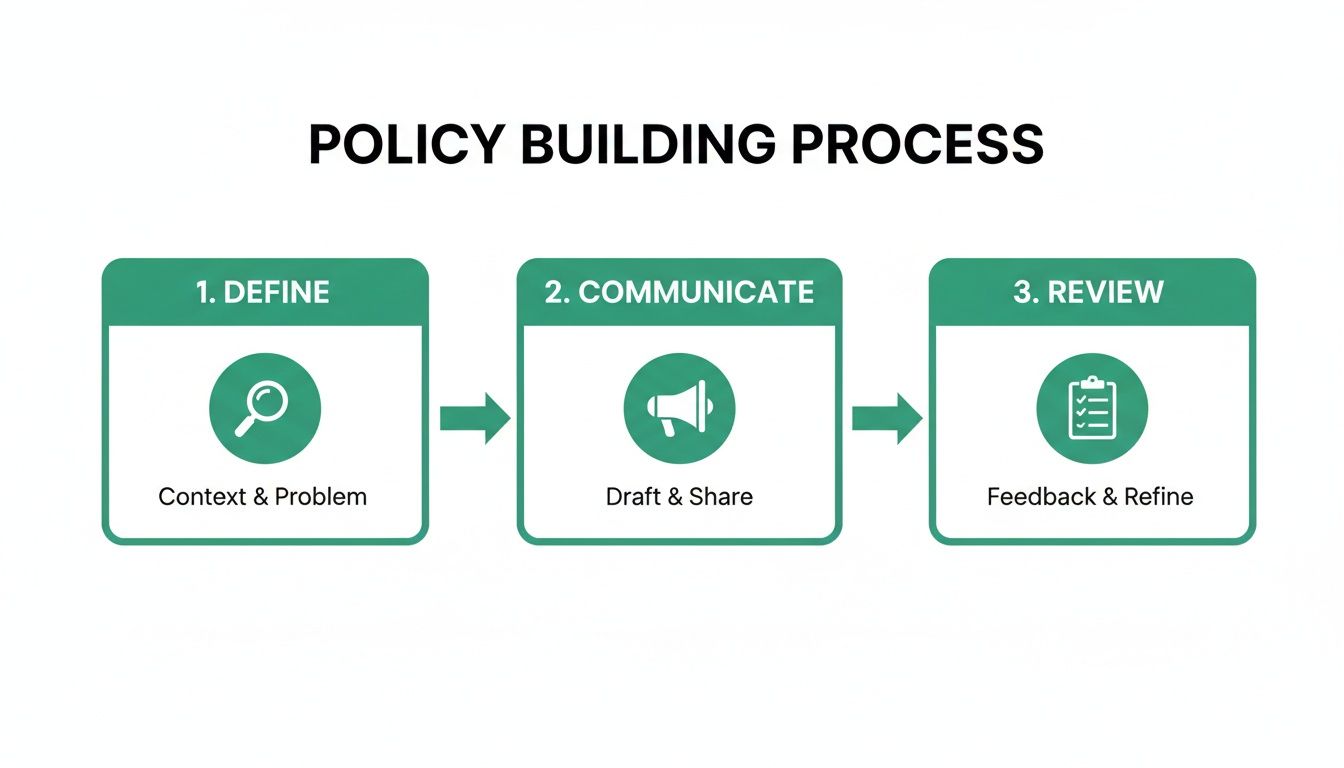
As you can see, a successful framework really just relies on three core steps: clearly defining the rules, communicating them effectively, and reviewing them regularly to make sure they still work.
Streamlining the Entire Leave Workflow
An online system like Leavetrack is designed specifically to solve this kind of operational challenge. It lets you create a specific leave type just for dependency leave, keeping it distinct from holidays or sick days in your records.
When an employee submits a request, their manager gets an immediate notification and can approve it in seconds. The central planner is updated in real-time for everyone to see, which gets rid of any confusion about who is off and why.
This transforms a burdensome admin task into a smooth, transparent process. The system provides impeccable, accessible records for HR and payroll, ensuring every instance of dependency leave is logged correctly without any manual data entry.
On top of that, building a system that logs all absences correctly is essential for staying on the right side of regulations. You can explore our article on why accurate absence tracking is crucial for compliance to understand just how important a reliable system of record is. By replacing outdated spreadsheets with a purpose-built tool, you create a supportive environment where handling family emergencies is straightforward and stress-free for everyone involved.
Why a Supportive Policy Is a Strategic Business Advantage
Looking at dependency leave as just another box to tick for legal compliance is a massive missed opportunity. A compassionate and clear policy is so much more than a legal obligation; it's a strategic investment in your most valuable asset—your people.
Think about it. When an employee feels genuinely supported during a family crisis, that support comes back to you in spades through loyalty and engagement. This simple shift in perspective turns your policy from a potential cost centre into a powerful tool for keeping your best talent. In a competitive market, top performers are actively looking for employers who care about their well-being. A supportive stance on family emergencies makes you a much more attractive place to work.
The Tangible Business Benefits
The advantages of going beyond the bare minimum are clear and you can actually measure them. A supportive culture has a direct impact on your business performance.
Here's how:
- Reducing Employee Burnout: Let's be honest, employees with caring responsibilities are at a much higher risk of stress. Having a clear dependency leave policy isn't just about the leave itself; it's a critical part of wider strategies for caregiver burnout prevention.
- Boosting Productivity: When someone isn't worrying about their job security while dealing with a crisis at home, they can focus on what needs to be done. They'll return to work more engaged and ready to contribute, rather than being distracted and stressed.
- Increasing Loyalty: An act of compassion during a difficult time builds a level of trust that you just can't buy with a salary increase. It's the kind of thing that makes people want to stick around for the long haul, significantly cutting down on employee turnover.
Ultimately, a proactive approach to dependency leave isn’t just about being a good employer—it’s about being a smart one. By providing security when your team feels most vulnerable, you are building a resilient, dedicated workforce that is better equipped to drive your company's long-term success. This is a core part of understanding what is dependency leave in a modern business context.
Common Questions About Dependency Leave
Even with a crystal-clear policy on the books, real-world situations have a knack for being messy. Life is rarely straightforward, and it's these grey areas that often trip up managers and employees alike.
Anticipating the common questions that pop up helps everyone apply the rules fairly. More importantly, it gives your team clarity during what is almost always a stressful time. Here are the answers to some of the most frequent queries we see.
Can We Just Refuse a Dependency Leave Request?
In short, not if it's a legitimate request. An employer can’t unreasonably refuse time off if it meets the legal criteria for a genuine, unforeseen emergency. Pushing back on a valid request is a risky move and could easily end up in an employment tribunal. It’s vital to handle every case with care and consistency.
That being said, you are well within your rights to ask for more information to understand what’s happened, as long as you do it sensitively. The crucial test is whether the time off is necessary for the employee to deal with the immediate crisis.
What’s the Difference Between Dependency and Compassionate Leave?
This is a big point of confusion, and it’s easy to see why. The key difference is that ‘dependency leave’ is a specific legal right designed for emergencies involving a dependant.
On the other hand, ‘compassionate leave’ isn’t a defined legal term. It’s usually a company-specific policy for bereavement, often offering more time off (and frequently paid) than the statutory minimum for dependency leave.
While a dependant passing away is a valid reason for dependency leave (to make funeral arrangements, for instance), a separate compassionate leave policy is where you’d typically offer more generous, paid time off to grieve.
Does an Employee Need to Show Us Proof?
Legally, no. An employee isn't required to bring in a doctor’s note or other formal evidence to take dependency leave. Their obligation is to tell you what's happened as soon as they reasonably can and explain why they need the time off.
Your internal policy can mention that you might ask for a few more details to get a handle on the situation, but this conversation should always be handled with respect and privacy in mind. The goal is to offer support, not to start an interrogation.
Does a Planned Hospital Appointment Count?
This is a firm no. Dependency leave is strictly for unexpected, sudden events. A pre-planned hospital or doctor's appointment simply doesn't qualify as an unforeseen emergency because the employee has had time to make other arrangements.
For these kinds of planned events, employees should be looking at other options:
- Booking annual leave
- Using parental leave (if it applies to them)
- Exploring flexible working options with their manager well in advance
Making this distinction clear helps protect the integrity of your policy and ensures the leave is used exactly as it was intended—for managing genuine crises.
Handling unplanned absences fairly and without the fuss is simple when you have the right tools. Leavetrack takes the chaos out of spreadsheets and gives you a clear, central system to manage dependency leave requests with confidence and consistency. See how it works at Leavetrack.